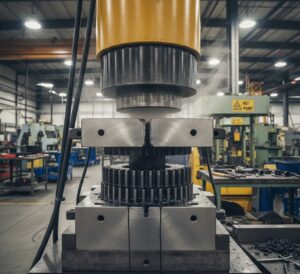
The global Rubber Molding Market is poised for significant growth over the next decade, propelled by both established manufacturers and new entrants focused on technological advancements and market expansion. Forecasts indicate the market size will nearly double, growing from USD 58.2 billion in 2025 to an impressive USD 117.7 billion by 2035, at a healthy CAGR of 7.3%. This surge is fueled by increasing demand for molded rubber components across automotive, industrial, healthcare, and consumer sectors, alongside continuous innovation in molding technologies and sustainable material development.
To access the complete data tables and in-depth insights – Request A Sample Report Now
Market Drivers and Emerging Trends
The rubber molding market thrives on the increasing application of molded rubber components for sealing, vibration damping, insulation, and more. Manufacturers are leveraging advancements such as automation, precision molding technologies, and material innovation to meet stringent regulatory demands and sustainability goals.
- Innovation in Molding Technologies:
Established leaders and new entrants alike are investing heavily in automation and robotics, enabling faster production cycles, improved precision, and reduced material waste. Noteworthy is King Steel Machinery’s launch of the world’s first dual-color rubber injection molding machine, enabling simultaneous molding of hard and soft materials, a game-changer in smart manufacturing. - Material Advancements:
Ethylene Propylene Diene Monomer (EPDM) dominates the material segment, with its exceptional heat resistance, weathering durability, and compatibility with electric vehicle components. Manufacturers are also focusing on developing eco-friendly compounds to align with global sustainability targets. - Sector-Specific Growth:
The automotive industry, accounting for over 51.6% of market demand, leads the charge by adopting precision rubber molded parts that enhance thermal and mechanical stability, particularly for electric vehicles. Parallel growth in healthcare and consumer electronics further broadens the market scope. - Global Expansion and Emerging Players:
Countries like South Korea and Japan are rapidly gaining ground, driven by cutting-edge precision engineering and sustainable manufacturing practices. South Korea, with a projected CAGR of 9.0%, exemplifies this growth, supported by strategic global partnerships and technology expertise. Meanwhile, China leverages its manufacturing scale and cost-efficiency to capture significant market share.
Key Segments of the Rubber Molding Market Report:
- By Type:
- Injection Molding (42.8%)
- Transfer Molding (7.1% CAGR, rising due to precision and cost-effectiveness)
- Compression Molding
- Others
- By Material:
- Ethylene Propylene Diene Monomer (EPDM) (39.4%)
- Styrene-Butadiene Rubber (SBR)
- Natural Rubber (NR)
- Others
- By End User:
- Automotive (51.6%)
- Healthcare
- Industrial
- Sports
- Others
- By Region:
- North America
- Latin America
- Western Europe
- Eastern Europe, Balkans & Baltics
- Russia & Belarus
- Central Asia
- East Asia
- South Asia & Pacific
- Middle East & Africa
Industry Challenges and Market Restraints
Despite its promising outlook, the rubber molding industry faces certain challenges:
- Price volatility in natural and synthetic rubber impacts manufacturing costs.
- Intense competition from low-cost producers in emerging markets pressures profit margins.
- Environmental concerns push for stricter regulations on rubber product recycling and manufacturing processes.
- Alternative materials like plastics and composites threaten certain application areas.
- Supply chain disruptions remain a potential risk factor amid geopolitical tensions and natural disasters.
Manufacturers are countering these hurdles by focusing on innovation, cost optimization, and sustainable production techniques.
Competitive Landscape and Strategic Moves
The market is highly dynamic, with major players and rising manufacturers actively enhancing their capabilities:
- Continental AG, Freudenberg and Co., Sumitomo Riko, and Federal-Mogul Corporation continue to lead through innovation and expansion into emerging sectors such as electric mobility and renewable energy.
- Desma USA’s investment in mold-making operations in Kentucky highlights the growing importance of localizing production and enhancing mold precision.
- Molded Dimensions and Molded Devices, Inc. represent new entrants scaling up through private equity investments and strategic focus on medical device rubber components.
- Family-owned Evco Plastics Inc. has expanded by integrating advanced liquid silicone rubber (LSR) molding techniques, strengthening their market position in high-precision applications.
Collaborations, mergers, and acquisitions remain vital to consolidating market presence and driving technological breakthroughs.
Regional Growth Insights
- South Korea: Leading the market with a 9.0% CAGR, thanks to superior technology and partnerships fostering R&D and sustainable manufacturing.
- Japan: Known for precision engineering and innovation, sustaining an 8.7% CAGR fueled by stringent quality standards.
- United Kingdom: Boasts strong manufacturing and supply chain capabilities, growing at 8.3%.
- China: Benefits from vast industrialization and cost advantages, with a CAGR of 7.9%.
- United States: Steady 7.5% growth driven by R&D, automation, and focus on sustainability.
Buy Full Report: Rubber Molding Market
Outlook: Technology and Sustainability to Define the Future
The rubber molding market’s trajectory is set toward continuous innovation, expanded product portfolios, and increased penetration in high-growth sectors like electric vehicles, healthcare, and consumer electronics. Manufacturers are embracing digital transformation, from smart molding machines to eco-conscious materials, reflecting an industry balancing performance, cost, and environmental responsibility.
Buy Full Report Why FMI: https://www.futuremarketinsights.com/why-fmi
About Future Market Insights (FMI)
Future Market Insights, Inc. (ESOMAR certified, recipient of the Stevie Award, and a member of the Greater New York Chamber of Commerce) offers profound insights into the driving factors that are boosting demand in the market. FMI stands as the leading global provider of market intelligence, advisory services, consulting, and events for the Packaging, Food and Beverage, Consumer Technology, Healthcare, Industrial, and Chemicals markets. With a vast team of over 400 analysts worldwide, FMI provides global, regional, and local expertise on diverse domains and industry trends across more than 110 countries.
Contact Us:
Future Market Insights Inc.
Christiana Corporate, 200 Continental Drive,
Suite 401, Newark, Delaware – 19713, USA
T: +1-347-918-3531
For Sales Enquiries: sales@futuremarketinsights.com
Website: https://www.futuremarketinsights.com
LinkedIn| Twitter| Blogs | YouTube