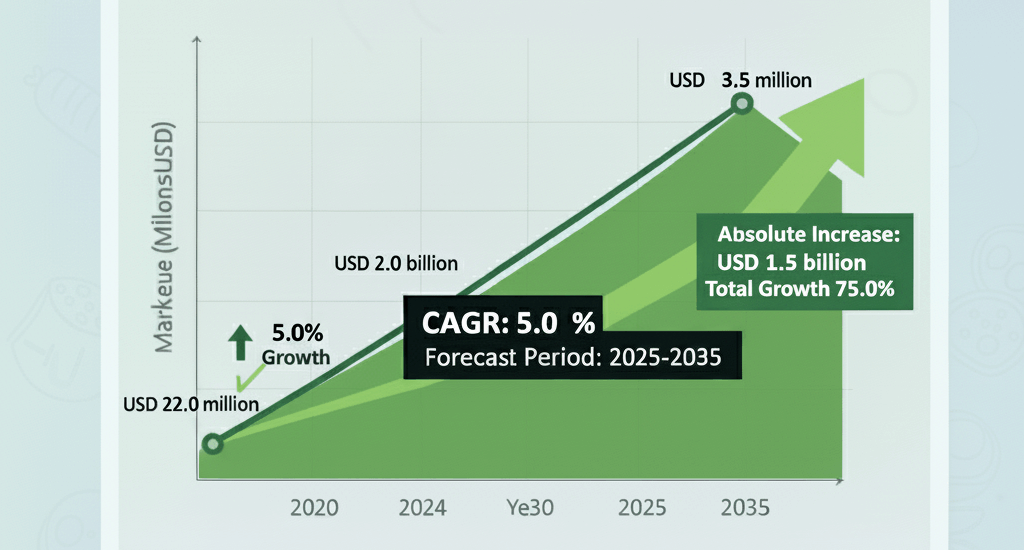
Future Market Insights (FMI), a leading provider of market intelligence and consulting services, today announced the publication of its latest in-depth report, “Wine Bottling Machine Market Size & Forecast 2025-2035.” The global wine bottling machine market is estimated to account for USD 2.0 billion in 2025. It is anticipated to grow at a CAGR of 5.0% during the assessment period and reach a value of USD 3.5 billion by 2035.The report highlights the transformative role of automation, sustainability, and technological innovations in driving efficiency and meeting the evolving demands of the global wine industry. As wine consumption surges in emerging markets and premiumization trends accelerate, this report provides essential insights for manufacturers, wineries, and investors navigating a dynamic landscape shaped by digitalization and eco-conscious practices.
Wine Bottling Machine Market Insights: Trends, Growth Drivers, Challenges, Opportunities, and Competitive Landscape:
The wine bottling machine market is poised for steady expansion, fueled by a confluence of technological advancements and shifting consumer preferences. Key trends include the integration of IoT-enabled machines, AI-driven quality control systems, and robotic automation, which enhance precision, reduce oxidation, and minimize wastage during bottling processes. Sustainability is a dominant force, with manufacturers increasingly adopting energy-efficient designs, recyclable materials, and low-carbon footprint solutions to align with global environmental regulations and consumer demands for green practices.
Growth drivers are multifaceted. Rising global wine consumption, particularly in Asia-Pacific and Latin America, where disposable incomes are climbing and preferences for premium and craft wines are growing, is a primary catalyst. The boom in direct-to-consumer (DTC) channels and online wine retail has amplified the need for versatile, scalable bottling equipment suitable for small-batch production. Additionally, the premiumization trend—where consumers seek high-quality, artisanal wines—encourages investments in advanced technologies like vacuum filling and oxygen-controlled systems to preserve flavor and extend shelf life.
However, the market faces notable challenges. Supply chain disruptions, exacerbated by geopolitical tensions and rising raw material costs, could hinder production and increase expenses for machinery. Regulatory pressures around sustainability and labeling standards may require costly upgrades for older equipment. Moreover, the high initial investment for automated systems poses a barrier for small-scale wineries and home bottlers, potentially slowing adoption in niche segments.
Opportunities abound in emerging regions and innovative applications. The Asia-Pacific market, led by China, is expected to witness rapid modernization with AI-enabled high-speed lines to cater to domestic demand and e-commerce sales. Latin America’s expanding wine exports offer prospects for export-oriented bottling solutions. Home bottling trends, driven by wine enthusiasts experimenting with blends, are creating demand for compact, user-friendly machines. Overall, the competitive landscape is concentrated, with global giants leveraging strong distribution networks and R&D investments to dominate, while local players excel in affordable, customized options for boutique producers. Mergers, acquisitions, and partnerships are intensifying as companies expand portfolios and penetrate new geographies.
Wine Bottling Machine Market Update: Evolving Dynamics in the Wine Bottling Sector:
The wine bottling machine industry is undergoing significant transformation amid broader wine market shifts. In 2025, the sector has seen a rebound from post-pandemic disruptions, with a focus on resilient supply chains and localized production to mitigate risks. Technological integration is accelerating; for instance, IoT-connected machines allowing real-time monitoring and predictive maintenance are becoming standard in commercial wineries, improving operational efficiency by up to 20-30%. Sustainability initiatives are gaining traction, with regulations in Europe and North America pushing for reduced plastic use and recyclable glass systems.
Recent industry news underscores these trends. In April 2025, The Wine Group acquired wine brands and production facilities from Constellation Brands in a $900 million deal, signaling consolidation that could boost demand for upgraded bottling lines to handle increased volumes. Similarly, Guala Closures’ acquisition of Metal Crowns in East Africa expands closure solutions, indirectly supporting bottling machinery advancements in emerging markets. Rising costs are impacting winery expansions, as noted in recent reports, with 33% of wineries planning increased production for the 2025 vintage despite inflationary pressures on equipment upgrades. The North American organic wine market is projected to grow from $1.87 billion in 2022 to $3.89 billion by 2030, driving needs for specialized bottling tech that minimizes preservatives and ensures quality. Globally, wine production machinery markets are aligning, with estimates showing growth from $2.35 billion in 2025 to higher figures by 2032, reflecting parallel expansions in bottling segments.
Wine Bottling Machine Market Applications: Benefiting Businesses Across the Value Chain:
The insights from FMI’s report offer actionable value for a wide array of stakeholders. Commercial wineries and large-scale producers can leverage forecasts on automated systems to optimize high-volume operations, reducing labor costs and contamination risks while ensuring consistent quality for premium exports. Boutique and craft winemakers benefit from analyses of semi-automated and compact machines, enabling flexible small-batch bottling to meet DTC and subscription demands without excessive capital outlay.
In the beverage industry, the report’s segmentation by application highlights opportunities for integrating wine bottling tech into broader liquid packaging lines, enhancing versatility for multi-product facilities. Home winemakers and enthusiasts gain from trends in user-friendly, home-compatible equipment, fostering personalization and experimentation. Investors and suppliers can use regional breakdowns—such as strong growth in Asia-Pacific due to e-commerce—to identify high-potential markets for R&D and partnerships. Overall, businesses can apply these findings to align with sustainability mandates, adopting green technologies to lower carbon footprints and appeal to eco-conscious consumers, ultimately driving competitive advantages and revenue growth.
Wine Bottling Machine Market Key Players:
The report profiles leading players shaping the market, including Tenco S.r.l., known for innovative vacuum filling solutions; Zhangjiagang City Xinmao Drink Machinery Co., Ltd., specializing in efficient automated lines; Qingzhou Tongda Packaging Machinery Co., Ltd., offering comprehensive liquid filling systems; Shenzhen Wellbom Technology Co., Ltd., focused on brewery and bottling hardware; and Higee Machinery (Shanghai) Co., Ltd., renowned for high-speed, precision equipment. These companies dominate through technological expertise, global reach, and strategic alliances, while competing with regional specialists in niche segments.
Full Market Report available for delivery. For purchase or customization, please request here: https://www.futuremarketinsights.com/checkout/16424
Request for Discount: https://www.futuremarketinsights.com/reports/sample/rep-gb-16424
Wine Bottling Machine Recent Developments in the Market:
As of November 2025, the wine bottling machine market has seen limited major acquisitions among core machinery providers, with no public records of deals involving key players like Qingzhou Tongda or Shenzhen Wellbom up to February 2025, and stability continuing thereafter. However, broader industry moves are influencing the sector. The Wine Group’s April 2025 acquisition of Constellation Brands’ assets is expected to spur investments in bottling upgrades for expanded production. Mobile bottling services are expanding, with providers adding cross-flow filtration and Velcorin dosing to core offerings, enhancing on-site efficiency for wineries. Sustainability-focused innovations, such as energy-efficient IoT machines, are proliferating, aligned with a U.S.-EU trade framework from July 2025 that eases tariffs and promotes green standards. Premiumization and organic wine growth are driving demand for advanced vacuum and enolmatic fillers, with boutique wineries adopting AI-optimized systems to handle rising DTC sales.
Explore More Related Studies Published by FMI Research:
Conveyors And Belt Loaders Market- https://www.futuremarketinsights.com/reports/conveyors-and-belt-loaders-market
ASEAN Organic Cosmetics Market- https://www.futuremarketinsights.com/reports/asean-organic-cosmetics-market
Commercial Kitchen Ventilation System Market- https://www.futuremarketinsights.com/reports/commercial-kitchen-ventilation-system-market
About Future Market Insights (FMI)
Future Market Insights, Inc. (ESOMAR certified, recipient of the Stevie Award, and a member of the Greater New York Chamber of Commerce) offers profound insights into the driving factors that are boosting demand in the market. FMI stands as the leading global provider of market intelligence, advisory services, consulting, and events for the Packaging, Food and Beverage, Consumer Technology, Healthcare, Industrial, and Chemicals markets. With a vast team of over 400 analysts worldwide, FMI provides global, regional, and local expertise on diverse domains and industry trends across more than 110 countries.
Contact Us:
Future Market Insights Inc.
Christiana Corporate, 200 Continental Drive,
Suite 401, Newark, Delaware – 19713, USA
T: +1-347-918-3531
For Sales Enquiries: sales@futuremarketinsights.com
Website: https://www.futuremarketinsights.com
LinkedIn| Twitter| Blogs | YouTube