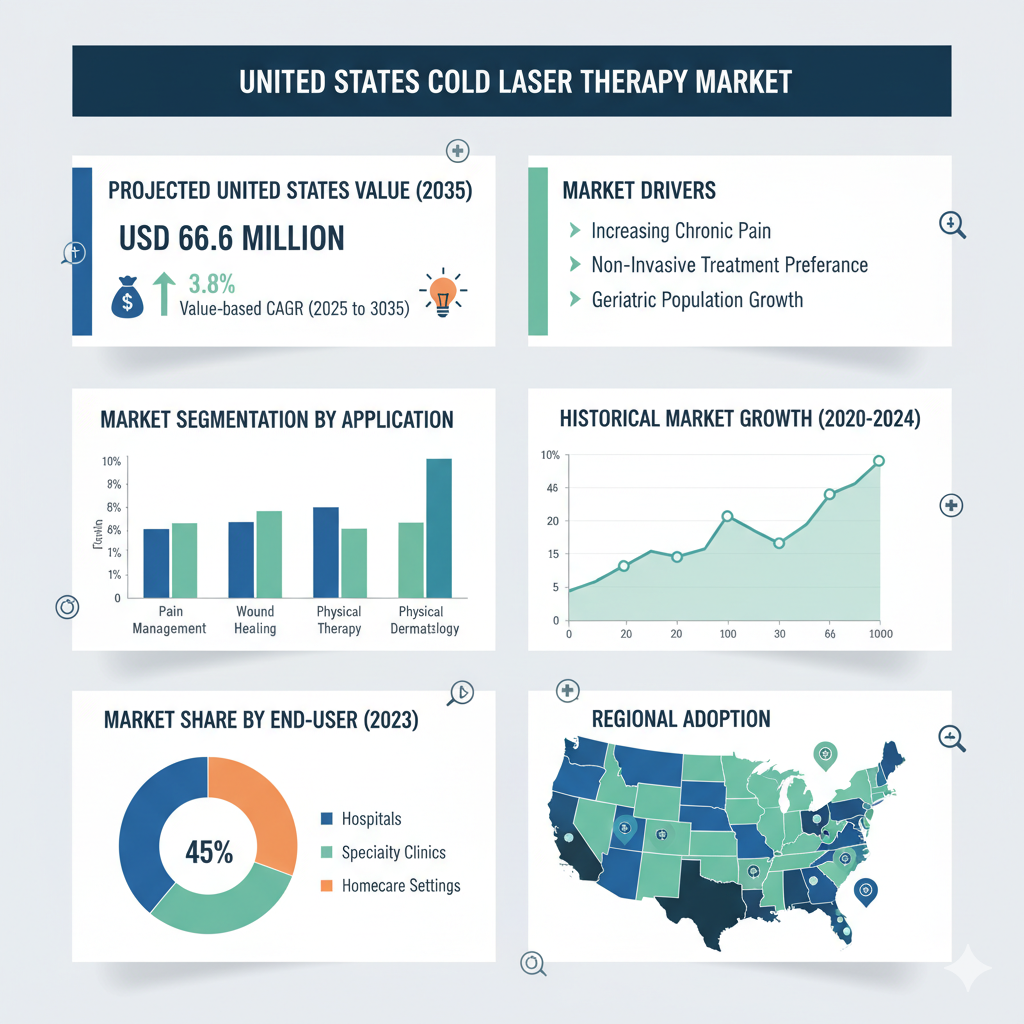
The United States cold laser therapy market is on a steady upward trajectory, projected to grow from approximately USD 45.7 million in 2025 to USD 66.6 million by 2035, at a CAGR of 3.8%. This consistent expansion presents a significant opportunity for both established industry leaders and emerging manufacturers who are eager to explore innovative technologies and strengthen their market presence.
Non-Invasive Therapies Gain Strong Momentum
As awareness grows around non-invasive, drug-free treatments, cold laser therapy—also known as low-level laser therapy—is emerging as a preferred option for pain management and rehabilitation. The therapy is being increasingly adopted for conditions such as musculoskeletal disorders, sports injuries, arthritis, and chronic pain.
With patients and healthcare professionals seeking effective alternatives to pharmaceuticals, cold laser devices are finding broader application in clinics, hospitals, physiotherapy centers, and even home-care environments. This rising acceptance is driving manufacturers to focus on developing more efficient, user-friendly, and affordable solutions.
Established Giants and Bold Innovators Share the Spotlight
The market currently features a strong lineup of leading manufacturers including Erchonia Corporation, DJO Global, Inc., BTL Industries, THOR Photomedicine Ltd, and BioLight Technologies LLC. These industry heavyweights are doubling down on research and development efforts, expanding product lines, and securing regulatory approvals for advanced therapeutic devices.
At the same time, emerging companies like Irradia AB, Omega Laser Systems, and Multi Radiance Medical are disrupting the space with innovative designs and cost-effective portable systems. Their agility and specialized focus allow them to compete effectively with larger players, particularly in niche markets and home-care applications.
This convergence of established and new players is creating a healthy competitive environment that encourages continuous improvement and technological progress.
Technology as the Core Growth Driver
Technology continues to be at the heart of market expansion. Manufacturers are rapidly integrating advancements such as multi-wavelength systems, wearable designs, and portable handheld devices. These innovations enhance therapeutic precision, convenience, and patient compliance, making cold laser therapy more accessible than ever.
Miniaturization, digital connectivity, and ergonomic design are becoming key differentiators. Devices equipped with app-based controls, smart monitoring, and adjustable laser intensities are expected to dominate the next generation of cold laser therapy systems.
For manufacturers, this shift means that investment in R&D and user-centered design is no longer optional—it’s essential to staying competitive.
Key Growth Segments for Expansion
The report identifies several high-potential segments within the U.S. cold laser therapy market:
- Product Type: Continuous laser devices continue to lead due to their precise and fast treatment capabilities.
- Technology: Multi-wavelength lasers are seeing strong adoption, enabling deeper tissue penetration and more versatile therapeutic benefits.
- Application Areas: Sports medicine, musculoskeletal pain, wound healing, and nerve regeneration are among the most promising use cases.
- End Users: Hospitals, specialty clinics, and home-care settings are all expected to experience sustained demand growth.
These segments present strategic entry points for companies looking to diversify their portfolios or introduce new solutions to the market.
What This Means for Manufacturers
- Innovation-Driven Expansion: Established players can leverage their brand strength and regulatory experience to develop next-generation technologies and expand into new therapeutic areas.
- Opportunities for New Entrants: Start-ups and smaller firms can target niche segments such as portable or home-care devices to establish a foothold without directly competing with industry giants.
- Regulatory Readiness: Compliance with FDA standards remains crucial. Companies that invest early in clinical validation and safety testing will gain a distinct advantage.
- Service-Oriented Differentiation: Beyond product design, manufacturers can stand out through connected services, training, and customer support to create complete care ecosystems.
- Collaborations and Partnerships: Joint ventures, technology licensing, and co-development projects will accelerate innovation and help players tap into untapped market potential.
Future Outlook
The U.S. cold laser therapy market’s journey toward a projected USD 66.6 million valuation by 2035 marks a period of transformation. Demand for personalized, non-pharmaceutical, and home-based treatments is opening new avenues for both established brands and visionary newcomers.
For legacy manufacturers, the time is ripe to expand their technology portfolios and cement leadership through strategic collaborations. For new players, the market offers fertile ground to innovate, specialize, and disrupt with fresh ideas and patient-focused solutions.
As the healthcare industry continues to embrace technology-enabled, non-invasive therapies, cold laser therapy stands out as a promising field where science, accessibility, and innovation meet.
About Future Market Insights
Future Market Insights, Inc. is a leading provider of global market intelligence and consulting services, helping clients uncover actionable insights, forecast trends, and seize growth opportunities across industries. The company’s detailed reports and strategic analyses empower organizations to make informed business decisions with confidence.