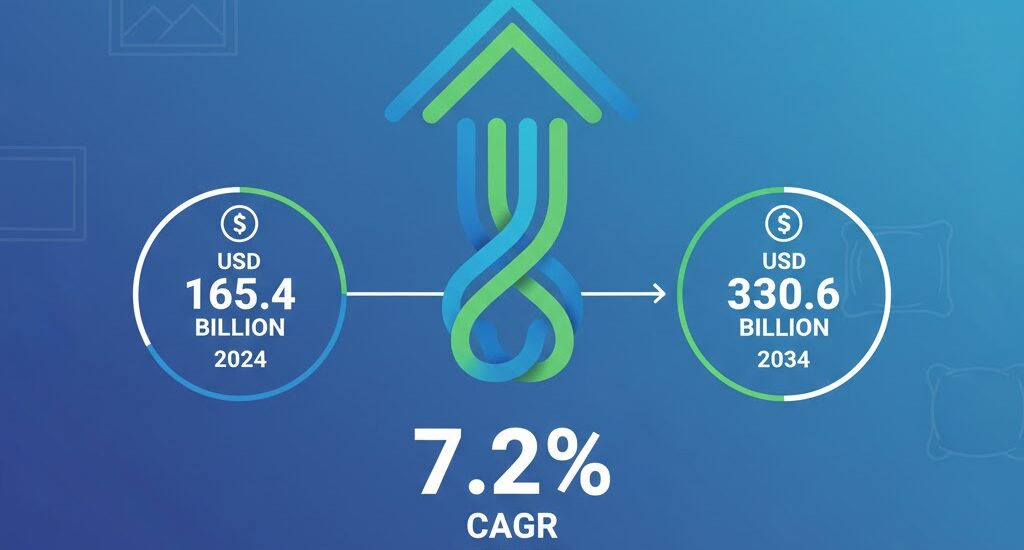
The global personalized home décor market is entering a new era of transformation, projected to soar from USD 165.4 billion in 2024 to an impressive USD 330.6 billion by 2034. Fueled by a growing demand for individuality, smart design, and sustainable materials, this sector is evolving rapidly — presenting unprecedented opportunities for manufacturers seeking growth, efficiency, and innovation in the next decade.
Manufacturers at the Forefront of a Personalization Revolution
Manufacturers are witnessing a profound shift in consumer behavior: homeowners now expect every element of their living space to mirror their personality. From bespoke furniture and customized wall décor to made-to-order textiles, personalization has become a decisive factor driving purchasing decisions.
The home furniture segment alone commands 37.4% of the market share, projected to grow at a CAGR of 4.7%. This segment’s evolution highlights a growing preference for modular, multifunctional, and eco-friendly furniture — a trend that rewards manufacturers capable of flexible, adaptive production models.
Customization tools, 3D modeling, and virtual design support have become central to production strategies, helping brands meet rising consumer expectations for space-optimized, sustainable living environments.
Technology and Sustainability: The New Manufacturing Imperatives
The convergence of technology and sustainability is redefining product development across the home décor sector. Manufacturers embracing 3D printing, augmented reality (AR), and data-driven customization are gaining a competitive edge by offering unique, tailor-made experiences.
In 2024, IKEA partnered with a leading tech firm to launch an AR-based design application that lets customers visualize their personalized furniture in real time — a milestone that showcases how digital innovation is revolutionizing manufacturing and customer engagement. Similarly, Wayfair introduced fully customizable textile products, giving consumers control over design, texture, and color.
At the same time, eco-conscious production is no longer optional — it’s essential. Consumers are increasingly choosing products made from natural or recycled materials such as bamboo, reclaimed wood, and linen. Manufacturers that incorporate sustainable materials and energy-efficient processes are not only reducing waste but also winning consumer trust and loyalty.
E-Commerce and Virtual Customization Accelerate Market Access
Online retailing has emerged as the dominant sales channel, accounting for over one-quarter of total sales in 2024 and projected to expand more than threefold by 2034. For manufacturers, this digital boom offers both challenge and opportunity: adapting to direct-to-consumer (DTC) models and leveraging e-commerce logistics can dramatically extend reach and improve margins.
Consumers now expect real-time customization capabilities through digital platforms, including AR previews and virtual room design. Manufacturers that integrate these experiences into their online stores not only simplify the buying process but also deepen emotional engagement with their brands.
The move toward data-driven personalization allows producers to anticipate consumer needs and refine designs before production, reducing costs and increasing satisfaction.
Emerging Trends Creating Long-Term Value
- Smart and Functional Décor
Modern consumers seek décor that blends beauty with utility. The integration of smart technology — such as adaptive lighting, furniture with built-in charging ports, and energy-efficient windows — is transforming the home environment into a connected ecosystem. Manufacturers able to merge form, function, and interactivity are well-positioned to capture this lucrative segment.
- Sustainable Manufacturing as Competitive Advantage
Eco-friendly production is now a core brand differentiator. From upcycled materials to biodegradable fabrics, sustainability not only meets regulatory standards but also taps into growing global awareness around environmental responsibility. Manufacturers who invest in green materials and transparent sourcing stand to lead the next generation of personalized home décor.
- Digital Tools Redefining Customer Experience
AR and virtual visualization tools empower consumers to see exactly how their chosen products fit their spaces, boosting confidence and conversion rates. Manufacturers who incorporate these technologies streamline the purchase journey and reduce return rates, directly impacting profitability.
Regional Growth Opportunities for Manufacturers
North America: Technology-Driven Customization
The United States will continue to lead, holding 62.5% of the North American market by 2034, thanks to digital manufacturing advancements and strong e-commerce ecosystems. Integration of AI-based design recommendations and virtual design platforms provides significant scalability opportunities for manufacturers.
Europe: Sustainability and Premium Design
Countries like the UK (CAGR 5.2%) and Spain (CAGR 6.0%) are driving growth through eco-conscious design and a strong appetite for locally made, customizable products. European manufacturers focusing on sustainable materials and craftsmanship will benefit from this demand surge.
Asia Pacific: Rapid Expansion and Urban Innovation
Markets such as India (CAGR 8.5%) and China (CAGR 7.0%) represent the fastest-growing regions. Rising disposable income and urbanization are fueling demand for compact, modular furniture solutions that blend affordability with personalization — opening a vast production opportunity for adaptive manufacturers.
Explore trends before investing — request a sample report today!:- https://www.futuremarketinsights.com/reports/sample/rep-gb-19931
Market Leaders Setting the Standard
Tier-1 companies such as IKEA, Wayfair Inc., Ashley Furniture Industries, Crate & Barrel, Pottery Barn, and RH collectively account for over 40% of industry sales. Their integrated supply chains, AR-driven platforms, and sustainable sourcing practices showcase the direction of the market.
Tier-2 and Tier-3 manufacturers, including La-Z-Boy, Herman Miller, Home Depot, Urban Ladder, and Pepperfry, continue to thrive by offering specialized customization and artisanal designs — demonstrating that flexibility and niche expertise can be powerful differentiators.
A Decade of Opportunity for Future-Focused Manufacturers
From 2024 to 2034, the personalized home décor industry will grow at a CAGR of 7.2%, doubling its market size and redefining how people shape their living environments. For manufacturers, this decade presents an unparalleled opportunity to innovate, personalize, and sustain — transforming design from a product into a deeply personal experience.
Those who embrace digital tools, sustainable materials, and customer-centric customization will not only thrive but also shape the homes — and lifestyles — of the future.
Click Here to Purchase the Report:- https://www.futuremarketinsights.com/checkout/19931
About Future Market Insights (FMI)
Future Market Insights, Inc. (ESOMAR certified, recipient of the Stevie Award, and a member of the Greater New York Chamber of Commerce) offers profound insights into the driving factors that are boosting demand in the market. FMI stands as the leading global provider of market intelligence, advisory services, consulting, and events for the Packaging, Food and Beverage, Consumer Technology, Healthcare, Industrial, and Chemicals markets. With a vast team of over 400 analystsworldwide, FMI provides global, regional, and local expertise on diverse domains and industry trends across more than 110 countries.
Contact Us:
Future Market Insights Inc.
Christiana Corporate, 200 Continental Drive,
Suite 401, Newark, Delaware – 19713, USA
T: +1-347-918-3531
For Sales Enquiries: sales@futuremarketinsights.com
Website: https://www.futuremarketinsights.com
LinkedIn| Twitter| Blogs | YouTube