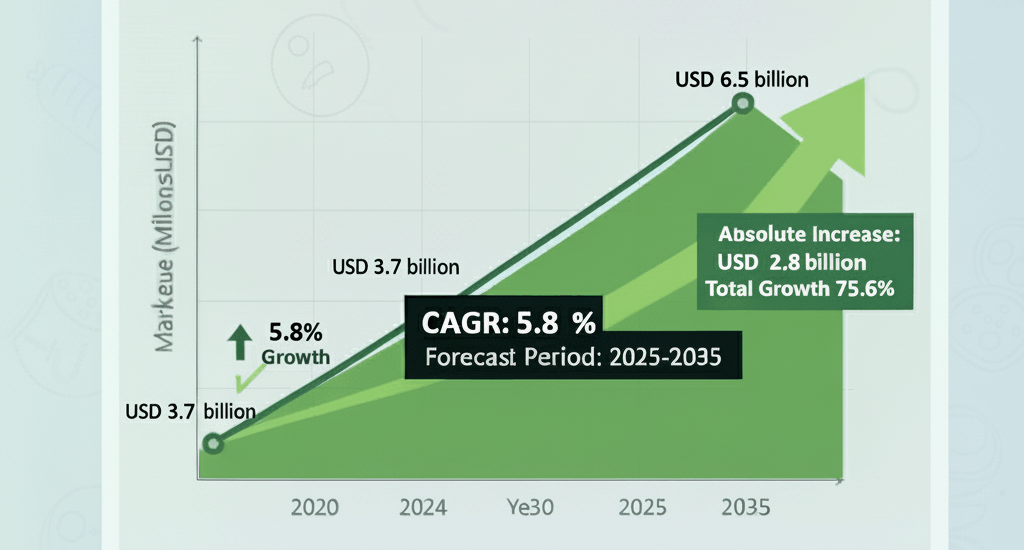
Future Market Insights (FMI), a premier provider of market intelligence and consulting services, today announced the publication of its in-depth report titled “Functional Cosmetic Ingredient Market Forecast 2025 to 2035.” The functi onal cosmetic ingredient market is slated to exhibit USD 3.7 billion in 2025. The industry is poised to capture 5.8% CAGR from 2025 to 2035 and register USD 6.5 billion by 2035.The report underscores the transformative role of functional ingredients—such as emollients, antioxidants, and peptides—in meeting evolving consumer demands for anti-aging, hydration, UV protection, and skin brightening solutions. As the beauty industry shifts toward science-backed, sustainable formulations, this growth signals significant opportunities for stakeholders to capitalize on trends like clean beauty and biotechnological advancements, ultimately reshaping global skincare and cosmetics landscapes.
Functional Cosmetic Ingredient Market Insights: Trends, Drivers, Challenges, Opportunities, and Competitive Landscape:
The functional cosmetic ingredient market is experiencing dynamic evolution, fueled by consumer preferences for multifunctional products that deliver tangible benefits. Key trends include the rise of multi-functional ingredients, such as tinted moisturizers with SPF and anti-aging properties, and the integration of biotechnology for enhanced efficacy, like microencapsulated retinol for controlled release and probiotic-infused skincare from brands like Gallinée. The clean beauty movement is another pivotal trend, with increasing adoption of plant-derived alternatives like bakuchiol (a natural retinol substitute) and algae extracts, aligning with demands for natural, eco-friendly, and sustainable sourcing.
Growth drivers are multifaceted, including heightened consumer awareness of skincare wellness, rising disposable incomes in emerging markets, and the proliferation of premium brands like The Ordinary and Drunk Elephant that emphasize science-driven formulations. The report highlights how urbanization and middle-class expansion in regions like Asia Pacific are boosting demand for high-performance products addressing pollution, climate stressors, and lifestyle-related skin issues.
However, challenges persist, such as raw material shortages due to climate change, supply chain disruptions, and geopolitical tensions affecting botanical extracts and peptides. Regulatory scrutiny from bodies like the FDA and EU Cosmetic Regulation poses risks of recalls or fines for non-compliance, while ingredient stability and quality control remain critical to maintaining consumer trust. Opportunities abound in personalized skincare, AI-driven ingredient development, and circular beauty initiatives promoting upcycled and carbon-neutral materials. The competitive landscape is dominated by a few major players holding significant shares, with the market fragmented among innovators focusing on sustainability and efficacy. This setup encourages strategic partnerships and R&D investments to differentiate offerings.
Functional Cosmetic Ingredient Market Update: Shifts and Emerging Dynamics:
From 2020 to 2024, the industry navigated pandemic-induced recovery, emphasizing basic hygiene and versatile products like hydrating and soothing formulations for mask-related skin issues. Sustainability gained traction with eco-friendly packaging and reduced synthetic ingredients, while bioactive peptides, plant-derived antioxidants, and microbiome-friendly actives emerged as staples. Regulations tightened, pushing a shift from synthetics to natural alternatives without compromising performance.
Looking ahead to 2025-2035, the report anticipates accelerated growth through premium, personalized formulations tailored to specific skin conditions. Green chemistry, biodegradable ingredients, and sustainable sourcing will dominate, driven by consumer demands for transparency and ethics. Biotechnologies, nanotechnologies, and AI customizations are set to proliferate, with a focus on lab-grown actives and DNA-based solutions. Smart delivery systems will enhance efficacy, and functional skincare will prioritize health over mere aesthetics. Regionally, North America and Europe led past growth due to high living standards, but emerging markets like India (7.7% CAGR) and Australia (6.7% CAGR) will drive future expansion amid urbanization and economic empowerment.
In a broader industry update, 2025 has seen intensified focus on sustainability and innovation. McKinsey’s “The State of Fashion: Beauty” report notes a global push toward eco-friendly practices, while U.S. trends emphasize science-driven longevity and holistic wellness. Ingredient transparency is paramount, with consumers scrutinizing labels for clean, non-toxic components.
Functional Cosmetic Ingredient Market Applications: Empowering Businesses Across the Value Chain:
The report’s insights offer actionable value for diverse stakeholders. Cosmetic brands and R&D teams can leverage data on efficacy, safety, and innovation priorities to develop high-performance products, such as anti-inflammatory serums or probiotic creams, ensuring compliance and market differentiation. Ingredient suppliers benefit from guidance on cost-efficient, sustainable sourcing, enabling them to meet regulatory pressures while optimizing supply chains for botanical extracts and biotech actives.
Retailers gain from trend analysis on market demand and affordability, informing inventory strategies for sellable, multifunctional items like hybrid makeup-skincare hybrids. Overall, businesses can use the forecast to mitigate risks like raw material volatility through diversified suppliers and third-party testing, while capitalizing on opportunities in segments like skincare (dominating applications) and moisturization (leading functions). This empowers strategic decision-making, from product launches to geographic expansions, fostering profitability in a consumer-centric market.
Functional Cosmetic Ingredient Key Players Shaping the Market:
The report profiles leading companies, revealing a concentrated yet competitive structure. BASF SE commands 18-22% market share with advanced active ingredients, UV filters, and sustainable emulsifiers. Dow follows at 14-18%, specializing in silicones and polymers for enhanced texture and stability. Croda International (12-16%) pioneers plant-based bioactives and microbiome-friendly solutions, supporting clean beauty. Evonik Industries AG (10-14%) excels in biotech-driven biodegradables, while Ashland Inc. (8-12%) focuses on botanical extracts and anti-aging compounds. Other key players, holding 25-35% combined, include Connect Chemicals, The Good Scents Company, Stepan Company, Gattefossé, Lucas Meyer Cosmetics, Nouryon, Symrise, and Givaudan Active Beauty, all innovating in ethical and high-efficacy formulations.
Full Market Report available for delivery. For purchase or customization, please request here: https://www.futuremarketinsights.com/checkout/18735
Request for Discount: https://www.futuremarketinsights.com/reports/sample/rep-gb-18735
Functional Cosmetic Ingredient Recent Developments in the Market:
2025 has brought notable advancements, aligning with the report’s projections. Succinic acid has emerged as a multi-functional ingredient, praised for its antimicrobial and exfoliating properties in active cosmetics, as highlighted in recent global tariff analyses by ResearchAndMarkets. The beauty ingestibles sector, a complementary area, surged to USD 4.2 billion in 2024, projected to reach USD 13.1 billion by 2034 at 11.9% CAGR, per InsightAce Analytic, reflecting demand for internal wellness solutions like collagen supplements.
Sustainability remains a cornerstone, with BTSA noting trends in transparent sourcing and innovative ingredients like upcycled botanicals. Siemens’ insights on cosmetic trends emphasize reduced waste and eco-friendly formulations, while Makeup in New York reports U.S. shifts toward ingredient innovation for long-term skin health. Archive Market Research estimates the functional ingredients market at USD 15 billion in 2025 with 6% CAGR, driven by vegan and natural emollients. These developments underscore the industry’s pivot to holistic, science-backed beauty, validating FMI’s forecast of robust growth through 2035.
Explore More Related Studies Published by FMI Research:
Tower Crane Market- https://www.futuremarketinsights.com/reports/tower-crane-market
Rescue Hoist System Market- https://www.futuremarketinsights.com/reports/rescue-hoist-systems-market
Sputtering Targets Market- https://www.futuremarketinsights.com/reports/sputtering-targets-market
About Future Market Insights (FMI)
Future Market Insights, Inc. (ESOMAR certified, recipient of the Stevie Award, and a member of the Greater New York Chamber of Commerce) offers profound insights into the driving factors that are boosting demand in the market. FMI stands as the leading global provider of market intelligence, advisory services, consulting, and events for the Packaging, Food and Beverage, Consumer Technology, Healthcare, Industrial, and Chemicals markets. With a vast team of over 400 analysts worldwide, FMI provides global, regional, and local expertise on diverse domains and industry trends across more than 110 countries.
Contact Us:
Future Market Insights Inc.
Christiana Corporate, 200 Continental Drive,
Suite 401, Newark, Delaware – 19713, USA
T: +1-347-918-3531
For Sales Enquiries: sales@futuremarketinsights.com
Website: https://www.futuremarketinsights.com
LinkedIn| Twitter| Blogs | YouTube