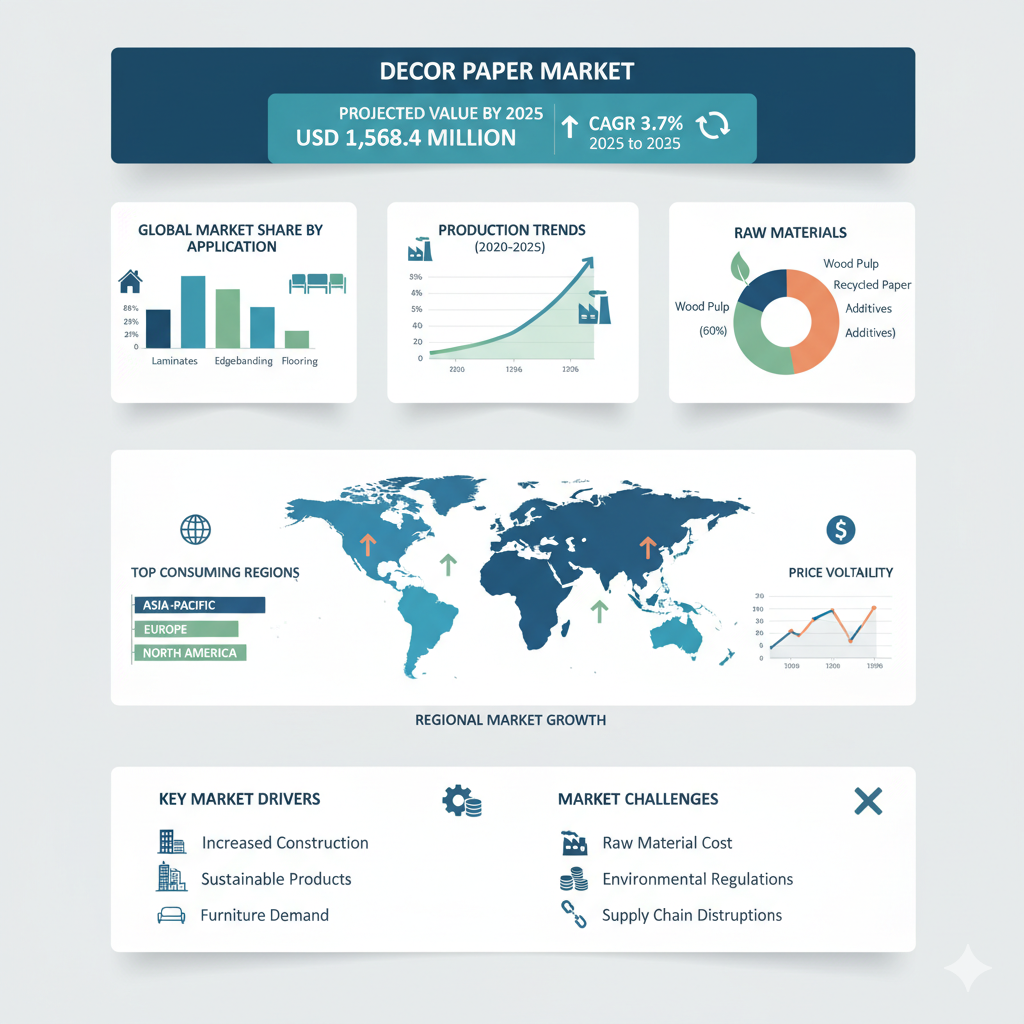
Driven by a surge in demand for aesthetic yet durable surface finishes, the global decor paper industry is entering an exciting new phase of growth. Both established manufacturers and ambitious new entrants are positioning themselves to capture opportunities in this evolving market, which is expected to surpass USD 1.56 billion by 2035, growing at a steady compound annual rate of 3.7 % between 2025 and 2035.
Long-standing industry leaders such as Schattdecor, Surteco Group, and Ahlstrom-Munksjö currently hold a major share of the market. These companies have built strong reputations through consistent quality, innovation, and large-scale operations. Their ongoing investments in digital printing technology, sustainable coatings, and vertically integrated value chains have helped them maintain a competitive edge in an increasingly dynamic environment.
However, the landscape is shifting rapidly. Mid-tier and emerging manufacturers are stepping up their presence, targeting niche markets and regional demands with creative, cost-efficient, and design-focused solutions. These agile players are using new technologies and flexible business models to compete effectively against long-established brands, signaling a healthy diversification of the industry.
Innovation and Technology: Shaping the Future
Technological innovation is now the cornerstone of the decor paper industry’s transformation. Advanced printing methods, next-generation impregnation techniques, and high-performance coatings are enhancing the functionality and longevity of decor papers used in furniture, flooring, and wall panels.
Equally significant is the industry’s commitment to sustainability. Manufacturers are increasingly adopting water-based inks, low-emission coatings, and recycled raw materials to meet the growing consumer demand for eco-friendly interiors. The shift toward sustainable production is not just an environmental imperative—it has also become a key market differentiator. Companies that successfully combine cutting-edge technology with green manufacturing processes are setting new benchmarks for the sector.
This wave of innovation creates opportunities for both seasoned producers and new entrants. Established players can leverage their R&D capabilities and global networks to scale up sustainable solutions, while newcomers can focus on design customization, faster turnaround times, and regional market responsiveness.
Expanding Horizons: Opportunities Beyond Mature Markets
While North America and Europe continue to be vital markets for decor paper, significant growth potential is emerging across Asia-Pacific, Latin America, and parts of Africa. Rapid urbanization, rising disposable incomes, and increasing awareness of interior design trends are driving demand in these regions.
Local manufacturers and new entrants are well-positioned to benefit by tailoring their offerings to regional preferences and price points. By setting up localized production facilities and partnering with furniture and laminate producers, these companies can meet the dual challenge of affordability and quality—critical factors in fast-growing economies.
Strategic Moves for Growth
For established manufacturers, the path forward involves reinforcing their sustainability credentials, accelerating digital-print adoption, and expanding into under-penetrated markets. These strategies not only align with global trends but also ensure resilience against fluctuating raw material costs and changing consumer preferences.
Emerging players, on the other hand, can focus on agility—delivering customized designs, leveraging modern printing technologies, and building regional supply networks that enable quick market access. Collaborating with furniture, flooring, and interior design companies can further strengthen their product appeal and open new revenue streams.
Key strategies shaping the next decade include:
- Investing in eco-friendly materials and production processes.
- Integrating advanced printing and coating technologies to enhance durability and design precision.
- Forming collaborations across the value chain to co-develop unique, sustainable solutions.
- Expanding footprints in high-growth regional markets.
Why It Matters
Decor paper—used in laminates, furniture surfaces, and flooring—has evolved from a basic aesthetic element to a vital material that combines visual appeal with technical performance. Today’s consumers demand designs that reflect their lifestyle while also offering resistance to wear, moisture, and fading. As a result, manufacturers are innovating rapidly to produce papers that deliver on both beauty and durability.
The transition from standard to high-performance decor paper represents a powerful shift in how the industry defines value. It creates new opportunities for technology providers, paper processors, and furniture manufacturers to collaborate in delivering the next generation of surface materials for modern interiors.
The Road Ahead
The future of the decor paper market looks vibrant and promising. With innovation, sustainability, and global expansion at its core, the industry is well-positioned for long-term success. Both legacy leaders and new entrants have ample room to thrive—provided they remain responsive to design trends, invest in cleaner technologies, and align with the growing consumer demand for environmentally responsible products.
As the industry moves forward, companies that balance production efficiency with creativity, sustainability, and market insight will lead the transformation of interior design materials worldwide. The coming decade is set to redefine not only how decor paper is made but also how it shapes the spaces we live and work in.