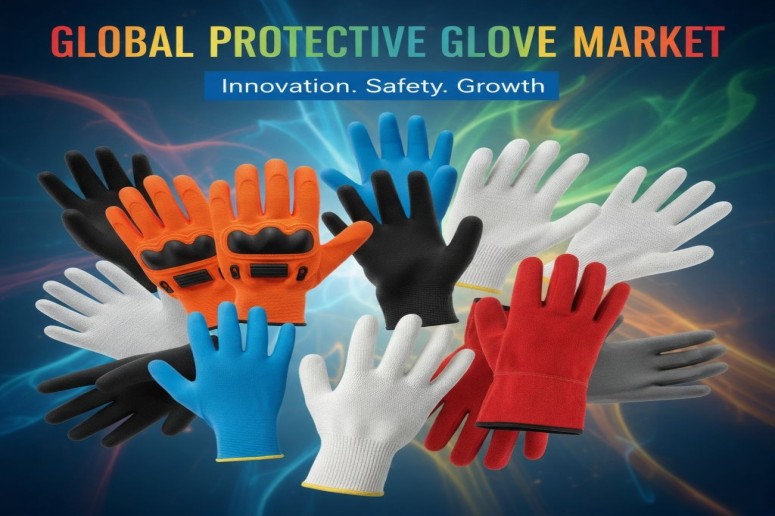
The global protective glove market is on a strong growth trajectory, supported by increasing awareness of occupational safety, stricter industrial hygiene standards, and rising demand across healthcare, manufacturing, and chemical sectors. According to the latest research report, “Protective Glove Market Size and Share Forecast Outlook From 2025 to 2035,” the market is valued at USD 22.6 billion in 2025 and is projected to reach USD 43.3 billion by 2035, growing at a CAGR of 6.7% during the forecast period.
The growing emphasis on worker safety in laboratories, food processing, and manufacturing facilities—along with heightened health consciousness following the COVID-19 pandemic—has strengthened the global glove supply chain. Both established manufacturers and new entrants are investing in advanced technologies, automation, and sustainable materials to meet the surging demand for protective gloves worldwide.
Grab This Report Now at Just $5,000 | Limited-Time Discount Offer!
https://www.futuremarketinsights.com/reports/sample/rep-gb-19021
Innovation and Safety Standards Fuel Market Momentum
The market’s steady expansion is largely attributed to evolving global safety regulations and the adoption of advanced glove materials offering enhanced durability, chemical resistance, and user comfort. From disposable examination gloves in hospitals to reusable heavy-duty gloves in construction, the industry is experiencing unprecedented diversification in product types and use cases.
Notably, technological advancements have redefined product performance. Enhanced synthetic formulations now allow gloves to combine flexibility with strength, ensuring superior grip and comfort without compromising protection. Automation in production has enabled faster manufacturing, improved consistency, and reduced material waste an important step as manufacturers respond to sustainability mandates.
Emerging economies across Asia-Pacific are accelerating production capacity, while developed regions such as North America and Europe continue to drive quality standards through regulatory frameworks. This dual-force dynamic positions the protective glove industry for long-term resilience and innovation.
Nitrile Gloves Continue to Dominate Global Demand
Among material categories, nitrile gloves command a leading market share of 45.4%, underpinned by their exceptional puncture resistance, hypoallergenic nature, and superior chemical compatibility. Their rise as a preferred alternative to latex reflects both safety and performance considerations, particularly in healthcare and industrial environments.
The growing global awareness of latex allergies has further accelerated the shift toward nitrile-based gloves. Manufacturers like Top Glove Corporation Berhad, Hartalega Holdings Berhad, and Kossan Rubber Industries Bhd are expanding their product portfolios with advanced nitrile technologies designed for flexibility, strength, and biodegradability aligning with the market’s sustainability goals.
As synthetic rubber innovations continue to enhance tactile sensitivity and comfort, nitrile gloves are expected to remain the cornerstone of protective glove manufacturing through 2035.
Key Catalysts Driving Market Expansion
Several growth enablers continue to shape the global protective glove landscape:
- Stringent workplace safety regulations and employer liability laws are prompting organizations to invest in high-quality protective gear.
- Increased hygiene awareness post-pandemic has reinforced glove use across food handling, pharmaceutical, and public health sectors.
- Economic expansion and industrialization in emerging markets like India, China, and Southeast Asia are spurring new production hubs.
- Technological progress in material science—including sustainable and biodegradable compounds—is transforming glove manufacturing.
Established manufacturers are expanding into new regions, while startups are leveraging niche innovations such as nanotechnology-based coatings, smart sensors, and antimicrobial materials to differentiate their offerings.
Challenges and Restraints
Despite its positive outlook, the market faces headwinds such as fluctuating raw material prices, compliance complexities, and environmental pressures. Latex and rubber price volatility directly affects production costs, while stringent safety standards necessitate ongoing investment in testing and certification.
Manufacturers are also addressing sustainability challenges through recycling initiatives and eco-friendly production methods. Failing to adapt to these evolving environmental expectations could risk both reputation and market share.
Reusable Gloves Gain Traction for Sustainability and Cost Efficiency
While disposable gloves dominate in volume, reusable protective gloves are emerging as a sustainable alternative for industrial users. Businesses are turning to reusable solutions that combine long service life with reduced waste generation.
Reusable gloves—particularly those made of nitrile—are increasingly adopted in sectors prioritizing durability, cost savings, and eco-friendly operations. Their long lifespan lowers maintenance expenses and replacement frequency, aligning with corporate sustainability objectives.
Industry Concentration and Strategic Developments
Leading market participants Ansell Limited, Honeywell International Inc., 3M Company, Kimberly-Clark Corporation, and Lakeland Industries, Inc. continue to drive innovation, safety compliance, and global reach.
- GIIB Holdings Bhd announced its first glove production facility in Nilai in 2025, boasting a 1.05-billion-unit annual capacity.
- Kimberly-Clark Professional launched Kimtech Opal Nitrile Gloves, integrating Low Derma Technology to reduce skin irritation and enhance user comfort.
- Ansell Limited expanded its Life Sciences division through the acquisition of Primus Gloves and Sanrea Healthcare Products in India.
- Honeywell, in collaboration with Premier Inc., is ramping up U.S. nitrile glove production to supply 750 million units annually, supporting domestic healthcare security.
Checkout Now to Access Market Forecasts:
https://www.futuremarketinsights.com/checkout/19021
Top Segments Studied in the Protective Glove Market
By Material:
- Nitrile
- Latex
- Neoprene
- Leather
- Vinyl
- Others
By Type:
- Reusable
- Disposable
By Application:
- Chemical
- Mechanical
- Biological
- Thermal
- Others
By End-use Industry:
- Healthcare
- Manufacturing
- Food & Beverage
- Oil & Gas
- Construction
- Transportation
- Others
By Region:
- North America
- Latin America
- Europe
- Middle East and Africa
- East Asia
- South Asia
- Oceania
About Future Market Insights (FMI)
Future Market Insights, Inc. (ESOMAR certified, recipient of the Stevie Award, and a member of the Greater New York Chamber of Commerce) offers profound insights into the driving factors that are boosting demand in the market. FMI stands as the leading global provider of market intelligence, advisory services, consulting, and events for the Packaging, Food and Beverage, Consumer Technology, Healthcare, Industrial, and Chemicals markets. With a vast team of over 400 analysts worldwide, FMI provides global, regional, and local expertise on diverse domains and industry trends across more than 110 countries.
Contact Us:
Future Market Insights Inc.
Christiana Corporate, 200 Continental Drive,
Suite 401, Newark, Delaware – 19713, USA
T: +1-347-918-3531
For Sales Enquiries: sales@futuremarketinsights.com
Website: https://www.futuremarketinsights.com
LinkedIn| Twitter| Blogs | YouTube