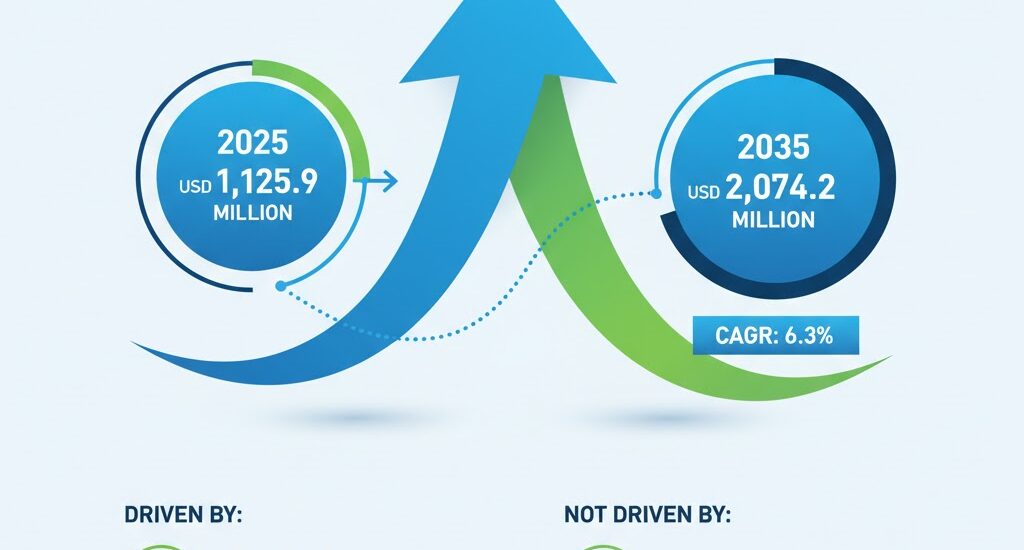
The global pectin market, valued at USD 1,125.9 million in 2025, is projected to surge to USD 2,074.2 million by 2035, expanding at a CAGR of 6.3%. Unlike previous decades, this growth is propelled not by broad consumer fads but by technological breakthroughs and targeted industrial advancements.
Leading innovators like CP Kelco and Herbstreith & Fox are spearheading this transformation. CP Kelco’s enzymatic extraction technology, highlighted in Food Engineering Magazine (2024), has boosted yield by 15% while cutting processing waste. Meanwhile, Herbstreith & Fox’s high-methoxyl pectin variant enables low-sugar jam formulations that comply with evolving health regulations.
Dr. Michael Becker, CEO of Herbstreith & Fox, stated in FoodNavigator (2024):
“Our focus on tailored pectin solutions directly addresses evolving industry needs for clean-label and sugar-reduced products.”
These advancements are enabling manufacturers to achieve regulatory compliance, reduce production waste, and create value-added formulations that resonate with both industry and consumers.
Pharmaceutical Breakthroughs: Pectin in Controlled Drug Delivery
Beyond food applications, pectin is redefining pharmaceutical innovation. A 2023 study in the International Journal of Biological Macromolecules reported that novel pectin hydrogels improved drug bioavailability by 30%. This advancement has prompted strategic collaborations between pectin suppliers and pharmaceutical companies to develop next-generation delivery systems set for commercialization by 2026.
This cross-industry integration signals a major opportunity for manufacturers to diversify applications, tapping into the expanding functional and nutraceutical markets that rely on natural, biocompatible materials.
Asia Pacific Leads with Circular Economy Initiatives
In regional dynamics, Asia Pacific is emerging as a powerhouse in the pectin supply chain. China and India’s citrus processing industries are driving large-scale pectin production through waste valorization projects that transform peel by-products into valuable feedstock.
Indonesia’s government-backed circular economy program, launched in 2023 and supported by the Asian Development Bank, incentivizes agro-industries to adopt sustainable extraction processes. This initiative not only enhances raw material availability but also strengthens supply resilience amid climate and crop challenges.
As sustainability becomes a non-negotiable manufacturing standard, eco-efficient sourcing is expected to play a defining role in maintaining competitive advantage across the sector.
Managing Price Volatility Through Biotechnology
Raw material price volatility remains a central challenge for manufacturers. Seasonal variations and climatic disruptions affect the consistency of citrus crops, creating uncertainty in supply chains. To combat this, companies are investing in biotechnological solutions—notably, the development of microbial pectin analogs projected to enter commercial production by 2030 (Food Chemistry, 2024).
These advancements hold the potential to stabilize supply and lower dependency on crop yields, presenting manufacturers with an opportunity to future-proof their operations while exploring alternative, sustainable production models.
Value-Based Pricing Enhances Profitability and Market Reach
In response to growing functional differentiation within the market, value-based pricing models are becoming the norm. Manufacturers now align pricing with performance, ensuring that premium formulations—particularly those targeting clean-label and pharmaceutical applications—command justified margins.
A Food Ingredients First (2024) analysis highlights that tiered pricing structures are enabling companies to maintain profitability while penetrating diverse market segments. This balanced approach fosters both innovation investment and competitive access for customers seeking standard-grade solutions.
Citrus Pectin: Sustainability Anchored in Waste-to-Value Practices
Citrus fruits account for 28% of global pectin sourcing in 2025. Major producers in the United States, Brazil, and Spain are ensuring consistent, high-quality supplies by leveraging citrus peels—juice industry by-products—as feedstock.
This sustainable model not only minimizes environmental waste but also reinforces circular economy principles, appealing to eco-conscious brands and consumers. Manufacturers adopting such practices are aligning with global ESG goals, strengthening brand credibility in increasingly regulated markets.
Semi-Annual Demand Trends Indicate Accelerating Momentum
Pectin demand patterns show steady acceleration, with CAGR rising from 6.4% in H1 2025 to 7.0% in H2 2025, reflecting a robust recovery and expanding industrial adoption. This momentum underscores manufacturers’ growing reliance on natural, multifunctional ingredients as a cornerstone of product innovation.
Buy Now & Save: Premium Market Report at $3,500 | Discount Details Inside :- https://www.futuremarketinsights.com/reports/sample/rep-gb-3041
Health, Functionality, and the Rise of Plant-Based Applications
Three key trends are shaping future demand:
- Reduced-Sugar Solutions: Pectin’s ability to replicate texture and mouthfeel without added sugar supports compliance with global nutrition guidelines.
- Natural Preservation: Its gelling properties enable clean-label shelf-life extension, minimizing the need for artificial preservatives.
- Plant-Based Expansion: As plant-based diets rise, pectin’s fruit-derived origin makes it an essential stabilizer, thickener, and gelling agent in dairy alternatives and vegan foods.
Together, these shifts are empowering manufacturers to capture new growth avenues while meeting evolving consumer expectations.
Market Landscape and Competitive Outlook
The market remains moderately concentrated, with Tier 1 players—CP Kelco, DuPont, Cargill, and Tate & Lyle—holding 40–50% share. These leaders leverage advanced R&D and global networks to maintain dominance. Tier 2 and Tier 3 players, including Ingredion, Naturex, and Lucid Colloids, are carving regional niches through specialized formulations and sustainability-driven practices.
As competition intensifies, collaboration between manufacturers, research bodies, and food producers is emerging as a strategic imperative to unlock next-generation applications.
Click Here to Purchase the Report:- https://www.futuremarketinsights.com/checkout/3041
Regulatory and Regional Growth Opportunities
In the United States, FDA recognition of pectin’s dietary fiber benefits supports its use in functional foods. Germany’s innovation-driven market is leveraging pectin for health-focused beverages and supplements. Meanwhile, India’s clean-label movement is rapidly expanding pectin adoption across jams, jellies, and dairy alternatives.
About Future Market Insights (FMI)
Future Market Insights, Inc. (ESOMAR certified, recipient of the Stevie Award, and a member of the Greater New York Chamber of Commerce) offers profound insights into the driving factors that are boosting demand in the market. FMI stands as the leading global provider of market intelligence, advisory services, consulting, and events for the Packaging, Food and Beverage, Consumer Technology, Healthcare, Industrial, and Chemicals markets. With a vast team of over 400 analysts worldwide, FMI provides global, regional, and local expertise on diverse domains and industry trends across more than 110 countries.
Contact Us:
Future Market Insights Inc.
Christiana Corporate, 200 Continental Drive,
Suite 401, Newark, Delaware – 19713, USA
T: +1-347-918-3531
For Sales Enquiries: sales@futuremarketinsights.com
Website: https://www.futuremarketinsights.com
LinkedIn| Twitter| Blogs | YouTube