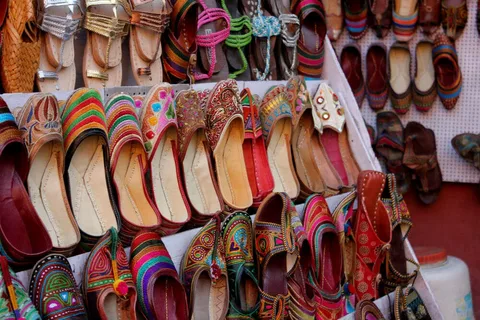
The Indian women’s luxury footwear market is projected to surpass a market valuation of USD 1,456.3 million in 2025 and is expected to reach USD 2,812.4 million by 2035, growing at a robust CAGR of 6.9% between 2025 and 2035. In 2024, the market valuation stood at USD 1,362.5 million, reflecting year-over-year (Y-o-Y) growth of 6.9% in 2025.
The Indian women’s luxury footwear market is poised for remarkable growth over the next decade, driven by rising affluence, shifting lifestyle preferences, and the fusion of fashion and technology. The market is projected to surpass a valuation of USD 1,456.3 million in 2025 and soar to USD 2,812.4 million by 2035, expanding at a compound annual growth rate (CAGR) of 6.9% from 2025 to 2035. In 2024, the industry stood at USD 1,362.5 million, marking a 6.9% year-over-year growth as Indian consumers continued to embrace high-end footwear as both a fashion statement and a lifestyle choice.
The market’s strong growth momentum is a testament to the evolving tastes of Indian women, who are increasingly combining sophistication with sustainability. While heels and pumps remain synonymous with luxury, demand for casual, comfortable, and athleisure-inspired designs is steadily rising, reflecting the modern woman’s versatile lifestyle.
Luxury Footwear in India: A Decade of Dynamic Growth
From 2024 to 2034, the women’s luxury footwear market in India is expected to grow at an annual rate of 7.0% in the first half (H1) and 6.8% in the second half (H2). This trend continues into the next decade, with 7.1% CAGR in H1 (2025–2035) and 6.9% CAGR in H2 (2025–2035). The consistent rise indicates a stable demand for premium footwear, underpinned by innovation in materials, digital retail strategies, and consumer engagement.
Between 2020 and 2024, the market witnessed a CAGR of 5.9%, increasing from USD 1,083.2 million to USD 1,362.5 million. This growth phase was largely influenced by India’s growing exposure to international fashion, the rise of luxury e-commerce, and an aspirational middle class that seeks quality and exclusivity. Looking forward, a new phase of expansion is expected as sustainability, influencer-led marketing, and regional market penetration redefine luxury consumption across India.
Key Trends Driving Growth in India’s Luxury Footwear Segment
- Sustainable Luxury Gains Ground
Sustainability is no longer a niche concept — it’s the new norm. Indian consumers, particularly younger demographics, are consciously seeking eco-friendly and ethically produced luxury footwear.
International giants like Gucci and Prada have introduced vegan and recycled-material collections, while Indian brands such as Metro Shoes and Mochi are following suit with locally produced, sustainable lines.
These initiatives not only align with global sustainability goals but also resonate with India’s environmentally aware audience, setting the tone for a greener luxury future.
- The Rise of Digital Platforms and Virtual Retail
India’s booming e-commerce landscape continues to revolutionize how women shop for luxury products. With enhanced mobile accessibility and faster delivery networks, high-end footwear brands are expanding their reach beyond metros into Tier-2 and Tier-3 cities, where aspirational consumers are emerging as new growth drivers.
Brands are investing in AI-powered personalization tools, virtual try-on technologies, and immersive online experiences to recreate the exclusivity of in-store luxury shopping.
Platforms like Tata CLiQ Luxury and Ajio Luxe have become key enablers, while independent labels are using Instagram storefronts and influencer marketing to connect directly with consumers.
- Casual Comfort Meets Luxury
The global comfort trend is making its mark on Indian wardrobes. While heels and pumps continue to dominate, sneakers, sandals, and flats are gaining strong momentum.
Luxury brands are redefining what it means to be stylish by offering comfort-focused elegance — think cushioned soles, minimalist aesthetics, and versatile designs that transition effortlessly from office to leisure.
This blend of comfort and luxury has attracted a younger customer base, particularly urban professionals and students who view footwear as an extension of self-expression.
- Counterfeiting and Price Sensitivity Remain Challenges
Despite impressive growth, the luxury footwear segment continues to battle counterfeit markets and price sensitivity. High import duties and premium pricing limit access for middle-income groups.
To bridge this gap, many brands are introducing “affordable luxury” collections — offering genuine craftsmanship and brand prestige at more approachable price points.
At the same time, stricter government regulations and digital authentication technologies are being adopted to combat counterfeit products.
Category and Channel Insights: Where Luxury Meets Lifestyle
By Product Type
| Product Type | Value Share (2035) |
| Heels & Pumps | 34.5% |
Heels and pumps remain the backbone of the luxury footwear market, associated with elegance and formal occasions. Meanwhile, boots see seasonal demand, particularly in northern India’s winter months, while sandals and flats dominate during summer.
Sneakers and casual footwear are witnessing exponential growth as brands merge fashion with function to cater to a dynamic, on-the-go consumer base.
By Sales Channel
| Sales Channel | Value Share (2035) |
| Department Stores | 29.5% |
Department stores continue to play a pivotal role, offering consumers the convenience of exploring multiple high-end brands under one roof. Specialty and mono-brand stores cater to customers seeking personalized service and exclusive collections.
Meanwhile, online sales channels are expanding rapidly, supported by influencer campaigns, virtual showcases, and digital styling sessions. Off-price stores are also finding success among value-conscious buyers who seek luxury at reduced prices.
Competitive Landscape: Established Icons and Emerging Innovators
The Indian women’s luxury footwear landscape is a blend of global prestige and local creativity.
Luxury fashion houses such as Jimmy Choo, Christian Louboutin, Gucci, Prada, and Louis Vuitton dominate the high-end segment with their timeless craftsmanship and aspirational appeal.
On the domestic front, Metro Shoes and Mochi are stepping up their game by launching premium and sustainable collections, expanding their retail footprint, and collaborating with homegrown designers to capture India’s unique cultural flair.
Emerging boutique brands and digital-first startups are also making waves, emphasizing custom designs, handcrafted luxury, and eco-friendly materials. These newer entrants are leveraging India’s rich artisanal heritage and combining it with global aesthetics to create a new definition of “Made in India” luxury.
Recent Developments in India’s Luxury Footwear Space
- January 2024: Indian luxury brands launched eco-conscious footwear lines using vegan leather and recycled fabrics, promoted heavily across premium retail chains.
- April 2024: Online sales spiked as influencer collaborations and limited-time discount campaigns boosted engagement during festive seasons.
- July 2024: Lightweight sandals and flats saw record sales amid India’s sweltering summer, with brands emphasizing comfort and elegance.
- October 2024: Winter collections of designer boots launched through partnerships between Indian boutiques and European luxury houses.
The Road Ahead: Luxury for the New Indian Woman
India’s women’s luxury footwear market is no longer defined solely by global names — it is being reshaped by local creativity, digital transformation, and sustainable innovation. The coming decade will see deeper brand collaborations, more inclusive pricing, and stronger consumer engagement across cities and social segments.
As established icons expand their presence and new entrants experiment with bold, tech-driven ideas, the Indian luxury footwear market stands on the cusp of a stylish revolution — one that celebrates both craftsmanship and consciousness, empowering every woman to walk confidently in her own fashion story.
Request Your Sample Report Today and discover growth opportunities!
https://www.futuremarketinsights.com/reports/sample/rep-gb-20053
Checkout Now to Access Industry Insights:
https://www.futuremarketinsights.com/checkout/20053
About Future Market Insights (FMI)
Future Market Insights, Inc. (ESOMAR certified, recipient of the Stevie Award, and a member of the Greater New York Chamber of Commerce) offers profound insights into the driving factors that are boosting demand in the market. FMI stands as the leading global provider of market intelligence, advisory services, consulting, and events for the Packaging, Food and Beverage, Consumer Technology, Healthcare, Industrial, and Chemicals markets. With a vast team of 400 analysts worldwide, FMI provides global, regional, and local expertise on diverse domains and industry trends across more than 110 countries.
Contact Us:
Future Market Insights Inc.
Christiana Corporate, 200 Continental Drive,
Suite 401, Newark, Delaware – 19713, USA
T: +1-845-579-5705
For Sales Enquiries: sales@futuremarketinsights.com
Website: https://www.futuremarketinsights.com
LinkedIn| Twitter| Blogs | YouTube