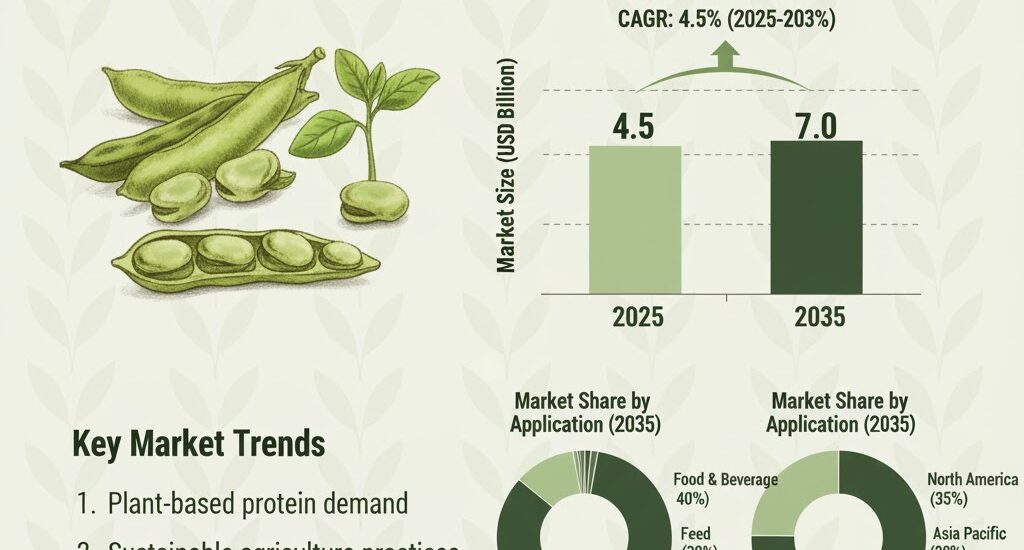
The global Fava Beans Market is on a steady path of expansion, anticipated to rise from USD 4.5 billion in 2025 to an impressive USD 7.0 billion by 2035, registering a 4.5% CAGR during the forecast period. This growth reflects the global surge in health awareness, plant-based diets, and demand for sustainable protein alternatives.
Fava beans, also known as broad beans, are among the oldest cultivated legumes and have maintained their popularity across Mediterranean, Middle Eastern, and Asian cuisines. Their distinctive nutty flavor, creamy texture, and rich nutritional profile are turning them into a staple ingredient for health-conscious consumers around the world. As plant-forward diets dominate food innovation, both established producers and new entrants in the market are investing in improved cultivation, sustainable sourcing, and value-added product development.
Health and Sustainability: The Core Growth Drivers
Fava beans’ nutritional density is one of the market’s strongest growth factors. They are high in protein and dietary fiber, low in fat, and packed with folate, iron, and magnesium—nutrients essential for energy, immunity, and cardiovascular health. As a natural and cost-effective plant-based protein source, fava beans are increasingly replacing animal proteins in functional foods and meal replacements.
With consumers embracing clean-label and plant-based lifestyles, fava beans’ versatility in foods such as soups, dips, salads, and snacks is boosting demand across food sectors. Moreover, growing research on fava beans’ cholesterol-lowering and gut-health benefits has made them a favorite ingredient for wellness brands aiming to cater to vegan, vegetarian, and flexitarian diets.
Shifting Consumer Preferences Encourage Market Expansion
Modern dietary patterns reflect a global shift toward sustainable eating, with plant proteins gaining traction as ethical and environmentally responsible alternatives. Millennials and Gen Z consumers are particularly drawn to legume-based foods like fava beans that support both wellness and eco-conscious living.
Manufacturers such as Prairie Fava Ltd., Unigrain Pty Ltd, and Cargill Incorporated are responding to this shift by diversifying their offerings into fava bean flour, protein concentrates, and ready-to-eat plant-based snacks. These innovations are helping brands meet the needs of consumers who demand nutrient-rich, convenient, and flavorful options.
Market Constraints: Awareness and Availability Challenges
Despite the positive momentum, certain factors restrain the fava beans market’s full potential. Limited consumer awareness—particularly in Western countries—continues to hinder demand. Many consumers are unfamiliar with how to prepare fava beans, often opting for more mainstream legumes like lentils or chickpeas.
Additionally, seasonal availability restricts supply stability. Fava beans are primarily harvested in the spring and early summer, leading to price fluctuations in the off-season. However, innovations such as frozen and canned fava beans are helping stabilize year-round availability, while import diversification is improving access across regions.
Emerging Trends Reshaping the Market
A number of dynamic trends are redefining how fava beans are produced and consumed:
- Rise of Organic Cultivation: The shift toward organic farming is encouraging chemical-free fava bean production, aligning with global sustainability goals.
- Culinary Globalization: Mediterranean and Middle Eastern cuisines featuring fava beans—such as falafel, ful medames, and hummus variations—are gaining popularity in Western markets.
- Innovative Product Lines: From fava bean-based pasta, protein bars, and flour to roasted fava bean snacks, food producers are leveraging the bean’s versatility to attract health-conscious and time-pressed consumers.
These factors are paving the way for both emerging players and established manufacturers to expand market share through innovation, quality assurance, and sustainable sourcing.
Segment Insights: Product, Application, and Form
By product type, fava beans dominate with a 65% market share in 2025, thanks to their high nutritional value and wide culinary use. Their creamy texture and nutty flavor have made them a sought-after ingredient in premium health foods and vegan meals.
In terms of application, the food and beverage sector leads with a projected 58% share in 2025. Fava beans’ role in soups, spreads, and salads, along with their adaptability to both gourmet and everyday dishes, makes them indispensable to modern kitchens and restaurant menus.
By form, the dried fava bean segment accounts for 54% of the market, favored for its long shelf life, affordability, and versatility. As consumers seek convenient and nutritious pantry staples, dried fava beans continue to gain traction in retail and foodservice channels.
Access Expert Analysis & Forecasts – Buy Now Before Prices Rise! https://www.futuremarketinsights.com/checkout/20433
Explore trends before investing — request a sample report today! https://www.futuremarketinsights.com/reports/sample/rep-gb-20433
Geographical Insights: Asia and Europe Lead the Growth Curve
Japan is projected to be the fastest-growing market, expanding at a 6.0% CAGR by 2035. Japanese consumers’ focus on balanced nutrition and sustainable food choices is accelerating the adoption of legumes in everyday diets.
China, expected to grow at a 5.1% CAGR, is seeing increased demand driven by urbanization, dietary diversification, and the rising popularity of traditional recipes featuring fava beans. Similarly, India’s market, growing at 4.9% CAGR, benefits from the population’s shift toward plant-based proteins and integration of fava beans into Indian culinary traditions.
In Germany, fava beans are gaining favor among consumers who prioritize sustainability and healthy eating, while in the United States (CAGR 4.1%), food bloggers and social media influencers are boosting awareness through innovative recipes and plant-forward meal ideas.
Competitive Landscape and Strategic Developments
The fava beans industry is moderately fragmented, characterized by a mix of global agribusiness giants and regional innovators. Leading companies such as ADM, Cargill, Bunge Limited, and Alberta Pulse Growers Commission are focusing on expanding their product lines, enhancing processing technologies, and optimizing global distribution networks.
Emerging companies like Prairie Fava Ltd., Unigrain Pty Ltd., and Aviip Group are carving out niches through sustainable farming practices and localized supply chains. Meanwhile, new entrants are leveraging digital marketing, e-commerce platforms, and strategic partnerships to connect directly with health-conscious consumers.
Market participants are also investing in research and development to improve fava bean yield, texture, and protein extraction for use in alternative meat and dairy formulations. Collaboration with food technology firms and farmers ensures consistent quality and supports the industry’s sustainable growth goals.
About Future Market Insights (FMI)
Future Market Insights, Inc. (ESOMAR certified, recipient of the Stevie Award, and a member of the Greater New York Chamber of Commerce) offers profound insights into the driving factors that are boosting demand in the market. FMI stands as the leading global provider of market intelligence, advisory services, consulting, and events for the Packaging, Food and Beverage, Consumer Technology, Healthcare, Industrial, and Chemicals markets. With a vast team of over 400 analysts worldwide, FMI provides global, regional, and local expertise on diverse domains and industry trends across more than 110 countries.
Contact Us:
Future Market Insights Inc.
Christiana Corporate, 200 Continental Drive,
Suite 401, Newark, Delaware – 19713, USA
T: +1-347-918-3531
For Sales Enquiries: sales@futuremarketinsights.com
Website: https://www.futuremarketinsights.com
LinkedIn| Twitter| Blogs | YouTube