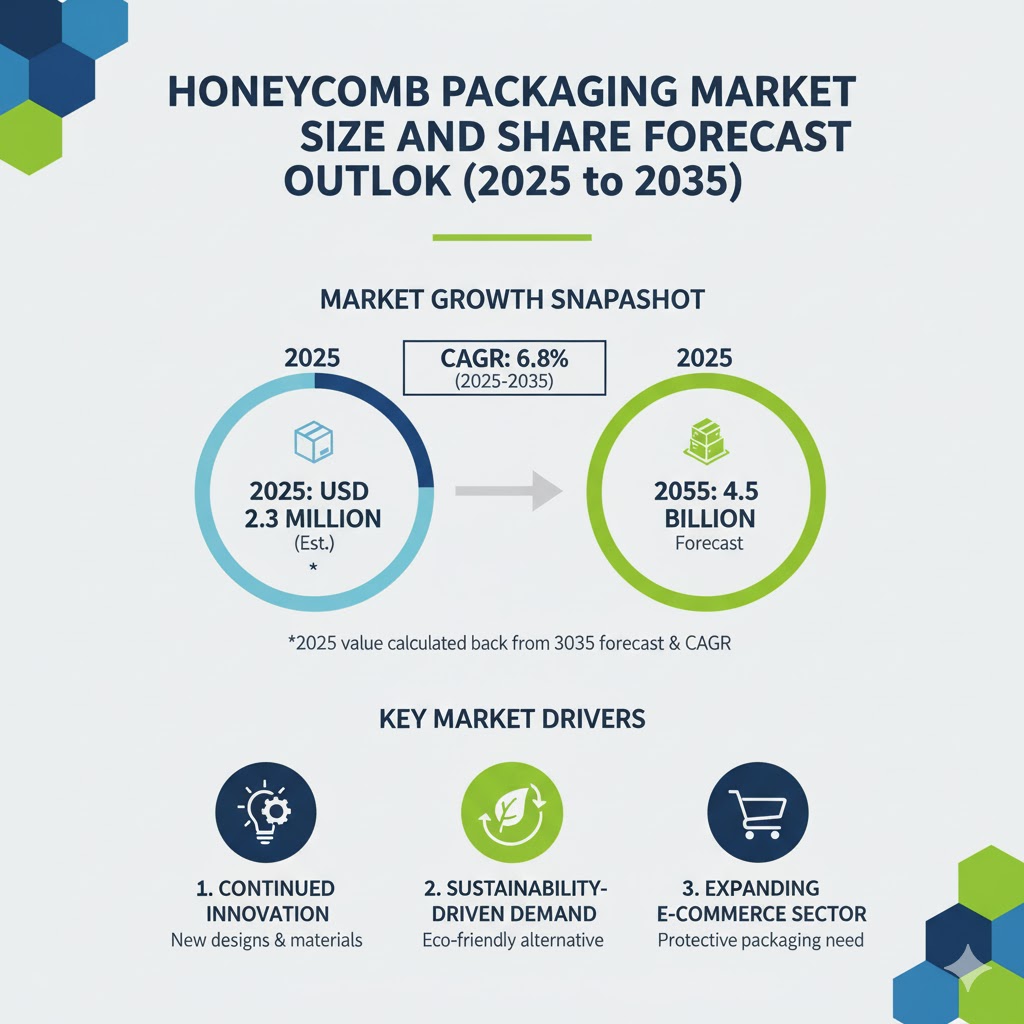
 The global honeycomb packaging market share analysis is gaining momentum as industries shift toward eco-friendly, durable, and lightweight packaging solutions. With the market projected to reach USD 4.5 billion by 2035, growing at a CAGR of 6.8% between 2025 and 2035, both established leaders and new entrants are striving to redefine packaging standards in line with global sustainability goals.
Growing Emphasis on Sustainable and Cost-Effective Packaging
The surge in demand for sustainable materials has become a defining factor shaping the honeycomb packaging industry. Market giants such as DS Smith, Smurfit Kappa, and the Packaging Corporation of America (PCA) are leading the way, leveraging advanced material science and innovative production methods to reduce environmental footprints and enhance durability.
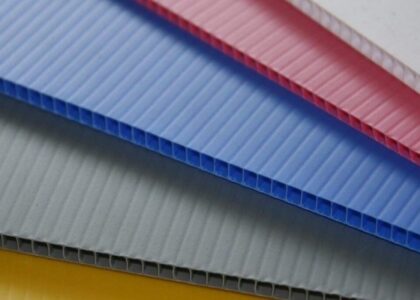
Honeycomb packaging, known for its high strength-to-weight ratio, offers superior cushioning while minimizing material usage—making it an ideal solution across e-commerce, automotive, and consumer goods sectors.
With the rapid growth of e-commerce, the need for lightweight, cost-efficient, and customizable packaging has skyrocketed. Online retailers increasingly prefer honeycomb packaging due to its balance of protection, flexibility, and sustainability, offering a competitive edge in shipping efficiency and product safety.
Key Growth Drivers in the Honeycomb Packaging Market
- Sustainability Push – Governments and corporations worldwide are transitioning to eco-friendly packaging to meet carbon reduction targets.
- E-Commerce Expansion – The explosive growth of online retailing requires lightweight yet durable packaging.
- Cost-Effectiveness – Honeycomb packaging’s ability to cut shipping and material costs makes it a preferred choice for logistics-driven sectors.
Additionally, the material’s durability, impact resistance, and customization potential continue to enhance its adoption across diverse applications—from protective packaging for fragile electronics to industrial components in the automotive sector.
Technological Transformations Reshaping the Industry
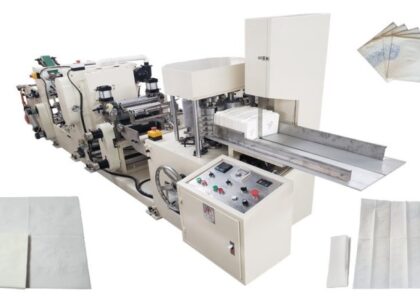
The industry is undergoing a profound transformation with the integration of automation, digital printing, and recyclable materials. Manufacturers are investing in automated production lines to improve scalability and precision, while engineers focus on enhanced structural designs that provide stronger support without added weight.
Another significant trend is the integration of digital printing technologies—enabling brands to customize designs and logos directly on packaging, creating both functional and aesthetic appeal.
Sustainability remains at the heart of these innovations, with companies advancing carbon-neutral and recyclable solutions. Major players are adopting renewable raw materials such as recycled paper, biodegradable adhesives, and reusable packaging formats to align with the circular economy model.
Regional Market Dynamics and Emerging Opportunities
North America, led by the United States, holds the largest share of around 35%, driven by e-commerce expansion and robust automotive demand. Europe, accounting for 30%, benefits from strong regulatory support under the EU Green Deal and a highly sustainability-aware consumer base.
Meanwhile, Asia-Pacific represents 25% of the global market, with countries like China and India showing immense growth potential due to industrial expansion and increased government emphasis on green packaging. Emerging markets in Latin America and Africa, contributing the remaining 10%, are also adopting honeycomb packaging to replace traditional plastic-based materials.
Competitive Landscape: Innovation and Expansion Define Growth
The market concentration remains moderate, with the top three players (DS Smith, Smurfit Kappa, and PCA) holding about 20% market share, followed by Sealed Air and WestRock at 10%, while mid-tier and regional players make up the rest.
DS Smith continues to pioneer recyclable honeycomb packaging for e-commerce and automotive industries, emphasizing innovation and circular economy principles. Smurfit Kappa has focused on lightweight yet strong honeycomb structures catering to online retail’s evolving needs. Meanwhile, Packaging Corporation of America remains a key player in heavy-duty industrial packaging, combining strength and sustainability.
Emerging companies such as Cascades and Honicel are also gaining traction by introducing cost-effective, customizable honeycomb solutions for niche sectors like electronics and furniture. Their strategies revolve around localized production, green sourcing, and digital design optimization.
Startups Entering the Market with Disruptive Technologies
A wave of startups and new entrants is further energizing the honeycomb packaging landscape. Many are exploring bio-based resins, automated forming systems, and modular honeycomb structures that enhance adaptability.
Young companies are partnering with logistics and e-commerce giants to co-develop packaging tailored to specific product categories. Their agility and focus on eco-conscious materials position them as valuable collaborators for established manufacturers aiming to meet stricter environmental standards.
Access Expert Analysis & Forecasts – Buy Now Before Prices Rise! https://www.futuremarketinsights.com/checkout/20295
Explore trends before investing — request a sample report today! https://www.futuremarketinsights.com/reports/sample/rep-gb-20295
Challenges and Opportunities Ahead
While the future looks bright, the market faces a few obstacles. Cost sensitivity among smaller businesses and competition from cheaper plastic packaging remain notable challenges. Additionally, limited awareness of honeycomb packaging’s long-term benefits in certain developing regions may slow adoption.
However, opportunities abound. The rapid e-commerce expansion, growing consumer awareness about eco-friendly products, and ongoing technological advancements will likely offset these challenges. Collaborations between material innovators and logistics providers can further accelerate large-scale adoption.
Future Outlook and Strategic Roadmap
By 2035, the honeycomb packaging market will evolve into a highly competitive and innovation-driven sector. Industry leaders and new entrants alike will continue investing in research and development, automation, and sustainable production processes to stay ahead.
Companies that focus on balancing cost-efficiency, performance, and environmental impact are poised to gain the most. Strategic partnerships, especially across e-commerce, automotive, and consumer goods sectors, will remain vital in unlocking new growth avenues.
Key Takeaways
- The global honeycomb packaging market will reach USD 4.5 billion by 2035, expanding at 6.8% CAGR.
- Sustainability, e-commerce growth, and automation are central to market evolution.
- Leaders such as DS Smith, Smurfit Kappa, and Packaging Corporation of America are setting industry benchmarks in recyclable and lightweight packaging.
- Emerging players and startups are reshaping the ecosystem through innovation and partnerships.
About Future Market Insights (FMI)
Future Market Insights, Inc. (ESOMAR certified, recipient of the Stevie Award, and a member of the Greater New York Chamber of Commerce) offers profound insights into the driving factors that are boosting demand in the market. FMI stands as the leading global provider of market intelligence, advisory services, consulting, and events for the Packaging, Food and Beverage, Consumer Technology, Healthcare, Industrial, and Chemicals markets. With a vast team of over 400 analysts worldwide, FMI provides global, regional, and local expertise on diverse domains and industry trends across more than 110 countries.
Contact Us:
Future Market Insights Inc.
Christiana Corporate, 200 Continental Drive,
Suite 401, Newark, Delaware – 19713, USA
T: +1-347-918-3531
For Sales Enquiries: sales@futuremarketinsights.com
Website: https://www.futuremarketinsights.com
LinkedIn| Twitter| Blogs | YouTube