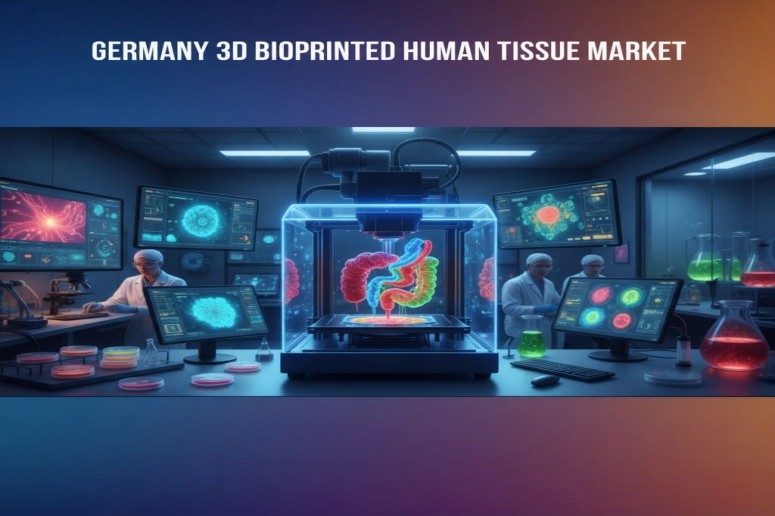
The Germany 3D bioprinted human tissue market is on the cusp of a transformative decade, projected to grow from USD 70.7 million in 2025 to USD 113.0 million by 2035, registering a steady compound annual growth rate (CAGR) of 4.8%. This surge underscores Germany’s deep-rooted commitment to precision medicine, biotechnology, and digital transformation within healthcare. As both established and emerging manufacturers invest in new technologies, the country is rapidly becoming a European powerhouse for 3D bioprinting innovation.
A Growing Ecosystem of Innovation and Collaboration
Germany’s bioprinting revolution is being driven by the convergence of engineering excellence, medical innovation, and academic research. The increasing demand for tissue regeneration solutions, rising incidences of chronic diseases, and breakthroughs in precision bioprinting have created fertile ground for growth.
German universities, research centers, and biotech firms are joining forces to develop functional, patient-specific tissues for both clinical and research applications. This ecosystem is further strengthened by the government’s supportive regulatory framework and funding programs that promote R&D in regenerative medicine and advanced healthcare technologies.
Get this Report at $5,000 Only | Exclusive Discount Inside!
https://www.futuremarketinsights.com/reports/sample/rep-gb-20136
Technological Leadership in Bioprinting
Germany’s historical leadership in precision manufacturing and engineering has seamlessly extended into the field of bioprinting. The country’s industrial base supports high-end technological infrastructure for developing next-generation 3D bioprinters capable of replicating the complexity of human tissue.
From reconstructive surgeries and wound healing to organ repair and grafting, 3D-printed tissues are increasingly finding real-world applications. Hospitals across Germany are adopting bioprinting solutions for advanced surgical procedures, while specialty clinics are turning to customized, patient-specific tissue models for cosmetic and reconstructive treatments.
Market Segmentation and Emerging Opportunities
According to the report, the skin tissue segment dominates the German market, accounting for 37.5% of value share in 2025, driven by its wide application in treating burns, chronic wounds, and cosmetic procedures. On the end-user front, hospitals represent 33.2% of market share, reflecting the growing use of 3D-printed tissues for complex reconstructive surgeries and personalized medical treatments.
This trend reflects a broader movement across German healthcare institutions to integrate digital biomanufacturing into clinical workflows, promoting faster recovery, fewer complications, and enhanced patient outcomes.
Industry Collaboration: Bridging Academia, Startups, and Established Firms
A defining feature of Germany’s bioprinting industry is the close collaboration between academia, biotechnology firms, and healthcare providers. Universities are working alongside startups and global players to translate laboratory breakthroughs into practical applications. Public-private partnerships, often supported by national grants, are accelerating the development of novel bioprinting techniques and materials.
This ecosystem is fostering the growth of emerging startups specializing in niche areas such as sustainable bioinks, tissue scaffolding, and miniaturized bioprinters. Germany’s biotech hubs in Berlin, Munich, and Heidelberg have become hotbeds for innovation, attracting investors and research talent from across Europe and beyond.
Pharmaceutical Advances and Drug Testing Applications
Pharmaceutical companies are increasingly recognizing the value of 3D bioprinted human tissues in preclinical drug testing. By replicating human physiology more accurately than traditional models, 3D tissues allow for improved safety and efficacy testing, significantly reducing the reliance on animal models.
This transformation is not only speeding up drug development timelines but also aligning with global ethical standards for laboratory research. Major pharma firms in Germany are integrating bioprinted tissues into early-stage research, enabling faster drug discovery and more predictable clinical outcomes.
Sustainability: The Rise of Green Bioprinting
Sustainability is becoming a cornerstone of Germany’s bioprinting strategy. Companies are developing eco-friendly and biocompatible bioinks, derived from renewable resources, that ensure safer and more sustainable tissue printing. These bioinks not only enhance print fidelity and cell viability but also reflect Germany’s broader commitment to environmentally responsible innovation.
As global attention turns toward green biotechnology, Germany’s leadership in developing sustainable bioinks positions it as a role model for balancing technological progress with environmental stewardship.
Key Players Shaping the Market
The competitive landscape of the German 3D bioprinted human tissue market is characterized by a mix of global leaders, mid-tier innovators, and agile startups.
Tier 1 vendors, including Cellink Global and Stratasys Ltd., command approximately 53.7% of market share, leveraging advanced bioprinting platforms and strong partnerships in healthcare and academia.
Tier 2 players such as EnvisionTEC, Inc., Cyfuse Biomedical K.K., and Poietis hold 33.2% of the market, specializing in tissue-specific applications and bioink innovation.
Meanwhile, Tier 3 companies like Allevi, Inventia Life Science PTY LTD, Vivax Bio, LLC, and Organovo Holdings, Inc. are contributing through niche, cost-effective solutions that broaden market accessibility and encourage experimentation.
Growth Drivers and Challenges
Key Growth Drivers:
- Engineering Excellence: Germany’s precision engineering continues to power innovation in bioprinting hardware and materials.
- Government Support: National funding and favorable policies foster medical research and commercialization.
- Sustainable Materials: R&D investments in eco-friendly bioinks enhance long-term market viability.
Key Challenges:
- High Initial Costs: The advanced technologies and raw materials needed for bioprinting make adoption costly for smaller facilities.
- Regulatory Complexity: The need for rigorous validation and compliance can delay market entry for new players.
Future Outlook: A Decade of Transformation
Looking ahead, the German 3D bioprinted human tissue market is set to redefine the boundaries of modern medicine. By 2035, advancements in AI-integrated bioprinting, scalable tissue fabrication, and automated quality control are expected to streamline the production process and make bioprinting more accessible.
The integration of artificial intelligence will enhance precision in bioprinting workflows, allowing researchers to simulate tissue behavior and optimize printing parameters in real time. Continuous improvements in bioink formulations will also lead to better biocompatibility and functionality, paving the way for complex organ-level printing in the coming years.
Checkout Now to Access Industry Insights:
https://www.futuremarketinsights.com/checkout/20136
About Future Market Insights (FMI)
Future Market Insights, Inc. (ESOMAR certified, recipient of the Stevie Award, and a member of the Greater New York Chamber of Commerce) offers profound insights into the driving factors that are boosting demand in the market. FMI stands as the leading global provider of market intelligence, advisory services, consulting, and events for the Packaging, Food and Beverage, Consumer Technology, Healthcare, Industrial, and Chemicals markets. With a vast team of over 400 analysts worldwide, FMI provides global, regional, and local expertise on diverse domains and industry trends across more than 110 countries.
Contact Us:
Future Market Insights Inc.
Christiana Corporate, 200 Continental Drive,
Suite 401, Newark, Delaware – 19713, USA
T: +1-347-918-3531
For Sales Enquiries: sales@futuremarketinsights.com
Website: https://www.futuremarketinsights.com
LinkedIn| Twitter| Blogs | YouTube