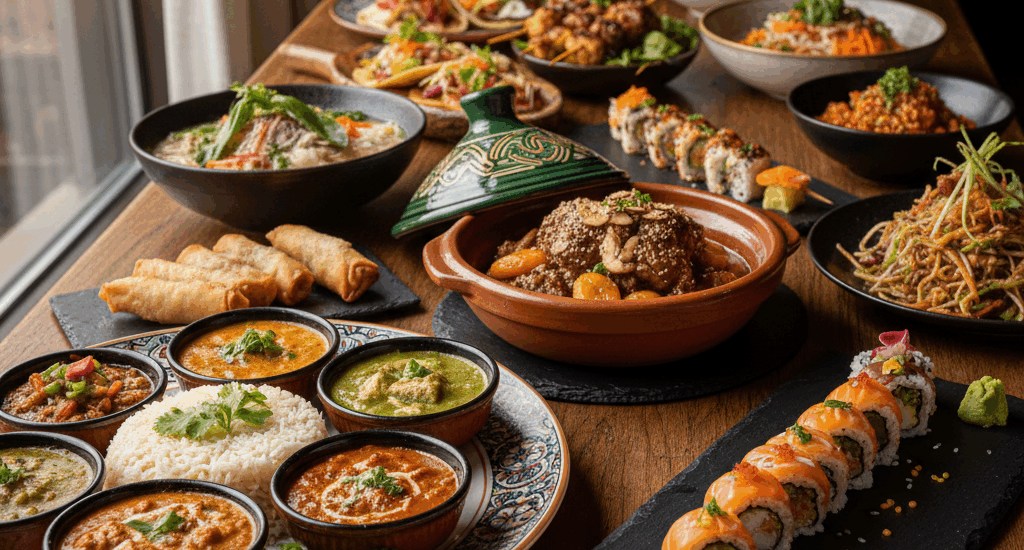
According to the latest report titled “Ethnic Food Market Size and Share Forecast Outlook from 2025 to 2035,” the global ethnic food market is poised for exceptional growth, projected to reach USD 208.5 billion by 2035 from an estimated USD 98.3 billion in 2025. The market, expected to expand at a compound annual growth rate (CAGR) of 7.8%, reflects the surging global appetite for diverse, authentic, and health-oriented cuisines.
As consumers across the globe seek cultural experience through food, both established multinationals and innovative startups are racing to redefine how ethnic flavors reach homes, restaurants, and digital platforms.
Get this Report at $3500 | Get Your Discounted Report Now
Rising Global Demand for Authentic and Health-Oriented Flavors
Ethnic foods—ranging from sushi and tacos to biryani and hummus—have become a bridge across cultures, offering a window into traditions, ingredients, and culinary artistry. Consumers, particularly millennials and Gen Z, are turning to authentic global cuisines for taste diversity and health benefits. Social media platforms, recipe tutorials, and travel-inspired food exploration are fueling this demand, particularly among younger demographics eager to discover new tastes.
Health-conscious consumers are also pushing market boundaries. Many ethnic dishes incorporate fresh, wholesome ingredients and natural spices, appealing to a growing population striving for balanced diets. As a result, brands are introducing healthier versions of traditional favorites, including plant-based curries, gluten-free tacos, and vegan sushi rolls.
Opportunities for Manufacturers: Combining Traditions with Technology
Established players like Nestlé, Unilever, Tata Consumer Products, and Ajinomoto are investing heavily in product innovation, sustainability, and convenience-based meal solutions. Nestlé continues to expand its Maggi product line with regional adaptations, while Unilever’s Knorr brand emphasizes eco-friendly packaging and globally inspired flavors. Meanwhile, Tata Consumer Products is deepening its footprint in the Indian subcontinent with its organic and fortified ethnic food ranges under Tata Sampann.
New entrants and startups are equally transforming the landscape. Companies such as HungryPanda, Zepto, and Weee! are leveraging advanced digital platforms to connect immigrant communities and urban consumers with authentic ingredients and ready-to-eat meals. These startups prioritize logistics innovation, fast delivery, and precise cultural targeting—strategies that are redefining ethnic food accessibility in urban markets.
The emergence of technology such as blockchain and artificial intelligence is further revolutionizing sourcing and supply chain reliability. These tools enhance traceability, ensure quality control, and monitor compliance with evolving food safety standards—allowing manufacturers to build consumer trust while optimizing efficiency.
Market Trends: Fusion, Plant-Based, and Regional Diversity
The ethnic food market’s growth is propelled by new global culinary crossovers and dietary innovations. Mexican fusion foods like Korean tacos, Indian plant-based curries, and Mediterranean-inspired snacks are resonating across borders. Vegan and gluten-free adaptations—such as dairy-free Italian pasta and keto-friendly Thai dishes—are reshaping menu offerings worldwide.
Popular ethnic cuisines include Mexican, Chinese, Japanese, Indian, Thai, Korean, and Mediterranean, while emerging interests are rising in African, Filipino, and Latin American foods. This expansion highlights both established tastes and new frontiers waiting to be discovered.
Regional Growth and Expansion Strategies
- Asia-Pacific: Expected to lead global growth, driven by China’s 10.1% CAGR and India’s deepening demand for both local and international cuisines. Convenience foods, ready-to-eat meals, and organic ingredients are fueling regional expansion.
- North America: The United States remains a frontrunner with its multicultural palate, growing at an estimated 7.6% CAGR. Fusion dishes, such as plant-based ethnic snacks and quick-prep meal kits, dominate retail shelves.
- Europe: Markets like Spain are seeing strong adoption of global cuisines, with consumers embracing plant-based and convenient ready meals. Supermarkets are expanding international food aisles in response to consumer curiosity.
Key Growth Segments and Distribution Channels
Ready-to-eat meals represent the top-performing product category, expected to hold 43% of market share by 2025. These convenient offerings appeal to busy consumers seeking authentic flavors with minimal preparation. On the distribution side, hypermarkets and supermarkets dominate sales, accounting for 52% of retail share due to their convenience, discounts, and variety. However, online platforms continue to grow as digital-savvy buyers seek access to global products that may be unavailable in brick-and-mortar stores.
Challenges and Future Opportunities
While the market outlook is robust, supply chain hiccups—particularly in sourcing high-quality, regional ingredients—remain a challenge. Ensuring authenticity and maintaining quality amidst rising prices continues to demand innovation in procurement and logistics management.
However, major gaps yield exciting opportunities. Untapped cuisines such as Filipino, Central Asian, and Indigenous foods present potential for creators ready to introduce underexplored flavors to global palates. New product innovations, including gluten-free naan, vegan shawarma, and ethnic-inspired snacks like masala popcorn, are expected to capture emerging demand.
Access In-Depth Market Analysis
A Convergence of Global Culture and Business
The global ethnic food market is no longer just a culinary trend—it is a cultural and economic movement uniting heritage, health, and innovation. Established corporations and emerging entrepreneurs alike are setting new benchmarks by blending authenticity with modern convenience. Through digital platforms, AI-driven supply chains, and innovative packaging, the industry is poised to serve the world a richer and more inclusive taste experience.
As ethnic food transitions from niche to mainstream, the next decade promises to celebrate diversity on every plate—where technology meets tradition and flavor becomes a global language.
About Future Market Insights (FMI)
Future Market Insights, Inc. (ESOMAR certified, recipient of the Stevie Award, and a member of the Greater New York Chamber of Commerce) offers profound insights into the driving factors that are boosting demand in the market. FMI stands as the leading global provider of market intelligence, advisory services, consulting, and events for the Packaging, Food and Beverage, Consumer Technology, Healthcare, Industrial, and Chemicals markets. With a vast team of over 400 analysts worldwide, FMI provides global, regional, and local expertise on diverse domains and industry trends across more than 110 countries.
Contact Us:
Future Market Insights Inc.
Christiana Corporate, 200 Continental Drive,
Suite 401, Newark, Delaware – 19713, USA
T: +1-347-918-3531
For Sales Enquiries: sales@futuremarketinsights.com
Website: https://www.futuremarketinsights.com
LinkedIn| Twitter| Blogs | YouTube