The global barite market is poised for a steady and resilient growth trajectory, surging from USD 1.6 billion in 2025 to USD 2.3 billion by 2035, at a compounded annual growth rate of 3.9%. This progression reflects the mineral’s unique role as a critical weighting agent in drilling fluids and its expanding utilization across healthcare and industrial applications. The surge highlights a growing synergy between established mining giants and emerging manufacturers investing in next-generation processing technologies to sustain global supply and respond to evolving end-user demands.
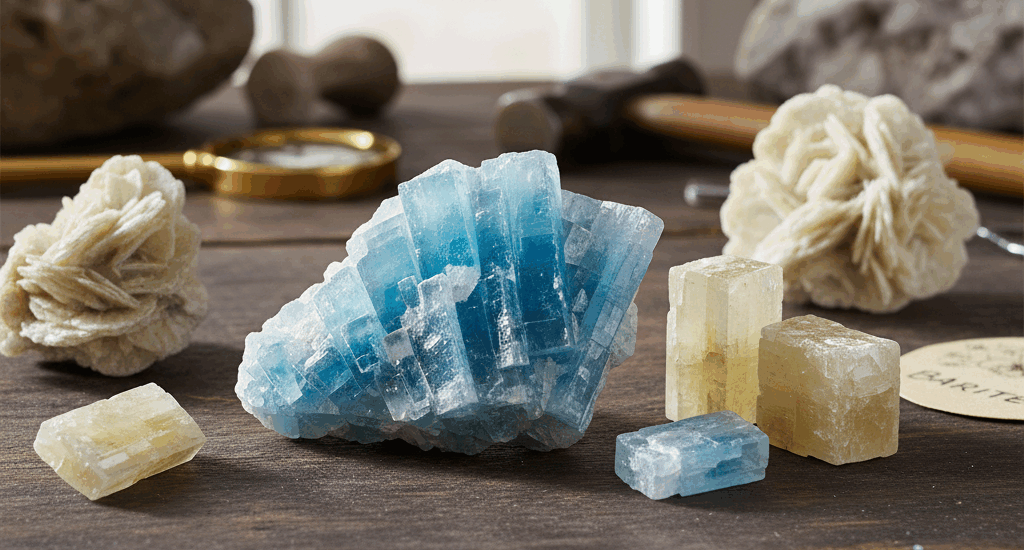
Barite, an essential high-density mineral, remains the backbone of drilling operations worldwide. Its ability to control fluid density and maintain wellbore stability underpins 71.8% of global consumption through drilling mud applications. With drilling contractors operating in increasingly complex well environments—from deepwater fronts to unconventional shale basins—the reliance on API-grade barite remains indispensable for meeting exacting density and contamination standards.
For purchase or customization, please request here
Industry Transformation Driven by Innovation
The next decade will see the global barite market transform from a traditional commodity segment into a technology-driven ecosystem encompassing beneficiation advancements, green mining frameworks, and digitalized supply chains. Established players such as Andhra Pradesh Mineral Development Corporation (APMDC), Milwhite, and Excalibar Minerals (Newpark Resources) continue to invest in modern beneficiation facilities and traceable supply infrastructure to meet the quality-driven API-grade specifications demanded by the oil and gas industry.
APMDC maintains its leadership by leveraging the prolific Mangampeta mining district in India, accounting for up to 12% of global market share. Partnering with oilfield service majors, APMDC’s API-grade output fuels drilling programs across international markets. Meanwhile, challengers like Anglo Pacific Minerals, BariteWorld, and The Kish Company are expanding regional footprints through localized logistics solutions and customized powder-grade offerings tailored for both drilling and industrial applications.
These developments coincide with the rise of new entrants such as Corpomin, International Earth Products, and Global Reach FZE, which are reinforcing supply networks in Asia Pacific, the Middle East, and North Africa. Their focus on sustainable sourcing, cost efficiency, and application-specific innovation signals a diversification in global barite production that aligns with shifting energy and industrial demand patterns.
Regional Growth Dynamics
Asia Pacific leads global expansion, projected to capture the largest incremental growth through 2035. India tops the chart with an impressive CAGR of 6.6%, supported by government designations identifying barite as a critical mineral. Strategic support for domestic mining, simplified lease issuance, and value-added processing initiatives have positioned the region as both a production and export powerhouse. China follows closely with 4.9% growth, strengthening its role as a dual hub of production and consumption through enhanced beneficiation technologies and advanced processing standards.
In the Middle East, Saudi Arabia is charting a proactive trajectory with a 4.3% CAGR, driven by its Vision 2030 energy diversification initiatives and national oilfield service localization programs. The United States, Brazil, and Germany represent mature but stable markets, leveraging established infrastructure to sustain demand in both drilling and healthcare applications, particularly in high-purity and radiation-shielding segments.
Western Europe remains defined by its focus on compliance and quality. Germany and the United Kingdom anchor regional demand through offshore drilling and hospital construction projects, emphasizing REACH-certified supply chains and environmentally responsible sourcing. Across these developed markets, imported API-grade powder maintains its dominance owing to quality consistency and performance reliability.
Technological and Sustainability Landscape
Technological innovation in the barite industry is reshaping both production and consumption. Companies are adopting micronization processes to deliver high-purity, medical, and radiation-grade materials for healthcare infrastructure growth. Advanced beneficiation and quality assurance labs ensure compliance with global specifications, while digital tracking systems enhance transparency from mine to application.
Equally significant is the acceleration of green mining practices. Producers are implementing progressive reclamation programs, advanced water management systems, and community participation frameworks to uphold their environmental and social commitments. Barite recycling initiatives—recovering material from drilling waste—are also emerging as a viable path toward circular mineral supply chains and reduced environmental footprint.
Industrial and Healthcare Demand Expansion
While oil and gas drilling will remain the largest consumer of barite, non-energy applications are expanding steadily. Healthcare infrastructure development—particularly in radiology and oncology facilities—drives adoption of barite-based radiation shielding concretes and mortars. The mineral’s high atomic number delivers superior X-ray attenuation at lower wall thickness compared to traditional materials, making it a preferred choice for modern hospital construction globally.
Simultaneously, industrial sectors such as paints, plastics, and rubber increasingly depend on barite fillers for enhancing density, brightness, and inertness in finished products. Emerging regional manufacturers and specialty processors are capitalizing on these opportunities by developing tailored products that combine quality performance with competitive pricing.
Access Exclusive Report Insights— Request PDF
Path Forward: Collaboration Across the Ecosystem
The barite market’s future rests on collaboration between mining companies, oilfield service providers, industrial users, and policymakers. Global players are expected to invest in critical infrastructure—including mineral processing facilities and port logistics—to ensure uninterrupted supply. Governments, in turn, can spur growth through streamlined approvals, resource mapping, and responsible mining incentives.
As demand for clean energy drilling and healthcare materials widens, the barite industry’s resilience will depend on responsible growth anchored in quality, sustainability, and competitive innovation. From Andhra Pradesh to the Gulf of Mexico, and from the North Sea to China’s industrial heartland, barite continues to cement its role as an indispensable enabler of the world’s energy, healthcare, and industrial progress.
About Future Market Insights (FMI)
Future Market Insights, Inc. (ESOMAR certified, recipient of the Stevie Award, and a member of the Greater New York Chamber of Commerce) offers profound insights into the driving factors that are boosting demand in the market. FMI stands as the leading global provider of market intelligence, advisory services, consulting, and events for the Packaging, Food and Beverage, Consumer Technology, Healthcare, Industrial, and Chemicals markets. With a vast team of over 400 analysts worldwide, FMI provides global, regional, and local expertise on diverse domains and industry trends across more than 110 countries.
Contact Us:
Future Market Insights Inc.
Christiana Corporate, 200 Continental Drive,
Suite 401, Newark, Delaware – 19713, USA
T: +1-347-918-3531
For Sales Enquiries: sales@futuremarketinsights.com
Website: https://www.futuremarketinsights.com
LinkedIn| Twitter| Blogs | YouTube