The BRIC automotive plastic market is entering a decade of accelerated growth, expanding from USD 80.4 billion in 2025 to an estimated USD 155.9 billion by 2035. This marks a compound annual growth rate (CAGR) of 6.9%, underscoring the region’s pivotal role in reshaping global automotive manufacturing through material innovation and sustainability.
Driven by rapid industrialization, stricter emission standards, and the surging adoption of electric and autonomous vehicles, the BRIC automotive plastic market is poised to become a cornerstone of vehicle production strategies. The increasing substitution of metal parts with advanced polymers is fueling performance, efficiency, and design adaptability across all major vehicle categories.
Get this Report at $5000 | Get Your Discounted Report Now
Innovation and Investment Push the Market Forward
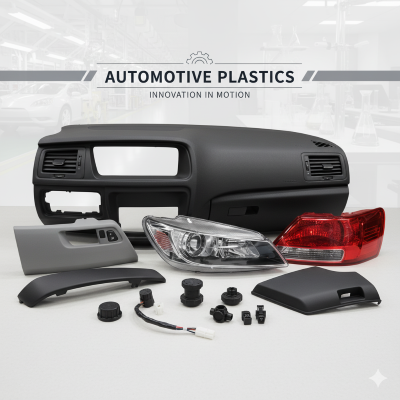
Automakers and suppliers across the BRIC region are moving decisively toward lighter, more versatile materials. Compared to 2024, the use of high-performance plastics in both structural and aesthetic applications has grown substantially. Advanced polymers—lightweight, corrosion-resistant, and highly formable—are enabling designers to combine aerodynamics with comfort and style.
In India and China, government incentives and infrastructure development are catalyzing breakthroughs in automotive R&D. Regulatory frameworks aimed at promoting local manufacturing and supporting energy efficiency continue to propel suppliers and OEMs to source materials domestically. This localized approach enhances supply chain stability while aligning with national industrial strategies.
China, with its robust manufacturing ecosystem, remains the most dynamic player. The country’s 8.0% forecasted CAGR between 2025 and 2035 highlights its commitment to developing lightweight vehicles and meeting aggressive carbon emission targets. Similarly, India’s 6.1% CAGR projection reflects rising investments in research and electric mobility initiatives, leading to broad opportunities for polymer innovation.
Interior Components Lead Market Demand
Interior components account for nearly 63.6% of the automotive plastic market in BRIC economies in 2025, making this the most dominant segment. As middle-class populations expand in India, China, and Brazil, automakers are enhancing cabin experiences with smart infotainment systems, ambient lighting, and ergonomic finishes—all heavily reliant on polymer materials.
Key plastics such as polypropylene (PP), acrylonitrile butadiene styrene (ABS), and polyvinyl chloride (PVC) are being widely used in dashboards, consoles, and seat structures. Chinese OEMs, in particular, are partnering with leading Tier-1 suppliers to develop modular interior systems using recycled materials and soft-touch surfaces that merge sustainability with user comfort.
Across Russia and Brazil, newly launched SUV and compact models showcase interiors with significantly higher plastic content. These designs not only meet consumer demands for aesthetics and convenience but also conform to regulatory requirements for weight and emission reductions.
Polypropylene’s Continued Dominance
Accounting for 20.3% of total automotive plastic demand in 2025, polypropylene remains the material of choice across most BRIC markets. Its lightweight profile, cost-effectiveness, and chemical resistance make it essential in producing bumpers, door trims, battery casings, and dashboard components.
In India and Brazil, cost-sensitive manufacturers are leveraging polypropylene to balance affordability with design appeal. Russia’s frigid climate has prompted the integration of cold-resistant polymer grades into HVAC ducts and cabin structures, ensuring durability over long service cycles. As electric vehicles expand, the material’s balance of performance and recyclability ensures its continuing relevance in next-generation powertrains and interiors.
Emerging Trends and Sustainable Growth Strategies
The decade from 2025 to 2035 will be defined by a transformation toward sustainability and smarter material applications. Lightweight plastics are increasingly critical to automakers striving to meet fuel economy standards and extend EV range. Manufacturers are exploring advanced composites—heat-resistant, recyclable, and high-impact variants—to address the twin priorities of performance and environmental responsibility.
Autonomous driving and the transition to EVs are unlocking new avenues for polymer applications, including EV powertrain housings, sensor enclosures, and lightweight panels. Additionally, recycling technologies for end-of-life automotive components are gaining traction, with BRIC-based suppliers investing in circular material systems to support greener production cycles.
Country-Level Insights
- China: The largest and fastest-growing market, supported by stringent carbon goals and strong domestic demand for energy-efficient vehicles.
- India: A key growth hub for affordable vehicle manufacturing, with electric mobility gaining momentum through policy support and private investment.
- Brazil: Achieving steady progress through R&D investments in bio-based and recycled polymers, driven by sustainability mandates.
- Russia: Modernizing its automotive base with advanced plastics that improve efficiency, design appeal, and cost-effectiveness.
Shop Market Research Reports Now
Leading Players and Market Dynamics
The competitive landscape is marked by collaboration and technological advancement. Industry veterans and newcomers alike are contributing to the sector’s evolution. Braskem and Grupo Plasutil in Brazil continue to refine biopolymer applications, while Russia’s SIBUR and GAZ Group are bolstering regional supply chains with resilient material solutions.
In India, Reliance Industries Limited and Supreme Industries Limited are showcasing their capabilities in automotive-grade polymer production. China’s Yanfeng Automotive Interiors, Sinopec, and BASF SE are driving a new era of innovation, forging strategic alliances to accelerate material science development and meet the growing demand for lightweight, sustainable automotive components.
As established and emerging manufacturers across BRIC nations align their strategies with technological progress and environmental priorities, automotive plastics are set to define the next generation of efficient, sustainable, and intelligent vehicles worldwide.
About Future Market Insights (FMI)
Future Market Insights, Inc. (ESOMAR certified, recipient of the Stevie Award, and a member of the Greater New York Chamber of Commerce) offers profound insights into the driving factors that are boosting demand in the market. FMI stands as the leading global provider of market intelligence, advisory services, consulting, and events for the Packaging, Food and Beverage, Consumer Technology, Healthcare, Industrial, and Chemicals markets. With a vast team of over 400 analysts worldwide, FMI provides global, regional, and local expertise on diverse domains and industry trends across more than 110 countries.
Contact Us:
Future Market Insights Inc.
Christiana Corporate, 200 Continental Drive,
Suite 401, Newark, Delaware – 19713, USA
T: +1-347-918-3531
For Sales Enquiries: sales@futuremarketinsights.com
Website: https://www.futuremarketinsights.com
LinkedIn| Twitter| Blogs | YouTube