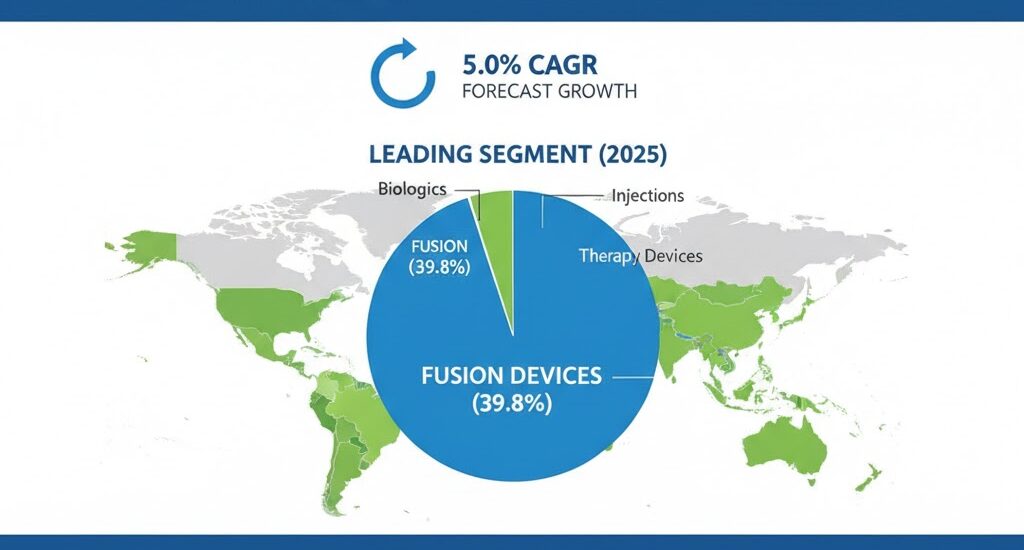
The global spine pain market is on an impressive trajectory, with the industry poised to grow from USD 8.4 billion in 2025 to USD 13.7 billion by 2035. This reflects a compound annual growth rate (CAGR) of 5.0% over the next decade, indicating both stability and significant potential for innovation and expansion in this sector. Manufacturers in the medical device industry are in prime position to seize the opportunities arising from this trend, driving both technological advancements and revenue growth.
Why Manufacturers Should Focus on Spine Pain Treatment Solutions
The rise in spine-related ailments, driven by aging populations, increasing urbanization, and more sedentary lifestyles, has spurred the demand for effective spine pain treatments. According to recent forecasts, the leading market segments in 2025 will include fusion devices (39.8% of the market share), minimally invasive surgeries (43.8%), and discectomy procedures (27.6%). These figures underscore a major opportunity for manufacturers who are aligned with the market’s evolving needs.
Additionally, the growing emphasis on cost-effective solutions and the shift towards precision-driven, minimally invasive interventions presents a fertile ground for manufacturers to innovate with next-generation products and technologies. The demand for devices that enhance patient outcomes, reduce recovery times, and support surgical precision is at an all-time high.
Key Drivers of Market Expansion
Several key factors are expected to fuel the continued growth of the spine pain market:
- Aging Populations: The prevalence of degenerative spine conditions, such as osteoarthritis, disc degeneration, and spinal stenosis, is expected to rise as populations in North America, Europe, and Asia-Pacific age. This demographic shift will significantly increase the demand for treatments ranging from non-invasive therapies to complex spinal surgeries.
- Technological Advancements: The integration of cutting-edge technologies like robotic-assisted surgery, image-guided systems, and advanced biomaterials are revolutionizing spinal procedures. Manufacturers who invest in these technologies will gain a competitive edge by offering more effective, minimally invasive, and patient-friendly solutions.
- Healthcare Expenditure and Access: As healthcare spending continues to rise globally—particularly in emerging markets like India and China—demand for spine pain treatments is increasing. In these regions, patients are increasingly seeking innovative, high-quality treatment options.
- Minimally Invasive Techniques: Minimally invasive surgery (MIS) is expected to continue its dominance, capturing a significant share of the market. MIS offers numerous benefits, including shorter recovery times, reduced complications, and less pain for patients, making it the preferred method for both patients and healthcare providers alike.
Key Segments: An In-Depth Look at Opportunities
Fusion Devices: Leading the Product Segment
Fusion devices are set to dominate the spine pain market in 2025, accounting for nearly 40% of the revenue. These devices, including spinal implants, plates, and screws, play a critical role in stabilizing the spine in cases of degenerative disc disease and spinal instability. As the prevalence of these conditions increases, so too does the demand for reliable, high-performance fusion devices.
Ongoing advancements in biomaterials, such as titanium and bioresorbable polymers, continue to enhance the efficacy and safety of these devices. Manufacturers focusing on improving the design, durability, and compatibility of spinal fusion devices can capitalize on this robust demand.
Minimally Invasive Surgery: The Preferred Treatment Approach
Minimally invasive surgery (MIS) is expected to capture the largest share of the spine pain treatment market by 2025, at 43.8%. This segment’s growth is driven by the many benefits of MIS, including reduced tissue trauma, faster recovery times, and lower risk of complications. As patient and provider preferences shift towards procedures that minimize hospital stays and recovery time, the demand for advanced MIS tools and technologies, including robotic platforms, continues to soar.
Manufacturers with a focus on MIS technologies, especially those offering highly specialized instruments, robotic assistance, and real-time imaging systems, will find themselves at the forefront of this growing trend.
Discectomy Procedures: A Proven Market Leader
The discectomy procedure, used primarily to treat herniated discs, remains one of the most commonly performed spine surgeries. With a market share of 27.6% in 2025, discectomy continues to lead in surgical interventions. The success of this procedure in relieving nerve compression and restoring mobility makes it a go-to solution for both physicians and patients.
Manufacturers who innovate in this space, especially in areas like minimally invasive discectomy, can enhance patient safety, reduce hospital stays, and improve clinical outcomes. The introduction of new tools, devices, and techniques that minimize invasiveness will be key to gaining traction in this segment.
Buy Now & Save: Premium Market Report at $5,000 | Discount Details Inside:- https://www.futuremarketinsights.com/reports/sample/rep-gb-16283
Regional Markets: Expanding Global Opportunities
North America and Europe: Strong Demand for Advanced Spine Solutions
North America, particularly the United States, remains a key market due to its advanced healthcare infrastructure, high levels of healthcare spending, and a large aging population. Technological advancements, including the use of robotic surgery and biologics, are driving growth in spine pain treatments. Manufacturers looking to capture a significant share of the North American market must focus on delivering innovative products that align with evolving clinical practices.
In Europe, demand is influenced by an aging population and increasing awareness of spine pain management options. However, healthcare system constraints, such as long wait times and budgetary limitations, can pose challenges for widespread adoption of new technologies. Manufacturers should explore partnerships with healthcare providers to facilitate access to cutting-edge treatments.
Asia-Pacific: Emerging Markets with Huge Potential
Asia-Pacific is rapidly emerging as a key market, driven by expanding healthcare access and rising disposable incomes. Countries like India and China are experiencing demographic shifts that result in a greater prevalence of spine-related conditions, such as degenerative disc disease and osteoarthritis. These trends, along with the increased adoption of minimally invasive techniques, create substantial growth opportunities for manufacturers.
India, in particular, is a leader in cost-effective spine care, offering affordable yet high-quality treatments. This is accompanied by growing medical tourism, as international patients flock to India for specialized spine care. Manufacturers who focus on affordability, while maintaining high-quality standards, will find significant opportunities in these markets.
Challenges and Strategic Considerations for Manufacturers
Regulatory Hurdles and Pricing Pressures
As with any healthcare market, manufacturers must navigate regulatory hurdles, particularly when introducing new technologies. In addition, market competition can lead to pricing pressures, impacting profit margins. To stay competitive, manufacturers must prioritize quality, innovation, and compliance with regulatory standards to maintain a strong market presence.
Evolving Consumer Preferences and Patient Safety
As patients become more informed about their healthcare choices, there is an increasing demand for personalized, patient-specific treatment options. Manufacturers can address this trend by investing in technologies that enable precision-based care, such as customized implants or advanced diagnostic tools. Ensuring patient safety and demonstrating clinical efficacy will be key to gaining physician and patient trust.
Conclusion: A Bright Future for Spine Pain Manufacturers
With the spine pain market forecast to grow at a steady rate of 5.0% annually from 2025 to 2035, manufacturers have significant opportunities to contribute to the development of next-generation treatments and devices. By focusing on technological innovation, cost-effective solutions, and precision-driven products, manufacturers can not only address current market demands but also help shape the future of spine care.
As global populations continue to age, and as the need for effective, minimally invasive treatments rises, manufacturers who position themselves to meet these evolving needs will be well-positioned for sustained growth and success.
Click Here to Purchase the Report:- https://www.futuremarketinsights.com/checkout/16283
About Future Market Insights (FMI)
Future Market Insights, Inc. (ESOMAR certified, recipient of the Stevie Award, and a member of the Greater New York Chamber of Commerce) offers profound insights into the driving factors that are boosting demand in the market. FMI stands as the leading global provider of market intelligence, advisory services, consulting, and events for the Packaging, Food and Beverage, Consumer Technology, Healthcare, Industrial, and Chemicals markets. With a vast team of over 400 analysts worldwide, FMI provides global, regional, and local expertise on diverse domains and industry trends across more than 110 countries.
Contact Us:
Future Market Insights Inc.
Christiana Corporate, 200 Continental Drive,
Suite 401, Newark, Delaware – 19713, USA
T: +1-347-918-3531
For Sales Enquiries: sales@futuremarketinsights.com
Website: https://www.futuremarketinsights.com
LinkedIn| Twitter| Blogs | YouTube