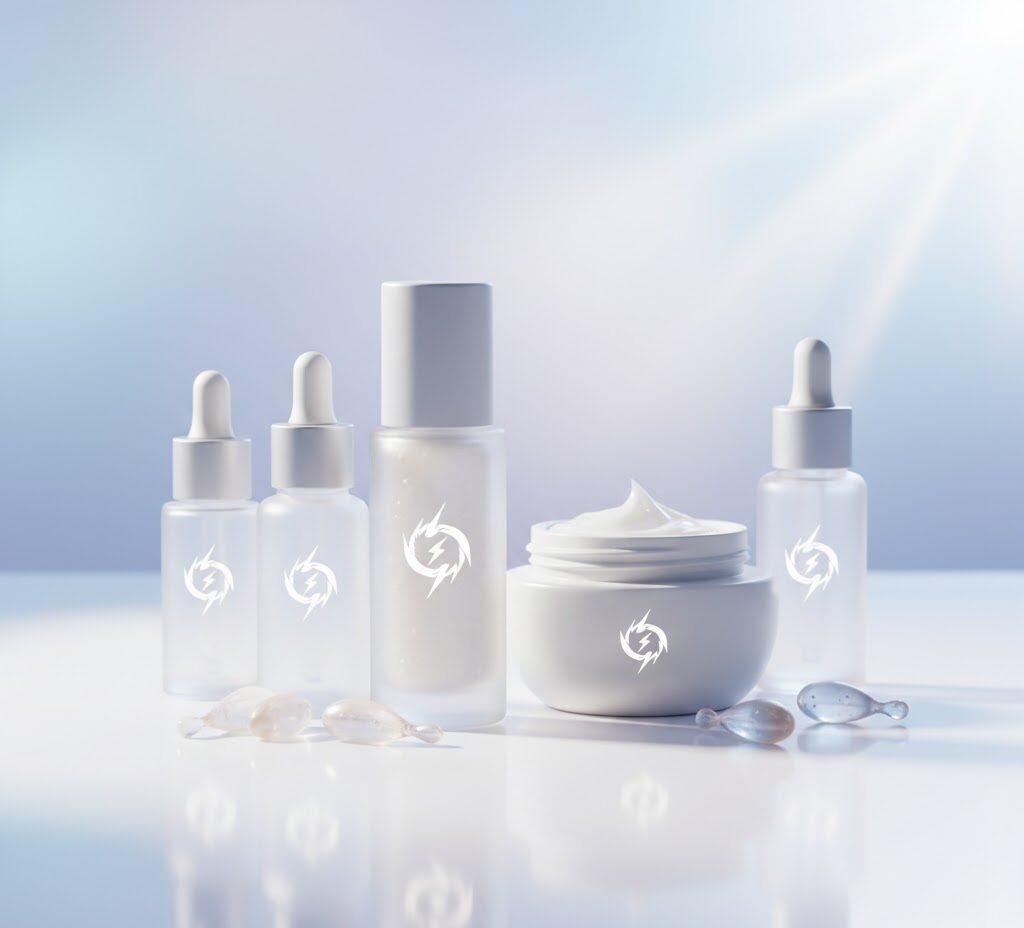
The global market for lightening and whitening agents is heading into a luminous decade. According to recent research, the Global Lightening / Whitening Agents Market is projected to grow from USD 3,408.6 million in 2025 to USD 7,803.5 million by 2035, reflecting an increase of USD 4,394.9 million and a robust compound annual growth rate (CAGR) of 8.6% over the ten-year period.
The demand for brightening, tone-evening and radiance-enhancing skincare continues to accelerate across global markets. Traditional whitening formulations have evolved into scientifically validated systems driven by biotechnology, encapsulation, botanical actives and clinically proven mechanisms. Ingredient manufacturers such as BASF, Clariant, DSM‑Firmenich, Givaudan, Symrise, Ashland, Croda, Seppic, Provital, and Evonik are actively collaborating with skincare and dermocosmetic brands to redefine what “brightening” means in modern skincare.
Key Segments
Here are the major segments in the upcoming market:
By Mechanism:
- Melanin synthesis inhibitors
- Tyrosinase inhibitors — leading with ~38.2% share in 2025
- Exfoliating cell-renewal agents
- Antioxidant brighteners
By Source:
- Synthetic actives
- Botanical actives — ~42.1% share in 2025
- Biotechnology-derived actives
By Delivery System:
- Encapsulated / sustained-release — ~46.2% share in 2025
- Free form
- Microemulsion
By Physical Form:
- Liquid concentrates
- Powders
- Encapsulated beads
By Application:
- Face creams & serums
- Spot correctors
- Body lotions
- Professional peels
By End Use:
- Cosmetic & skincare brands
- Dermocosmetic & clinical applications
- Over-the-counter (OTC) brightening products
By Region:
- North America
- Latin America
- Europe
- East Asia
- South Asia & Pacific
- Middle East & Africa
Trends & Key Takeaways
- The first half of the decade (2025-2030) will add about USD 1,748.8 million (≈40% of decade growth) as skincare brands deploy botanical and fermentation-derived actives in face creams, serums and spot correctors.
- From 2030-2035 the acceleration intensifies, adding around USD 2,646.1 million (≈60% of the decade’s growth) thanks to advanced encapsulation, sustained-release systems and multifunctional brightening formulations.
- Tyrosinase inhibitors remain central: they disrupt melanin synthesis, with molecules like niacinamide, alpha-arbutin and resorcinol derivatives dominating.
- Botanical actives (licorice, mulberry, bearberry, green tea) are driving clean-label demand, while biotechnology-derived actives (bio-fermented kojic acid, stabilized vitamin C derivatives, recombinant peptides) are setting performance benchmarks.
- Encapsulated / sustained-release delivery formats enable enhanced stability, deeper skin penetration and lower irritation — a critical advantage in premium and sensitive skin applications.
- Geographically, Asia (notably China, India, Japan) leads growth, while mature markets in North America and Europe shift emphasis toward tone-evening and radiance rather than “whitening.”
Regional Outlook
- India: Forecast CAGR ~14.1% (2025-2035) — driven by urbanization, rising middle class, Ayurvedic and bio-fermented actives, and expansion into tier-2/3 cities.
- China: Forecast CAGR ~12.5% — strong consumer preference for luminous skin, large domestic biotech manufacturing base and e-commerce growth.
- Japan: Forecast CAGR ~10.1% — dermocosmetic precision, mild yet effective formulations combining peptides and antioxidants.
- United States: Forecast CAGR ~5.2% — shift toward clinical-grade brightening, tone correction and “radiance” positioning. In 2025 the US market is estimated at USD 679.8 million, growing to about USD 1,383.4 million by 2035.
- Europe: Overall CAGR ~7.5% — led by UK (~8.1%) and Germany (~6.1%) through safe, clean-label, clinically backed solutions.
Established and Emerging Manufacturers: Expansion & Innovation
Established players such as BASF, Clariant, DSM-Firmenich, Givaudan and Symrise are scaling their brightening portfolios through high-performance actives, encapsulation platforms and global regulatory compliance. They are well-positioned to partner with global skincare brands and serve large mass-market and premium segments.
Emerging and niche suppliers (for example Ashland, Croda, Seppic, Provital, Evonik) are differentiating themselves via plant-based or fermentation-derived actives, micro-encapsulation, bioavailability improvements and formulations for sensitive and inclusive skin tones. For these manufacturers, the growth strategy lies in flexible innovation, regional customization (especially Asia), and sustainability credentials.
Expansion opportunities for manufacturers include:
- Collaborations with skincare brands to co-develop brightening complexes integrating tyrosinase inhibitors, botanical extracts and delivery systems.
- Investing in encapsulation technologies (liposomes, polymeric microspheres, nanocarriers) to enhance bioavailability, stability and skin-compatibility.
- Scaling biotechnology-derived actives (fermentation, recombinant peptides) to meet regulatory and consumer demand for premium, efficacy-based formulations.
- Expanding into high-growth regions like India, China and Southeast Asia with tailored formulation development, local sourcing of botanical actives and regional regulatory compliance.
- Embracing “brightening + anti-aging + barrier-repair” multifunctional solutions, aligning with consumer demand for skin health rather than pure whitening.
- Adapting to the changing narrative: replacing “whitening” with “brightening”, “radiance” or “tone-evening” to meet global consumer sensibilities and regulatory frameworks.
Competitive Landscape
The global market remains moderately fragmented. While BASF holds a value share of ~8.0% in 2025, many others contribute to the remaining ~92%. Market differentiation is moving beyond simple cost-leadership toward science-driven advantage: ingredient purity, safety, bioavailability and sustainability matter. Strategic collaborations—between ingredient houses and skincare brands—are becoming the norm. In essence, the winners will be those who can offer clinically validated, sustainably sourced, technologically advanced brightening solutions.
Why the Market is Growing
- Advances in skin biology and melanin-pathway understanding enable more refined actives and mechanisms of action.
- Tyrosinase inhibitors remain a dominant mechanism (38.2% share in 2025) due to clinical efficacy.
- Botanical actives (42.1% share in 2025) respond to consumer demand for natural, safe and ethically sourced ingredients.
- Encapsulated delivery systems (46.2% share in 2025) enhance stability, reduce irritation and enable premium formats.
- Rising middle-class buying power in Asia, rapid e-commerce growth, influencer-driven skincare trends and Asian beauty culture all accelerate uptake.
- Strict regulatory frameworks pushing out older synthetic actives like hydroquinone create space for newer, safer technologies and actives.
This Report Now at Just $2000 | Limited-Time Discount Offer! https://www.futuremarketinsights.com/reports/sample/rep-gb-27099
Checkout Now to Access Industry Insights: https://www.futuremarketinsights.com/checkout/27099
About Future Market Insights (FMI)
Future Market Insights, Inc. (ESOMAR certified, recipient of the Stevie Award, and a member of the Greater New York Chamber of Commerce) offers profound insights into the driving factors that are boosting demand in the market. FMI stands as the leading global provider of market intelligence, advisory services, consulting, and events for the Packaging, Food and Beverage, Consumer Technology, Healthcare, Industrial, and Chemicals markets. With a vast team of over 400 analysts worldwide, FMI provides global, regional, and local expertise on diverse domains and industry trends across more than 110 countries.
Contact Us:
Future Market Insights Inc.
Christiana Corporate, 200 Continental Drive,
Suite 401, Newark, Delaware – 19713, USA
T: +1-347-918-3531
For Sales Enquiries: sales@futuremarketinsights.com
Website: https://www.futuremarketinsights.com
LinkedIn| Twitter| Blogs | YouTube