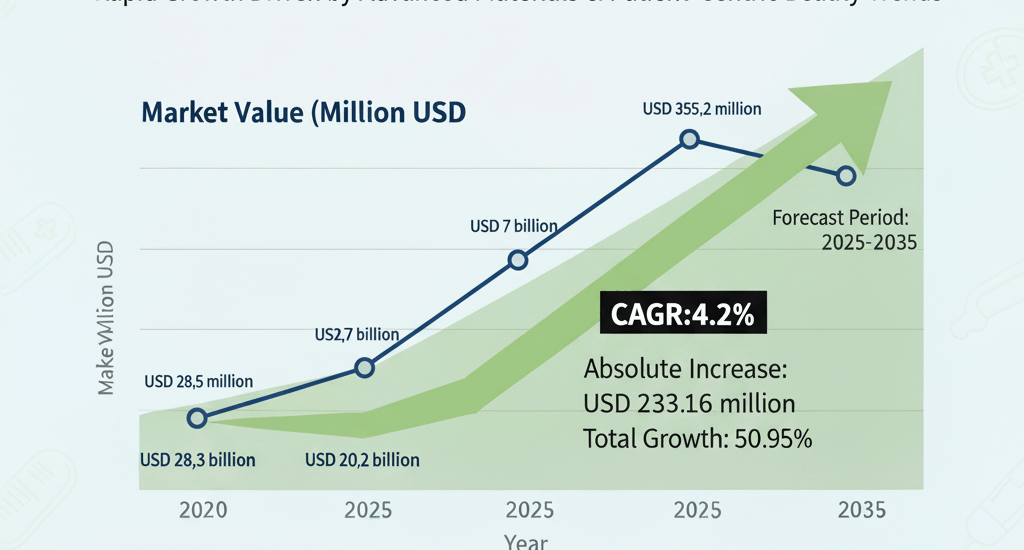
Global sales of carbon fiber composites for prosthetics is estimated to be USD 301.7 million in 2025 and expected to reach a valuation of USD 455.2 million by 2035. The market is projected to grow at a rapid growth rate of 4.2% over the forecast period between 2025 and 2035. The revenue generated by Carbon Fiber Composites for Prosthetics in 2024 was USD 289.5 million. The industry is predicted to exhibit a Y-o-Y growth of 3.9% in 2025.
This robust growth reflects the increasing demand for lightweight, durable, and functional prosthetic solutions that improve the quality of life for amputees.
carbon fiber composites for prosthetics market Overview and Industry Highlights:
The rising global incidence of amputations due to diabetes, vascular diseases, and accidents, combined with an aging population, is driving demand for advanced prosthetic solutions. Carbon fiber composites are preferred materials in modern prosthetics because they offer high strength-to-weight ratios, improved mobility, and reduced fatigue. These materials enable users to perform daily activities comfortably while minimizing physical strain.
Between 2025 and 2035, the market will experience strong growth in Asia-Pacific, Latin America, and Africa, supported by government healthcare initiatives and NGO-led efforts to provide affordable prosthetics. Additionally, technological advancements in manufacturing and reduced production costs are making carbon fiber prosthetics more accessible globally.
Sustainability has also become a defining factor in the industry, with manufacturers increasingly adopting eco-friendly materials and recycling methods. The integration of bio-based resins with carbon fibers is emerging as a sustainable solution that meets stringent environmental regulations and appeals to eco-conscious consumers.
carbon fiber composites for prosthetics market Segmentation by Product Type:
Lower Limb Prosthetics – 45.4% Market Share (2024): Lower limb prosthetics dominate the market due to the widespread use of carbon fiber prosthetic feet. These devices function like a spring—storing energy upon impact and releasing it during push-off, creating a smoother, more efficient stride. Products such as Össur’s Flex-Foot Cheetah exemplify the use of advanced carbon fiber designs in sports and mobility applications.Their lightweight, durable, and energy-efficient design allows users to wear them comfortably all day, improving quality of life for both daily use and athletic performance.
Upper Limb Prosthetics – 27.4% Market Share (2024):This segment includes prosthetic arms, hands, and components that enhance precision and comfort. The growing popularity of multi-functional prosthetic devices with biofeedback systems has spurred demand for carbon fiber composites. Advanced manufacturing methods such as 3D printing and hybrid composites enable highly customized solutions tailored to each user’s needs.Increasing awareness of ergonomic designs and aesthetics, coupled with a rise in upper-limb amputations, continues to fuel this segment’s expansion.
carbon fiber composites for prosthetics market Key Trends and Technological Advancements:
Surge in Sports and Performance Prosthetics: The popularity of adaptive and inclusive sports—such as the Paralympics—has fueled demand for high-performance prosthetics. Devices like the Flex-Foot Cheetah demonstrate how carbon fiber enables strength, flexibility, and energy efficiency for athletic activities. As awareness grows, manufacturers are developing next-generation prosthetics optimized for both professional athletes and active individuals.
Smart Prosthetics Integration: The integration of smart technologies, including sensors, microprocessors, and robotics, is transforming prosthetic functionality. Products like Össur’s Rheo Knee utilize AI-based motion control to adapt to users’ gait patterns, improving comfort and natural movement. Carbon fiber composites play a vital role in these systems by offering lightweight strength that supports embedded electronics without adding bulk.
Sustainability in Carbon Fiber Manufacturing: With environmental regulations tightening, manufacturers are shifting toward recycled carbon fibers and low-energy production methods. Companies such as Carbon Conversions are pioneering recycling technologies that repurpose composite waste for prosthetic manufacturing. This trend aligns with Europe’s sustainability goals and appeals to eco-sensitive markets.
Cost Challenges and Accessibility Barriers: Despite technological progress, the high cost of producing carbon fiber composites remains a key challenge. Raw carbon fiber costs USD 20–40 per kilogram, compared to only a few dollars for aluminum. This restricts affordability in low-income regions. However, continued innovation in low-cost production and government subsidies is expected to improve accessibility over time.
carbon fiber composites for prosthetics market Regional Insights:
United States – Leading Global Market (CAGR: 6.2%): The U.S. leads in both innovation and adoption of carbon fiber prosthetics, supported by a well-developed healthcare system and a population of over 2 million amputees. Access to insurance coverage through Medicare and private health plans makes advanced prosthetics widely available. A strong culture of adaptive sports and active living also boosts demand. Companies such as Össur and Ottobock dominate the U.S. market with advanced prosthetic designs.
Germany – Engineering Excellence and Aging Demographics (CAGR: 5.4%): Germany’s aging population and high prevalence of diabetes drive demand for lightweight prosthetics. Local giants like Ottobock, headquartered in Germany, combine engineering excellence with healthcare innovation to supply advanced carbon fiber prosthetics globally.
Japan – Aging Population and Material Expertise (CAGR: 5.0%): Japan’s domestic expertise in carbon fiber production, combined with its rapidly aging society, makes it a significant market. Companies such as Kawamura Gishi benefit from local material supply chains and universal healthcare access, making carbon fiber prosthetics both affordable and widely available.
China and India – Emerging Growth Engines: Both China and India are witnessing strong demand growth due to expanding healthcare access and government investments in prosthetic affordability programs. Local manufacturing initiatives and lower production costs will make Asia-Pacific the fastest-growing regional market over the forecast period.
carbon fiber composites for prosthetics market Recent Updates:
- March 2024:Össur launched POWER KNEE™ K3, featuring AI-driven motion control and three-day battery life.
- January 2024:Össur expanded in Europe with the acquisition of ProCare Orthopaedics (Ireland).
- February 2024:Ottobock unveiled an enhanced Kenevo microprocessor knee with improved stumble recovery technology.
- December 2023:Ottobock introduced remote prosthetic adjustment features, enhancing digital healthcare accessibility.
Full Market Report available for delivery. For purchase or customization, please request here: https://www.futuremarketinsights.com/checkout/6479
Request for Discount: https://www.futuremarketinsights.com/reports/sample/rep-gb-6479
carbon fiber composites for prosthetics market Future Outlook (2025–2035):
The next decade will mark a transformative period for the carbon fiber composites for prosthetics market. Key trends include:
- Increased adoption of AI and smart sensors in prosthetic systems.
- Broader access in emerging markets through cost-effective production.
- Sustainable manufacturing via recycled and bio-based carbon fibers.
- Personalized prosthetic designs through digital modeling and 3D printing.
The combination of technological innovation, environmental consciousness, and global inclusivity positions the carbon fiber composites for prosthetics market for sustained and meaningful growth through 2035.
Explore More Related Studies Published by Fact.MR Research:
Global Rust Remover market is expected to be valued at USD 579.3 million in 2025. And is projected to reach valuation of USD 891.1 million by 2035, with CAGR of 4.4% over the forecast period.
Global Polyester Resin Dispersion market is expected to be valued at USD 8.37 billion in 2025. And is projected to reach valuation of USD 13.37 billion by 2035, with CAGR of 4.8% over the forecast period.
Global Mercaptopropionic Acid market is expected to be valued at USD 359.8 million in 2025. And is projected to reach valuation of USD 596.3 million by 2035, with CAGR of 5.2% over the forecast period.
About Future Market Insights (FMI)
Future Market Insights, Inc. (ESOMAR certified, recipient of the Stevie Award, and a member of the Greater New York Chamber of Commerce) offers profound insights into the driving factors that are boosting demand in the market. FMI stands as the leading global provider of market intelligence, advisory services, consulting, and events for the Packaging, Food and Beverage, Consumer Technology, Healthcare, Industrial, and Chemicals markets. With a vast team of over 400 analysts worldwide, FMI provides global, regional, and local expertise on diverse domains and industry trends across more than 110 countries.
Contact Us:
Future Market Insights Inc.
Christiana Corporate, 200 Continental Drive,
Suite 401, Newark, Delaware – 19713, USA
T: +1-347-918-3531
For Sales Enquiries: sales@futuremarketinsights.com
Website: https://www.futuremarketinsights.com
LinkedIn| Twitter| Blogs | YouTube