The sodium caseinates market in the European Union is entering a decade of steady expansion, underpinned by increasing adoption of functional proteins in food manufacturing and a shift toward cleaner, high-protein ingredient formulations. With the market poised to increase by over USD 368 million by 2035, the trajectory underscores a growing alignment between evolving consumer preferences and technological progress among ingredient manufacturers.
Sodium caseinates—derived from casein proteins found in milk—play a critical role in the European food ecosystem. They serve as stabilizers, emulsifiers, and protein enhancers across diverse product segments including bakery, confectionery, dairy alternatives, and processed meats. Their versatile functionality makes them indispensable in the formulation of protein-enriched foods and beverages.
Functional and Nutritional Trends Drive Market Momentum
Consumer awareness of protein nutrition, coupled with surging demand for convenient, fortified foods, has created fertile ground for sodium caseinate expansion. The ingredient’s ability to enhance texture, stabilize emulsions, and enrich nutritional profiles positions it as a vital component for food and nutraceutical manufacturers alike.
Between 2025 and 2030, the EU sodium caseinates market is forecast to grow from USD 456 million to USD 612 million—a 42.7% rise that reflects accelerating adoption of functional ingredients. The second half of the forecast period (2030–2035) will see even faster expansion, adding another USD 209 million as clean-label formulations and specialized nutritional applications gain traction.
Beyond food, pharmaceutical manufacturers are utilizing sodium caseinates in controlled-release tablets and coating systems, adding another layer of demand diversity. These cross-industry applications are reinforcing the market’s resilience against supply fluctuations and raw material constraints.
Supply-Side Dynamics: Efficiency over Expansion
While demand continues to soar, EU production capacity is expanding only moderately. Sodium caseinate output is directly tied to casein extraction, which depends on milk production volumes and raw milk allocation across competing end uses such as cheese, infant formula, and whey protein. This structural interdependence means that the sodium caseinates market is sensitive to changes in dairy economics.
Instead of large-scale capacity additions, European processors are focusing on process modernization and efficiency improvements, optimizing milk utilization and yield through advanced filtration and spray-drying technologies. Imports from Oceania—where surplus dairy capacity remains available—help balance regional shortfalls, though increasing global demand for dairy proteins is expected to tighten supply chains and push input costs upward.
Environmental compliance and energy costs also pose challenges. To counteract these pressures, EU producers are increasingly investing in waste valorization, circular processing systems, and energy-efficient technologies that improve sustainability while maintaining profitability.
Food-Grade Sodium Caseinates Dominate with 60% Market Share
The food-grade segment currently represents 60% of total EU sodium caseinates sales and is expected to rise to 62% by 2035. This growth is driven by stringent European food safety regulations, growing consumer trust in certified suppliers, and the superior functional versatility of food-grade sodium caseinates.
Food manufacturers rely heavily on this grade for consistent performance across emulsification, foaming, and nutritional fortification applications. Mature supply chains, technical collaborations, and widespread access to certified dairy processors provide a strong foundation for continued dominance.
Food Additives Lead Application Share at 38%
Food additives remain the largest single application segment for sodium caseinates, commanding 38% of demand in 2025. While its share may decline slightly as emulsifier and stabilizer formats expand, its absolute value is set to increase significantly.
Modern bakery, confectionery, and beverage manufacturers increasingly view sodium caseinates as premium protein additives that improve product quality, texture, and shelf life. Enhanced solubility, protein content standardization, and improved cost efficiency continue to define innovation priorities among both established and emerging ingredient producers.
Direct (B2B) Sales Model Dominates Market Distribution
In 2025, direct B2B sales account for around 62% of market value—a reflection of close collaboration between suppliers and end manufacturers. These partnerships enable tailored formulations, product testing, and long-term supply agreements that ensure consistent quality. Although distributor and online channels are growing, direct supply remains the backbone of the industry due to the technical nature of sodium caseinate applications.
Clean-Label and Sustainable Processing: The Next Frontier
One of the most prominent trends shaping the future of sodium caseinates in Europe is the shift toward clean-label and natural processing technologies. Manufacturers are actively transitioning from traditional chemical neutralization to enzymatic and membrane-based processes that minimize additive use. This aligns with rising consumer expectations for transparency and natural origin ingredients.
Leading players are investing in enzymatic modification, controlled hydrolysis, and advanced drying techniques to produce sodium caseinates with improved solubility, superior emulsification, and enhanced heat stability—all while maintaining clean-label status. These advances are not only attracting health-conscious consumers but also supporting premium pricing in specialized nutrition and organic food categories.
Purchase this Report for USD 5,000 Only | Get an Exclusive Discount Instantly! https://www.futuremarketinsights.com/checkout/27235
Everything You Need—within Your Budget. Request a Special Price Now! https://www.futuremarketinsights.com/reports/sample/rep-gb-27235
Country-Level Insights: Germany and Southern Europe Lead Growth
Germany remains the largest market for sodium caseinates in Europe, thanks to its advanced dairy infrastructure and deep-rooted expertise in functional ingredient innovation. French manufacturers continue to emphasize quality and premium formulations, driven by the country’s sophisticated food culture and culinary standards.
Southern European countries—Spain and Italy—are emerging as dynamic growth hubs, expanding at 6.1–6.2% CAGR through 2035. Their rapidly modernizing food industries and thriving bakery and processed meat sectors are creating significant opportunities for both local and international suppliers. The Rest of Europe region, encompassing smaller and developing EU economies, leads overall growth with a 6.3% CAGR, reflecting expanding industrial capacity and demand for protein fortification.
Competitive Landscape: Established Leaders Meet Innovative Entrants
The European sodium caseinates landscape is moderately fragmented, featuring a mix of global leaders, regional cooperatives, and specialized ingredient firms.
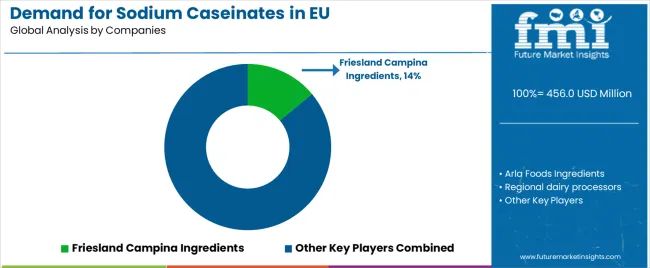
FrieslandCampina Ingredients holds the largest share at approximately 14%, leveraging its vast dairy network, advanced casein production capacity, and deep technical expertise. Arla Foods Ingredients follows closely with a 12.5% share, supported by strong customer partnerships and advanced solubility and emulsification technologies.
Beyond these giants, regional dairy processors and emerging players account for nearly three-quarters of total market activity. Many of these companies are gaining ground through niche specialization—developing customized sodium caseinate grades, offering localized supply chains, and providing technical support tailored to small and mid-sized food manufacturers.
About Future Market Insights (FMI)
Future Market Insights, Inc. (ESOMAR certified, recipient of the Stevie Award, and a member of the Greater New York Chamber of Commerce) offers profound insights into the driving factors that are boosting demand in the market. FMI stands as the leading global provider of market intelligence, advisory services, consulting, and events for the Packaging, Food and Beverage, Consumer Technology, Healthcare, Industrial, and Chemicals markets. With a vast team of over 400 analysts worldwide, FMI provides global, regional, and local expertise on diverse domains and industry trends across more than 110 countries.
Contact Us:
Future Market Insights Inc.
Christiana Corporate, 200 Continental Drive,
Suite 401, Newark, Delaware – 19713, USA
T: +1-347-918-3531
For Sales Enquiries: sales@futuremarketinsights.com
Website: https://www.futuremarketinsights.com
LinkedIn| Twitter| Blogs | YouTube