The demand for soft magnetic composites (SMCs) across the European Union is set to expand significantly, increasing from USD 11.2 million in 2025 to USD 20.6 million by 2035, representing an absolute increase of USD 9.4 million and a compound annual growth rate (CAGR) of 6.3%. This growth reflects Europe’s accelerating transition toward electrification, renewable energy integration, and energy-efficient technologies.
SMCs are fast becoming indispensable in the EU’s evolving industrial landscape, primarily driven by their superior performance in high-frequency, lightweight, and energy-efficient applications. As industries pursue higher efficiency and sustainability goals, manufacturers—both established and emerging—are investing in innovative SMC technologies to meet the continent’s growing demand.
Electronics Lead, Automotive Accelerates
The electrical and electronics industry currently commands the largest share of soft magnetic composite consumption, accounting for nearly half of total demand. SMCs are vital in inductors, transformers, and electromagnetic shielding applications, where they help reduce eddy current losses and allow compact designs in consumer and communication electronics.
However, the automotive sector is emerging as the fastest-growing end-use category. The EU’s stringent energy-efficiency and emission-reduction directives are steering automakers toward lightweight, high-performance materials. SMCs are being increasingly adopted in electric vehicle (EV) traction motors, onboard chargers, and auxiliary power systems. The ability of SMCs to offer high permeability, low core losses, and complex shaping flexibility is enabling next-generation EV motor designs.
Between 2025 and 2030, the expansion of EV assembly lines across Western and Northern Europe will fuel exponential demand, while Eastern Europe strengthens its manufacturing capacity to supply motor and power component parts.

Industrial, Renewable, and High-Tech Sectors Strengthen the Demand Base
Beyond automotive and electronics, the industrial machinery and renewable energy sectors are emerging as major growth areas for SMC adoption. In power electronics, robotics, and compact drives, these materials enhance performance through energy efficiency and frequency optimization.
In renewable energy systems, particularly wind and solar inverters, SMCs are gaining traction for their role in magnetic energy conversion and power regulation. Smaller yet highly valuable applications are also emerging across medical devices and aerospace—including sensors, imaging systems, and avionics—where precision and miniaturization are paramount.
The evolving demand landscape shows that while electronics will remain a steady demand anchor, automotive electrification and industrial automation will be the key drivers of incremental growth through 2035.
Material and Application Insights
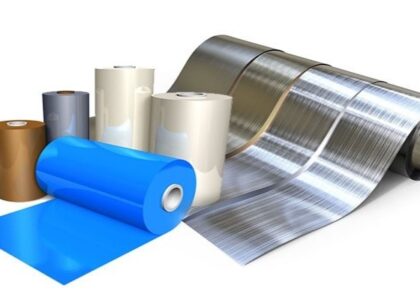
By product type, electrical steel dominates with a 40% market share in 2025, owing to its reliability, superior flux density, and mature manufacturing infrastructure across Europe. Despite a minor decline to 39% by 2035 as iron powder composites gain traction in EV applications, electrical steel will remain the core material choice for traditional motor and transformer designs.
By application, motors account for 36% of total SMC demand in 2025, growing to 38% by 2035. Electric traction motors, industrial drives, and automation systems increasingly rely on SMCs for efficiency, torque density, and lightweight construction.
Distribution-wise, direct-to-OEM channels dominate with 62% share, expected to rise to 65% by 2035, as OEMs prioritize direct relationships with magnetic material suppliers for quality assurance, supply reliability, and co-engineered solutions.
Regional Highlights: Germany Leads, Southern Europe Gains Momentum
The EU SMC market shows diverse growth patterns across key economies.
- Germany remains the largest market, expanding at a 6.0% CAGR, supported by its robust automotive ecosystem, advanced industrial motor production, and engineering excellence.
- France, growing at 5.8% CAGR, benefits from automotive electrification efforts led by Renault and Stellantis, and from aerospace demand for premium-grade magnetic materials.
- Italy grows at 6.4% CAGR, leveraging its strong automotive component manufacturing base and expanding electric drivetrain production.
- Spain, with 6.6% CAGR, demonstrates rapid growth through component manufacturing for EVs and power electronics systems.
- The Netherlands emphasizes power electronics and high-tech manufacturing with a 6.2% CAGR, leading in ferrite and inductor material applications.
- The Rest of Europe leads in overall growth at 8.0% CAGR, with emerging EV and automation industries expanding in Central and Eastern Europe.
Purchase this Report for USD 5,000 Only | Get an Exclusive Discount Instantly! https://www.futuremarketinsights.com/checkout/27243
Everything You Need—within Your Budget. Request a Special Price Now! https://www.futuremarketinsights.com/reports/sample/rep-gb-27243
Innovation, Sustainability, and Circular Economy at the Core
Manufacturers across the EU are investing heavily in nano-coating and powder metallurgy technologies to improve SMC magnetic performance, reduce losses, and enable 3D component geometries. Advanced coatings such as atomic layer deposition (ALD) and sol-gel insulation are being adopted to improve efficiency in high-frequency electric motor applications.
Moreover, European producers are aligning with the EU’s circular economy objectives, developing recyclable SMC materials, closed-loop powder metallurgy systems, and eco-friendly production methods that support carbon neutrality goals.
Competitive Landscape: Established and Emerging Players Drive Innovation
The EU SMC market remains moderately consolidated but increasingly competitive as new entrants invest in specialized materials and technology partnerships.
Höganäs AB, holding an estimated 14% market share, leads through its comprehensive European powder metallurgy network and collaborations with leading motor OEMs. Magnetec GmbH (6.5%) focuses on high-performance motor cores for automotive electronics, while GKN Powder Metallurgy (5.8%) leverages its automotive manufacturing integration to expand SMC-based components.
Sumitomo Electric (4.2%) brings advanced Japanese electromagnetic technologies to European EV applications, and Rio Tinto Metal Powders (3.9%) supports raw material supply for powder-based SMC production.
New players and SMEs across Central and Eastern Europe are entering the market with regionally localized production facilities and innovative material formulations, contributing to a more dynamic and technology-driven supply chain ecosystem.
About Future Market Insights (FMI)
Future Market Insights, Inc. (ESOMAR certified, recipient of the Stevie Award, and a member of the Greater New York Chamber of Commerce) offers profound insights into the driving factors that are boosting demand in the market. FMI stands as the leading global provider of market intelligence, advisory services, consulting, and events for the Packaging, Food and Beverage, Consumer Technology, Healthcare, Industrial, and Chemicals markets. With a vast team of over 400 analysts worldwide, FMI provides global, regional, and local expertise on diverse domains and industry trends across more than 110 countries.
Contact Us:
Future Market Insights Inc.
Christiana Corporate, 200 Continental Drive,
Suite 401, Newark, Delaware – 19713, USA
T: +1-347-918-3531
For Sales Enquiries: sales@futuremarketinsights.com
Website: https://www.futuremarketinsights.com
LinkedIn| Twitter| Blogs | YouTube