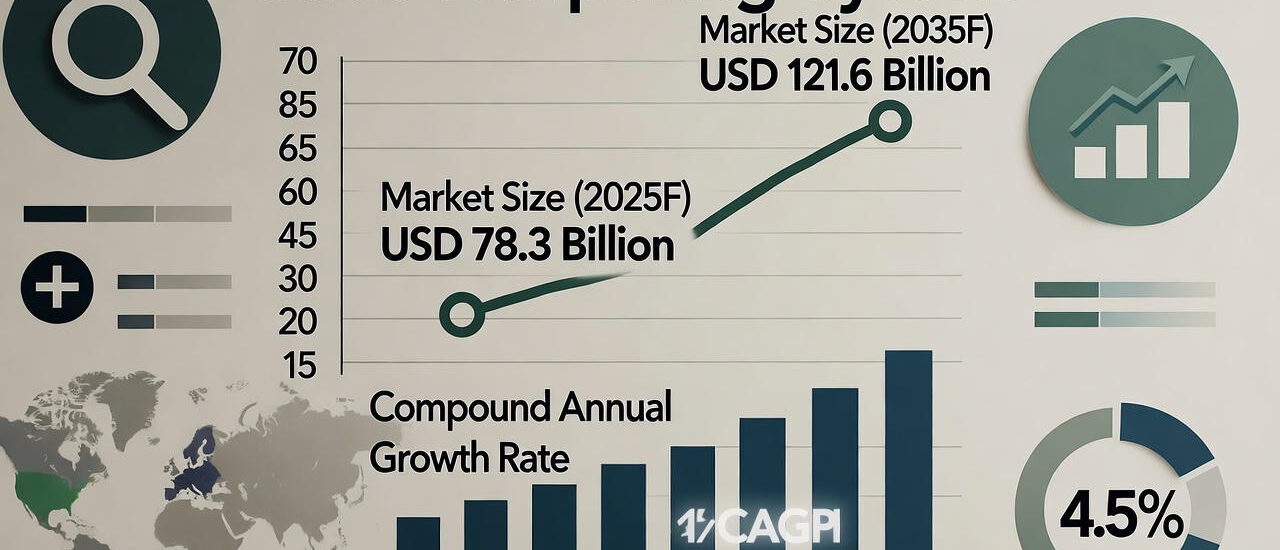
The global glass tempering system market is poised for significant expansion, projecting a steady rise from USD 78.3 Billion in 2025 to an impressive USD 121.6 Billion by 2035, exhibiting a Compound Annual Growth Rate (CAGR) of 4.5%. This robust growth is primarily fueled by the escalating demand for energy-efficient, high-strength, and durable glass solutions across diverse end-use industries, including automotive, construction, and electronics. The market’s trajectory is further propelled by thriving construction sectors in developing economies, increasing investments in infrastructure, and the anticipated implementation of stricter safety norms.
Get this Report at $5000 Only (Report price) | Exclusive Discount Inside!: https://www.futuremarketinsights.com/reports/sample/rep-gb-3855
Competitive Landscape: Innovation Driving Market Leaders
The glass tempering system market is a dynamic arena, shaped by a blend of global leaders and specialized manufacturers. Companies like Glaston Corporation (estimated 12-17% market share), LiSEC Group (estimated 10-14% market share), and North Glass (estimated 8% market share) are at the forefront, driving innovation and shaping the future of glass processing. Their focus on high-precision tempering solutions, energy-efficient furnaces, and automation-driven production lines is enhancing glass strength, safety, and overall production efficiency, setting industry benchmarks.
Market Dynamics: Key Drivers and Emerging Trends
The market is witnessing a profound transformation driven by the deployment of Industry 4.0 technologies. IoT-enabled tempering systems, offering real-time monitoring, are revolutionizing the industry by increasing production efficiency and significantly lowering operational costs. Furthermore, a growing global emphasis on environmental awareness and sustainability is fostering demand for eco-friendly glass tempering solutions that minimize energy usage and carbon footprint. The rapid advancements in smart glass technology are also contributing to market growth, with tempered glass finding increasing applications in solar panels, touchscreens, and automotive windshields.
Regional Growth Powerhouses
North America: Leading the Charge with Stringent Regulations
North America, particularly the USA and Canada, currently holds the largest share of the glass tempering system market. This dominance is attributed to the growing demand for safety glass in construction, automotive, and electronics sectors. Stringent building safety regulations, such as ASTM standards in the USA, are driving the adoption of high-performance tempering systems. The burgeoning electric vehicle (EV) industry in the region is also creating substantial demand for high-strength tempered glass in automotive applications. Manufacturers are actively embracing IoT-based monitoring to optimize production efficiency and reduce downtime.
Europe: Green Initiatives and Automotive Prowess
Major European markets, including Germany, France, Italy, and the UK, are significant contributors to the glass tempering systems market. The robust European automotive industry, with giants like BMW, Mercedes-Benz, and Volkswagen, is a key driver for high-quality tempered glass. Increasing urbanization and smart city projects are fueling growth in the construction sector, with governments encouraging the use of energy-efficient building materials. Stringent EU regulations like EN 12150 standards are pushing manufacturers to invest in precision tempering systems for flawless architectural glass. The rising solar energy sector is also increasingly utilizing tempered glass in photovoltaic (PV) panels, aligning with Europe’s transition towards renewable energy.
Asia-Pacific: Fastest-Growing Hub of Industrialization
The Asia-Pacific region is projected to be the fastest-growing market for glass tempering systems, propelled by rapid industrialization, urbanization, and booming automotive production. China, India, Japan, and South Korea are leading this growth. China, as the largest consumer and producer of tempered glass, benefits from strong demand in its construction and automotive industries. India’s rapid infrastructure development, particularly with the “Make in India” initiative, is driving domestic manufacturing of tempering systems. Japan and South Korea, with their advanced manufacturing industries, are seeing high demand for smart glass technologies in consumer electronics, automotive displays, and solar panels, increasingly adopting fully automatic, AI-led glass tempering machines.
Outlook on Tempering Technologies: CHQE and Advanced Configurations Set the Standard
CHQE Systems: Precision and Efficiency Leading the Way
CHQE (Convection Heating with Quench & Equalization) and advanced configuration glass tempering systems are dominating the market due to their superior performance, energy efficiency, and precision control. These systems are crucial across automotive, construction, architectural, and electronics industries, delivering optimal glass strength, enhanced thermal stability, and advanced surface quality. CHQE technology, with its forced convection heating, offers significant advantages over conventional methods by improving thermal efficiency and quenching performance, thereby reducing optical distortion and enhancing stress specification. While requiring a sizable initial investment, continuous advancements in smart temperature monitoring and AI-enabled optimization are making CHQE systems more accessible and cost-effective.
Advanced Configurations: Customization for Niche Applications
Advanced configuration glass tempering systems excel in niche glass processing applications demanding extensive customization and multi-step treatments. These systems, integrated with adaptive control mechanisms and precision temperature profiling, allow for tailored glass tempering parameters, crucial for specialized products. The solar energy sector heavily relies on these systems for producing high-transparency and insulated solar glass panels. Furthermore, the interior design, luxury furniture, and defense and aerospace industries are increasingly adopting advanced configurations for their specialized needs, ensuring high durability and aesthetic appeal.
Flat and Bent Glass Tempering: Versatility for Diverse Industries
Flat Glass Tempering: The Backbone of Architectural and Industrial Applications
Flat glass tempering systems remain the most widely adopted technology, providing uniform heat distribution, enhanced optical clarity, and mechanical strength for a vast array of commercial, residential, and industrial applications. Driven by the increasing demand for Low-E (low emissivity) glass, smart glass, and multi-layer laminated glass, significant investments are being made in high-capacity flat glass tempering lines. These systems are integral for machine enclosures, display screens, protective barriers, and retail displays, ensuring safety, durability, and aesthetic appeal.
Bent Glass Tempering: Shaping the Future of Automotive and High-End Architecture
Bent glass tempering systems are experiencing strong market adoption, particularly in automotive, luxury architectural, and high-performance glass applications. The automotive industry is the largest consumer, requiring curved windshields, panoramic sunroofs, and aerodynamically optimized side windows for modern vehicle designs. In architecture, bent tempered glass panels are creating unique, visually striking designs for contemporary skyscrapers and bespoke interiors, offering seamless integration with curved surfaces and improved structural strength. While production complexity exists, advancements in automated glass shaping and AI-driven stress analysis are improving scalability and cost-effectiveness.
Buy Now Report Here: https://www.futuremarketinsights.com/checkout/3855
Market Shifts: A Decade of Transformation (2025-2035)
The period from 2025 to 2035 is anticipated to witness a significant shift towards AI-backed automation, energy-efficient tempering solutions, and deeper integration with smart manufacturing ecosystems. Regulatory frameworks will become increasingly stringent, prioritizing sustainable production practices and low-carbon emissions, fostering the adoption of green manufacturing processes and closed-loop glass production systems.
Technological advancements will be characterized by the prevalence of predictive maintenance, AI-driven monitoring systems, and robotic automation, with IoT becoming integral to smart factories. The rise of digital twin technology will enable manufacturers to simulate and optimize tempering operations, minimizing defects and waste. The automotive industry, driven by the proliferation of autonomous and electric vehicles, will demand highly advanced, multifunctional tempered glass with integrated sensors and augmented reality displays. Simultaneously, the burgeoning solar energy sector will continue to drive demand for tempered glass with high optical transmission and anti-soiling coatings.
The global glass tempering system market is clearly on an upward trajectory, propelled by innovation, evolving safety standards, and a strong commitment to sustainability. As industries continue to seek advanced glass solutions, the demand for sophisticated tempering technologies will only intensify.
Related Reports:
Military Parachute Market- https://www.futuremarketinsights.com/reports/military-parachute-market
Automated Parcel Delivery Terminals Market- https://www.futuremarketinsights.com/reports/automated-parcel-delivery-terminals-market
Automatic Checkweigher Market- https://www.futuremarketinsights.com/reports/automatic-checkweigher-market
About Future Market Insights (FMI)
Future Market Insights, Inc. (ESOMAR certified, recipient of the Stevie Award, and a member of the Greater New York Chamber of Commerce) offers profound insights into the driving factors that are boosting demand in the market. FMI stands as the leading global provider of market intelligence, advisory services, consulting, and events for the Packaging, Food and Beverage, Consumer Technology, Healthcare, Industrial, and Chemicals markets. With a vast team of over 400 analysts worldwide, FMI provides global, regional, and local expertise on diverse domains and industry trends across more than 110 countries.
Join us as we commemorate 10 years of delivering trusted market insights. Reflecting on a decade of achievements, we continue to lead with integrity, innovation, and expertise.
Contact Us:
Future Market Insights Inc.
Christiana Corporate, 200 Continental Drive,
Suite 401, Newark, Delaware – 19713, USA
T: +1-347-918-3531
For Sales Enquiries: sales@futuremarketinsights.com
Website: https://www.futuremarketinsights.com
LinkedIn| Twitter| Blogs | YouTube