The European vapour barrier market is entering a decade of strong, sustained growth, with demand forecasted to increase from USD 2.6 billion in 2025 to USD 4.2 billion by 2035, expanding at a compound annual growth rate (CAGR) of 4.9%. This renewed momentum marks a significant shift from the moderate growth phase seen between 2020 and 2024, when construction activity was subdued and renovation programs were slower to take off.
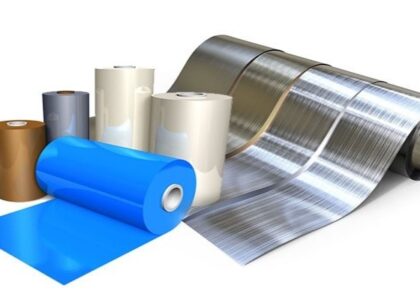
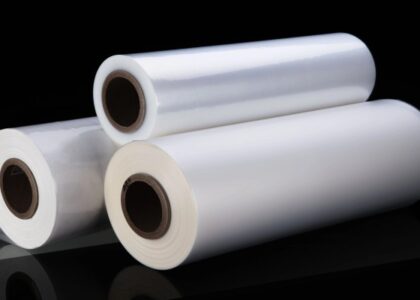
The industry is now on a firmer foundation, propelled by building renovation programs, tighter moisture control regulations, and advancements in membrane technology. While commodity polyethylene films continue to dominate in volume due to affordability and easy availability, the premium segment of laminated and cross-laminated barriers is driving value growth. These high-performance products, designed for enhanced puncture resistance and variable permeance, are becoming the preferred choice for energy-efficient and long-lasting building envelopes.
Construction and Retrofit Demand Anchor Market Expansion
The construction sector remains the cornerstone of vapour barrier demand across Europe. These materials are essential in roofs, walls, basements, and flooring systems — particularly in northern and central Europe, where cold climates intensify the need for moisture protection. Beyond new builds, the market’s stability is reinforced by the EU’s focus on retrofit and renovation programs, ensuring consistent demand rather than cyclical peaks.
Industrial and commercial infrastructure, including warehouses and logistics hubs, continue to account for the largest share of demand, while residential and DIY refurbishment projects provide a smaller yet steady contribution. Outside of construction, automotive, electronics, and healthcare applications are also growing steadily. In the automotive sector, vapour barriers enhance cabin moisture control and sound insulation, while electronics manufacturers utilize advanced laminates to protect sensitive devices. Agricultural use — such as silage and greenhouse covers — is emerging as a niche yet promising application area.

Regional Leaders and Rising Hubs in Eastern Europe
Across the EU, Germany, France, and the Nordic countries remain the dominant consumers of vapour barriers, benefiting from cold climates, mature building industries, and comprehensive energy codes. Germany, in particular, continues to lead the regional market, maintaining an estimated 26% share in 2025, with growth supported by stringent passive house standards and large-scale renovation programs under KfW funding.
France demonstrates consistent growth driven by its RE2020 energy code and tax incentives such as MaPrimeRénov, encouraging residential retrofits. Meanwhile, Italy and Spain are leveraging national renovation schemes and construction recovery efforts to expand vapour barrier use in both new and existing buildings.
Rapid growth is also taking shape in Eastern Europe, led by Poland, Czechia, and Romania, where industrial projects and commercial real estate investments are accelerating. These regions, though import-dependent, are strengthening their local presence through strategic distribution and partnerships with Western European suppliers. Supply hubs in Germany, France, and Italy continue to serve as the backbone of EU production, while imports from Asia supply cost-competitive polyethylene films and specialized laminates, carefully filtered through EU’s strict CE marking and REACH compliance standards.
Smart Membranes and Sustainable Materials Define the Next Decade
Technological innovation is reshaping the future of the vapour barrier industry. Smart vapour membranes, capable of adjusting permeance based on humidity levels, are emerging as the standard for high-performance buildings. These humidity-responsive systems enable optimal moisture diffusion, preventing condensation during winter and supporting drying during warmer months — a vital advantage in Europe’s diverse climate zones.
Manufacturers are also expanding into eco-friendly materials and low-VOC formulations, aligning with the EU Green Deal’s sustainability goals. Spray-applied coatings are gaining interest for complex geometries, although they currently face challenges with thickness consistency and long-term performance validation. As digital construction tools and prefabrication advance, vapour barrier producers are integrating installation simplification technologies and air-barrier combinations, offering builders fully integrated envelope systems.
Membranes Lead, Insulation Applications Dominate
By product type, membranes remain the dominant category, commanding 56.1% of the EU market in 2025, and projected to rise to 58% by 2035. These products combine flexibility, controlled permeance, and strong mechanical performance, making them indispensable across both new builds and retrofits. European manufacturers benefit from decades of membrane production expertise and established certification frameworks ensuring compliance with local building standards.
By application, insulation systems represent roughly 40% of total vapour barrier demand, increasing slightly over the forecast period. With building codes tightening across the continent, insulation assemblies now require more advanced vapour control systems that prevent condensation, ensure thermal continuity, and contribute to passive or net-zero energy performance.
Distribution Trends: Contractors Take the Lead
Distribution patterns show direct-to-contractor channels accounting for 60% of total sales in 2025, expected to rise to 62% by 2035. This dominance reflects the critical importance of manufacturer–contractor relationships, where technical support, installation training, and building science consulting are integral to ensuring compliance and performance. Manufacturers increasingly provide field training, digital installation guides, and on-site testing to help installers meet airtightness and moisture control standards.
Purchase this Report for USD 5,000 Only | Get an Exclusive Discount Instantly! https://www.futuremarketinsights.com/checkout/27230
Everything You Need—within Your Budget. Request a Special Price Now! https://www.futuremarketinsights.com/reports/sample/rep-gb-27230
Competitive Landscape: Established Leaders and New Innovators
The EU vapour barrier market combines the scale of established multinational players with the agility of emerging regional specialists. Kingspan Group, with around 10% market share, leads through its integrated building envelope systems, providing insulation, vapour control, and airtightness solutions under one portfolio. Its focus on passive house compatibility and direct contractor engagement strengthens its European presence.
Soprema Group, holding approximately 7.5% share, continues to expand its influence through comprehensive membrane and waterproofing solutions, spanning self-adhered sheets, fluid-applied coatings, and specialty products tailored for diverse climates.
Carlisle Companies (CCW), representing roughly 6.5% share, benefits from its position in roofing and below-grade waterproofing systems, leveraging contractor networks and proven installation reliability. Saint-Gobain, through its GCP Applied Technologies division, contributes around 5% share, supported by strong European distribution and a multi-product building materials portfolio. BASF SE, with an estimated 4% share, continues to drive innovation through polymer science, focusing on low-emission, durable formulations.
Beyond these established leaders, numerous regional and emerging manufacturers are carving niches in specialized membranes, green materials, and adaptive coatings. Companies in Eastern Europe, Benelux, and the Nordics are exploring cross-laminated and metallized vapour barriers, while start-ups are leveraging bio-based polymers and AI-enabled quality control to enter the premium segment.
About Future Market Insights (FMI)
Future Market Insights, Inc. (ESOMAR certified, recipient of the Stevie Award, and a member of the Greater New York Chamber of Commerce) offers profound insights into the driving factors that are boosting demand in the market. FMI stands as the leading global provider of market intelligence, advisory services, consulting, and events for the Packaging, Food and Beverage, Consumer Technology, Healthcare, Industrial, and Chemicals markets. With a vast team of over 400 analysts worldwide, FMI provides global, regional, and local expertise on diverse domains and industry trends across more than 110 countries.
Contact Us:
Future Market Insights Inc.
Christiana Corporate, 200 Continental Drive,
Suite 401, Newark, Delaware – 19713, USA
T: +1-347-918-3531
For Sales Enquiries: sales@futuremarketinsights.com
Website: https://www.futuremarketinsights.com
LinkedIn| Twitter| Blogs | YouTube