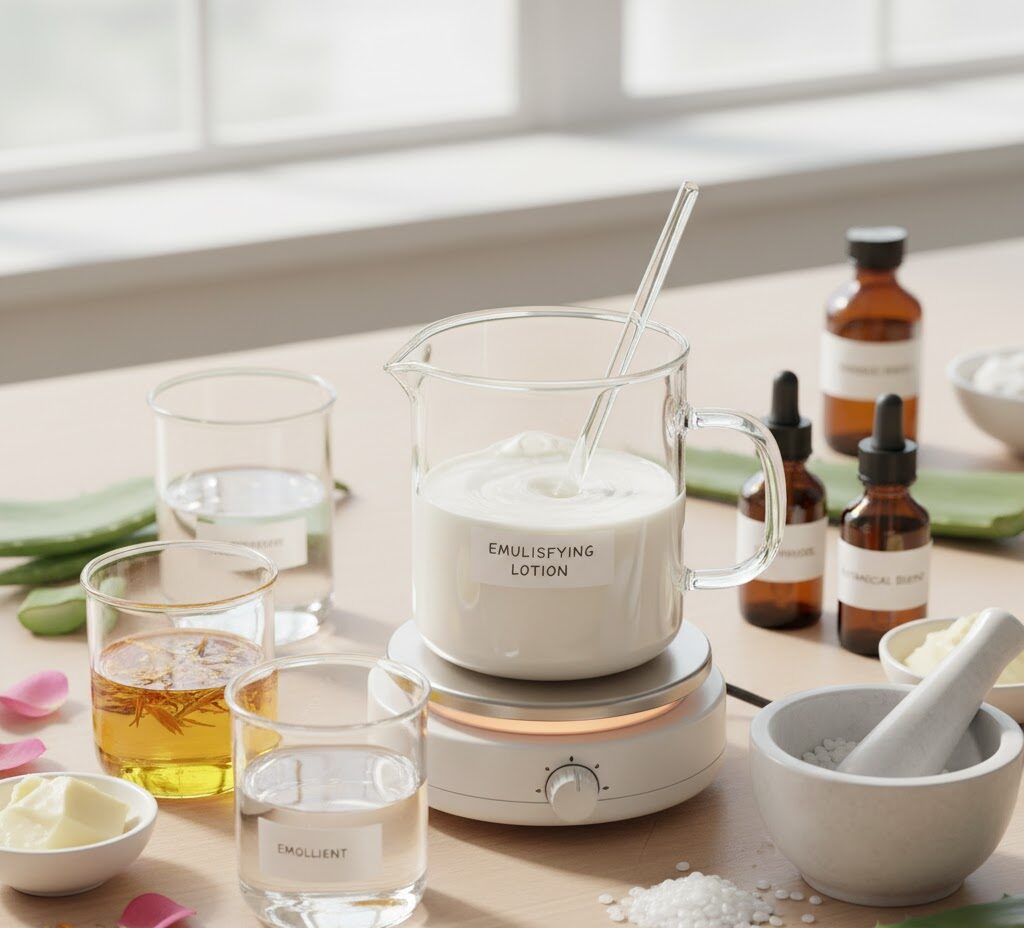
The global Emulsifying Skincare Lotions Market is poised for significant expansion, growing from USD 11,203.6 million in 2025 to USD 23,503.8 million by 2035, at a steady CAGR of 7.7%. Fueled by a shift toward clean beauty, bio-based emulsifiers, and clinical skincare formulations, the market is set to double in value over the decade. Among product types, water-in-oil intensive lotions will continue to dominate with a 51.9% share in 2025, while oil-in-water daily lotions will account for 48.1% of global market revenue.
Key Market Statistics
- Market Size (2025): USD 11,203.6 million
- Market Size (2035): USD 23,503.8 million
- CAGR (2025–2035): 7.7%
- Leading Product Type: Water-in-oil intensive lotions (51.9%)
- Top Growth Regions: Asia-Pacific, Europe, North America
- Leading Brands: Neutrogena, Nivea, L’Oréal Paris, CeraVe, Olay, Eucerin, Aveeno, Clinique, La Roche-Posay, The Ordinary
Market Overview: Innovation Meets Skin Science
The emulsifying skincare lotions industry is entering a new era where bio-based technology, clinical validation, and sustainability define success. In 2025, the market stands at USD 11.2 billion, driven by increasing consumer demand for lightweight, dermatologist-tested emulsions that combine hydration, barrier repair, and environmental protection.
Over the next decade, manufacturers—both established giants and emerging indie brands—are expected to accelerate investments in PEG-free emulsifier systems, cold-process emulsification, and biomimetic formulations that replicate the skin’s natural lipid layer.
From 2025 to 2030, the market is expected to add USD 5 billion in value, primarily driven by advances in polyglyceryl esters and lecithin-based emulsifiers. The latter half of the decade will see even stronger momentum, adding nearly USD 7.3 billion by 2035, as digital retail and clean-label formulations reshape skincare consumption.
Why the Market is Growing
Consumers today prioritize skincare that does more than just moisturize—it must protect, repair, and restore. Rising rates of sensitive skin, pollution exposure, and over-exfoliation are fueling demand for gentle, dermatologist-approved emulsifying lotions. Ingredients such as polyglyceryl esters and lecithin are gaining traction for their mildness and ability to support long-term hydration.
Additionally, the surge of e-commerce and pharmacy-based retail is transforming market accessibility. Online beauty platforms allow for personalized skincare recommendations and subscription-based sales, while pharmacies enhance credibility with clinical-grade positioning. This dual-channel synergy ensures strong global reach and repeat consumer engagement.
Key Market Segments
By Product Type
- Water-in-oil intensive lotions – 51.9% share (2025)
- Favored for dry and sensitive skin
- Offers deep hydration and barrier protection
- Enhanced with advanced emulsifiers like lecithin and sucrose esters
- Oil-in-water daily lotions – 48.1% share (2025)
- Lightweight, fast-absorbing, and suitable for combination skin
- Cold-process lotions – Energy-efficient and sustainable production
- Sensitive/PEG-free lotions – Clean-label innovation for gentle skincare
By Emulsifier Base
- Polyglyceryl esters (36.7%) – Clean beauty champion; PEG-free and biodegradable
- Lecithin-based emulsifiers – Naturally derived and mild
- Fatty alcohol/ester blends – Provide emulsion stability
- Sucrose esters – Add texture and sensory appeal
By Function
- Moisturizing & Barrier Care (44.3%) – Core category addressing dryness and sensitivity
- Anti-aging Active Delivery – Combining emulsification with peptide and retinol systems
- Brightening/Tone-evening – Infused with vitamin C and niacinamide
- SPF Day Lotions (Non-tinted) – Broad-spectrum protection
By Channel
- E-commerce – Personalization, subscriptions, and online dermatologist consultations
- Pharmacies & Drugstores – Trusted clinical formulations
- Specialty Beauty Retail – Premium and professional skincare lines
- Supermarkets & Hypermarkets – Growing presence of affordable dermocosmetic brands
By End User
- Women
- Men
- Unisex family care
- Sensitive-skin users
By Region
- North America: Dermatologist-backed innovation and pharmacy-led growth
- Europe: Sustainability compliance and PEG-free transition
- Asia-Pacific: Digital retail dominance and high adoption rates
- Latin America, Middle East & Africa: Expanding consumer base and growing skincare awareness
Regional Growth Insights
Asia-Pacific – Global Growth Powerhouse
Asia-Pacific leads the global expansion, with India (17.4% CAGR) and China (15.5% CAGR) driving demand for affordable, multifunctional emulsifying lotions. Domestic brands are innovating with plant-based emulsifiers and Ayurvedic blends, while digital-first beauty platforms fuel nationwide adoption.
Europe – Sustainability and Clinical Integrity
The UK (10.0%) and Germany (7.5%) continue to anchor European market leadership. German brands like Nivea and Eucerin set global standards in dermatological research and safety compliance, while UK brands leverage natural emulsifiers and eco-friendly packaging to align with government-backed clean beauty initiatives.
North America – Clinical and Clean Beauty Growth
The U.S. market, growing at 6.4% CAGR, is shaped by the influence of brands such as Neutrogena, CeraVe, and Aveeno. Demand is rising for multi-functional, dermatologist-endorsed emulsifying lotions that combine hydration with anti-aging and SPF benefits.
Competitive Landscape: Collaboration and Innovation at the Core
The Emulsifying Skincare Lotions Market remains moderately fragmented but highly competitive.
- Top Global Leaders: Neutrogena, Nivea, L’Oréal Paris, CeraVe, and Olay dominate with advanced R&D, dermatologist partnerships, and clinical efficacy claims.
- Mid-Tier Innovators: Eucerin, Aveeno, Clinique, and La Roche-Posay are diversifying product lines into sensitive-skin and brightening segments, supported by online consultation tools.
- Emerging Brands: The Ordinary and indie labels are winning consumers with minimalist, transparent, and clean-label formulations.
The competitive edge is shifting from brand heritage to formulation credibility. Manufacturers that integrate bio-based emulsifiers, cold-process technology, and eco-certified ingredients are set to lead the next decade of skincare innovation.
Recent Developments
- January 2025: Neutrogena and L’Oréal Paris launched biomimetic emulsifying systems replicating the skin’s lipid layer for enhanced hydration.
- June 2025: Nivea (Beiersdorf AG) partnered with the Fraunhofer Institute to pioneer cold-process emulsification, reducing energy use by 40% while maintaining texture stability.
Key Market Drivers & Trends
- Rising demand for sensitive-skin formulations with mild, PEG-free emulsifiers.
- Rapid digitalization through e-commerce and tele-dermatology.
- Bio-based emulsifier innovation aligning with sustainability goals.
- Growth of pharmacy-led skincare across Europe and North America.
- Emerging regional brands leveraging localized R&D and natural ingredient sourcing.
This Report Now at Just $2000 | Limited-Time Discount Offer! https://www.futuremarketinsights.com/reports/sample/rep-gb-27091
Checkout Now to Access Industry Insights: https://www.futuremarketinsights.com/checkout/27091
About Future Market Insights (FMI)
Future Market Insights, Inc. (ESOMAR certified, recipient of the Stevie Award, and a member of the Greater New York Chamber of Commerce) offers profound insights into the driving factors that are boosting demand in the market. FMI stands as the leading global provider of market intelligence, advisory services, consulting, and events for the Packaging, Food and Beverage, Consumer Technology, Healthcare, Industrial, and Chemicals markets. With a vast team of over 400 analysts worldwide, FMI provides global, regional, and local expertise on diverse domains and industry trends across more than 110 countries.
Contact Us:
Future Market Insights Inc.
Christiana Corporate, 200 Continental Drive,
Suite 401, Newark, Delaware – 19713, USA
T: +1-347-918-3531
For Sales Enquiries: sales@futuremarketinsights.com
Website: https://www.futuremarketinsights.com
LinkedIn| Twitter| Blogs | YouTube