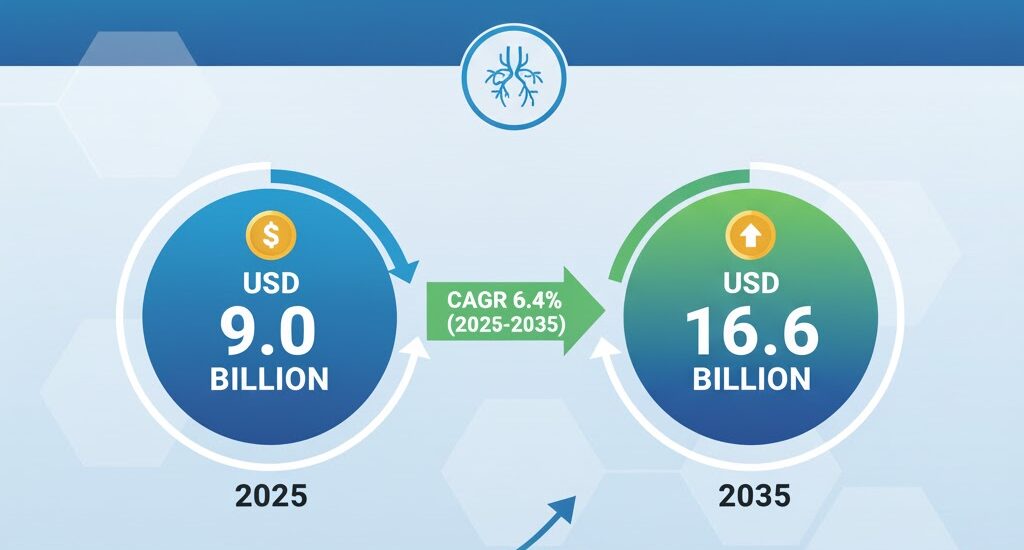
The global Chronic Venous Occlusions Treatment Market is projected to experience strong growth, rising from USD 9.0 billion in 2025 to USD 16.6 billion by 2035, registering a CAGR of 6.4% over the forecast period. This accelerating expansion highlights a defining decade for medical device manufacturers, technology providers, and healthcare stakeholders committed to advancing vascular treatment solutions.
As demand for patient-friendly, effective therapies grows, the industry is witnessing a pivotal shift toward minimally invasive, image-guided procedures that improve clinical outcomes while reducing recovery times.
Addressing the Industry’s Core Challenge: Efficiency Meets Innovation
For manufacturers, the challenge lies in designing technologies that combine precision, safety, and scalability. Chronic venous occlusions—blockages caused by abnormal blood flow or scarring within veins—represent a growing global health burden, particularly among aging populations and individuals with obesity, hormonal imbalances, or sedentary lifestyles.
The increased adoption of advanced imaging, catheter-based solutions, and laser-assisted techniques reflects the industry’s movement toward procedures that minimize risk and improve accessibility. Manufacturers that align their innovations with these trends are best positioned to meet the market’s evolving clinical and operational demands.
By offering streamlined, outpatient-compatible systems, companies can support hospitals and ambulatory centers in enhancing throughput and reducing overall treatment costs—key concerns across both developed and emerging healthcare systems.
Growth Catalysts: Aging Populations, Advanced Imaging, and Expanding Care Access
The market’s upward trajectory is fueled by a combination of demographic shifts and technological evolution. The rising prevalence of venous disorders among older adults is a central growth driver, with an increasing global focus on early diagnosis, intervention, and preventive care.
Additionally, enhanced imaging modalities now enable precise diagnosis and guided treatment, significantly improving patient outcomes. The expansion of healthcare infrastructure in emerging regions—notably across Asia-Pacific and parts of Europe—further strengthens the market outlook.
These advancements create opportunities for manufacturers to develop modular, cost-effective systems adaptable to various clinical settings, from advanced hospital centers to rural outpatient facilities.
Endovenous Laser Ablation: Leading the Way in Treatment Innovation
Among all treatment modalities, Endovenous Laser Ablation (EVLA) leads the market, holding a commanding 32.6% share in 2025. This dominance is attributed to its minimally invasive design, which offers lower infection risks, reduced discomfort, and faster patient recovery compared to conventional surgical methods.
Continuous improvements in laser delivery systems and real-time imaging have elevated EVLA’s precision and safety, making it a preferred choice for both physicians and patients.
Manufacturers are encouraged to focus on technology refinement and device miniaturization, facilitating wider adoption in outpatient and day-care facilities. The segment’s scalability and compatibility with evolving hospital protocols make it a cornerstone of future vascular treatment innovation.
Hospitals Remain the Epicenter of Market Demand
The Hospitals segment, expected to account for 58.1% of global revenue in 2025, continues to be the largest end user of chronic venous occlusion treatments. Hospitals offer a unique advantage through comprehensive diagnostic capabilities, specialized vascular teams, and access to high-end technologies.
As patient volumes increase—particularly among elderly and comorbid populations—hospitals are expanding capacity for laser-assisted and catheter-guided interventions. The growing emphasis on post-treatment monitoring and structured recovery pathways further supports hospital-based treatment leadership.
Manufacturers that provide integrated device ecosystems, including imaging support and training modules for hospital staff, can strengthen their market position by becoming long-term partners in care delivery.
Buy Now & Save: Premium Market Report at $5,000 | Discount Details Inside:- https://www.futuremarketinsights.com/reports/sample/rep-gb-8023
Regional Outlook: Asia-Pacific Leads Global Growth Momentum
The global market shows varied growth rates across regions, with China (8.6% CAGR) and India (8.0% CAGR) leading the expansion. These countries benefit from rapid healthcare infrastructure development, rising public health awareness, and growing investments in minimally invasive technologies.
Meanwhile, Germany (7.3%), France (6.7%), and the UK (6.1%) maintain steady growth driven by established reimbursement frameworks and strong clinical adoption. The USA, valued at USD 3.3 billion in 2025 and projected to reach USD 5.7 billion by 2035, remains a key innovation hub, underscoring consistent investment in research and device modernization.
This geographically diverse growth opens strategic avenues for manufacturers seeking to expand global footprints—particularly those capable of aligning product portfolios with localized healthcare priorities and regulatory frameworks.
Competitive Landscape: Innovation-Driven Leadership
Major market participants, including Cardinal Health, Stryker, Boston Scientific Corporation, and Edward Lifesciences, are driving the industry’s technological frontier. Their ongoing efforts in R&D, physician training, and device optimization are shaping the next phase of treatment evolution.
Manufacturers entering or expanding within this market can capture value by focusing on:
- Automation and precision control systems for laser and catheter-based therapies
- Hybrid devices compatible with both inpatient and outpatient care models
- Comprehensive service ecosystems, including training, maintenance, and digital support
Strategic collaborations between device developers and healthcare providers will be essential to accelerating adoption and ensuring sustainable market growth.
A Decade of Opportunity: Transforming Vascular Health
The Chronic Venous Occlusions Treatment Market’s projected rise to USD 16.6 billion by 2035 represents more than just financial growth—it signals a paradigm shift toward patient-centered, technology-driven vascular care.
Manufacturers that invest in innovation, clinical partnership, and accessibility today will define the next decade of medical progress. With a clear path toward efficiency, scalability, and improved patient outcomes, the market stands poised to deliver lasting value for the entire healthcare ecosystem.
Click Here to Purchase the Report:- https://www.futuremarketinsights.com/checkout/8023
About Future Market Insights (FMI)
Future Market Insights, Inc. (ESOMAR certified, recipient of the Stevie Award, and a member of the Greater New York Chamber of Commerce) offers profound insights into the driving factors that are boosting demand in the market. FMI stands as the leading global provider of market intelligence, advisory services, consulting, and events for the Packaging, Food and Beverage, Consumer Technology, Healthcare, Industrial, and Chemicals markets. With a vast team of over 400 analysts worldwide, FMI provides global, regional, and local expertise on diverse domains and industry trends across more than 110 countries.
Contact Us:
Future Market Insights Inc.
Christiana Corporate, 200 Continental Drive,
Suite 401, Newark, Delaware – 19713, USA
T: +1-347-918-3531
For Sales Enquiries: sales@futuremarketinsights.com
Website: https://www.futuremarketinsights.com
LinkedIn| Twitter| Blogs | YouTube