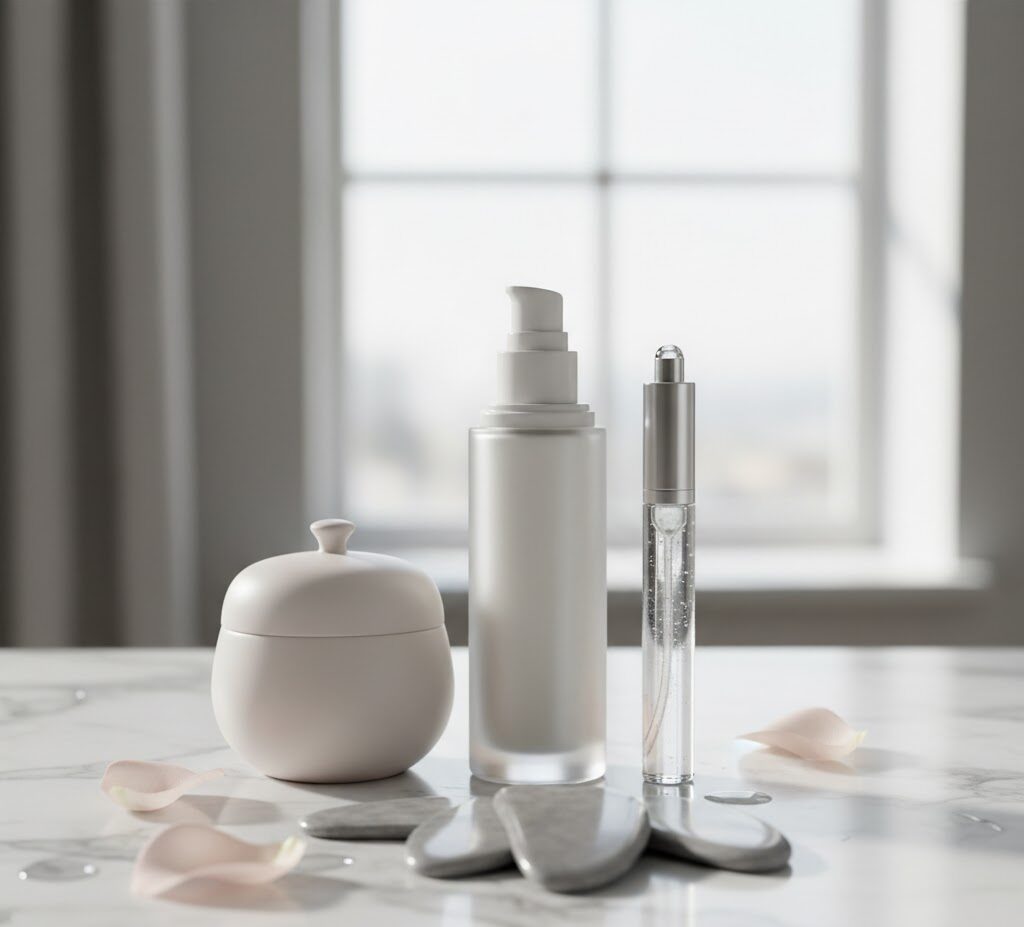
The global Anti-Wrinkle Products Market is set for transformative growth, expected to rise from USD 10,802.7 million in 2025 to an impressive USD 22,903.2 million by 2035, representing a robust CAGR of 7.8% over the forecast decade. This expansion equals a market increase of USD 12,100.5 million—nearly a 2X growth—driven by technological innovations, rising preventive skincare adoption, and strong regional demand across Asia-Pacific, North America, and Europe.
Quick Market Highlights
- Market Value (2025): USD 10,802.7 million
- Forecast Value (2035): USD 22,903.2 million
- Forecast CAGR (2025–2035): 7.8%
- Leading Product Segment (2025): Serums – 44.3% market share
- Top Growth Regions: Asia-Pacific (China CAGR 13.7%, India CAGR 15.4%)
- Leading Players: Estée Lauder, L’Oréal Paris, Shiseido, Olay, Clinique, Neutrogena, RoC, Lancôme
Market Overview: Shifting from Correction to Prevention
The anti-wrinkle skincare industry is evolving rapidly as consumer preferences shift toward preventive skincare and high-performance formulations. Serums dominate the category with 44.3% of global market share in 2025, signaling a strong pivot toward concentrated solutions featuring retinol, peptides, and hyaluronic acid.
Between 2025 and 2030, the market is projected to increase by USD 4,926.8 million, while the 2030–2035 period will add another USD 7,173.7 million, largely driven by Asia-Pacific markets where younger demographics and digital retail ecosystems accelerate adoption.
Established leaders such as Estée Lauder, L’Oréal, and Shiseido are investing in AI-powered skincare diagnostics, personalized formulations, and omnichannel retail. Meanwhile, emerging Asian and indie skincare brands are leveraging clean-label positioning, natural actives, and direct-to-consumer (D2C) models to disrupt traditional players.
Why the Anti-Wrinkle Products Market is Growing
- Preventive Skincare Among Younger Demographics
Increasing awareness among consumers in their 20s and 30s is expanding the market beyond mature users. Fine lines—accounting for 40.2% of global concerns—are now targeted early with serums and retinol-based formulations. - Digital-First Retail Expansion
E-commerce and social-commerce channels in China, India, and Western markets are redefining brand accessibility and consumer engagement, enabling faster adoption of premium skincare solutions. - Ingredient Innovation
The next wave of growth is fueled by peptides, vitamin C, and hyaluronic acid, offering visible efficacy and improved tolerance. New formulations are designed for sensitive and preventive skincare, broadening appeal across age groups. - AI-Powered Personalization
Brands like Clinique and Shiseido are integrating AI-driven diagnostic tools that recommend customized skincare regimens, improving efficacy, loyalty, and repeat purchases.
Key Market Segments (2025–2035)
By Product Type
- Serums – 44.3% market share; lead due to high efficacy and preventive use
- Creams & Lotions – classic, trusted segment for mature consumers
- Ampoules & Sheet Masks – gaining traction through intensive repair benefits
- Overnight Repair Treatments – driven by premium innovation and convenience
By Key Ingredients
- Retinol & Retinoids – 42.3% share in 2025; the “gold standard” of wrinkle correction
- Peptides – fast-growing, favored for collagen stimulation and low irritation
- Vitamin C – vital for antioxidant protection and brightening
- Hyaluronic Acid & Coenzyme Q10 – boost hydration and elasticity
By Skin Concern
- Fine Lines – 40.2% share; leading segment with early-age intervention
- Deep Wrinkles & Photoaging – targeted with multi-active treatments
- Loss of Elasticity – growing among mature consumers seeking firmness
By Distribution Channel
- E-commerce – fastest-growing; key driver across China and India
- Pharmacies/Drugstores – stronghold for dermatology-endorsed brands
- Specialty Beauty Retail & Department Stores – premium brand expansion
- Dermatology Clinics – emerging as credible retail hubs for high-efficacy formulations
By End User
- Women remain the core market, while men’s skincare and unisex lines expand.
- Mature skin (50+) continues to drive premium segment demand.
Regional Market Outlook
Asia-Pacific: The Global Growth Engine
- China (CAGR 13.7%) and India (CAGR 15.4%) lead global expansion.
- Rising disposable incomes and digital-first ecosystems power growth.
- Domestic brands compete with global giants through affordability and innovation.
United States: Mature but Innovation-Driven
- Market to reach USD 3.75 billion by 2035 at 5.7% CAGR.
- Preventive skincare adoption by millennials and Gen Z fuels steady demand.
- E-commerce and AI personalization redefine distribution and loyalty.
United Kingdom and Europe: Premium and Regulated
- UK CAGR 8.9%, Germany CAGR 6.7%.
- Regulatory focus on ingredient safety favors dermatology-endorsed products.
- Specialty beauty retail chains expand reach and reinforce consumer trust.
Japan: Blending Tradition and Innovation
- 11.1% CAGR, leveraging hybrid formulations that fuse botanicals with modern actives.
- Strong beauty culture and high skincare literacy sustain demand.
Competitive Landscape: Established Giants Meet Agile Innovators
The Anti-Wrinkle Products Market is highly fragmented, with both global and regional players driving innovation:
- Estée Lauder leads with an 8.2% global share, strengthened by brands like Clinique and La Mer.
- L’Oréal, Olay, Lancôme, and Shiseido dominate premium categories through R&D in active ingredients.
- Neutrogena and RoC excel in mid-market dermatology-backed skincare.
- Indie and local brands are scaling quickly via clean-label, vegan, and D2C strategies.
Notable Developments
- March 2025 – Shiseido launched a peptide-enriched overnight repair cream with dermatology-backed results.
- May 2025 – Clinique introduced an AI-powered diagnostic app that recommends tailored routines, integrating technology with skincare personalization.
These innovations underscore the market’s transformation toward data-driven beauty, customized regimens, and sustainable formulations.
Future Outlook: Personalization, Clean Beauty, and E-Commerce Define the Next Decade
The Anti-Wrinkle Products Market is on the cusp of technological reinvention. Over the next decade, personalized skincare ecosystems, AI integration, and digital retail dominance will reshape consumer experiences. While retinol remains the gold standard, emerging actives like bio-peptides, niacinamide, and plant-derived retinoids will drive next-gen formulations.
As Asia-Pacific markets outpace traditional Western growth, brands that blend science with personalization, innovation with accessibility, and technology with trust will emerge as global leaders. Both established manufacturers and ambitious new entrants stand to gain by aligning with evolving consumer expectations and embracing smarter, more sustainable skincare innovation.
This Report Now at Just $2000 | Limited-Time Discount Offer! https://www.futuremarketinsights.com/reports/sample/rep-gb-8556
Checkout Now to Access Industry Insights: https://www.futuremarketinsights.com/checkout/8556
About Future Market Insights (FMI)
Future Market Insights, Inc. (ESOMAR certified, recipient of the Stevie Award, and a member of the Greater New York Chamber of Commerce) offers profound insights into the driving factors that are boosting demand in the market. FMI stands as the leading global provider of market intelligence, advisory services, consulting, and events for the Packaging, Food and Beverage, Consumer Technology, Healthcare, Industrial, and Chemicals markets. With a vast team of over 400 analysts worldwide, FMI provides global, regional, and local expertise on diverse domains and industry trends across more than 110 countries.
Contact Us:
Future Market Insights Inc.
Christiana Corporate, 200 Continental Drive,
Suite 401, Newark, Delaware – 19713, USA
T: +1-347-918-3531
For Sales Enquiries: sales@futuremarketinsights.com
Website: https://www.futuremarketinsights.com
LinkedIn| Twitter| Blogs | YouTube