The global 3-hydroxyphenyl phosphinyl propanoic acid market is projected to increase from USD 47.69 million in 2025 to USD 71.97 million by 2035, reflecting a CAGR of 4.2%. This steady expansion signals a decade of transformation for both established chemical producers and new entrants striving to enhance pharmaceutical synthesis and industrial applications. Continuous improvement in compound purity, reaction optimization, and large-scale synthesis efficiency is helping this niche segment evolve into a critical enabler for advanced pharmaceutical and specialty chemical markets.
Early-Phase Growth: 2025–2030
Between 2025 and 2030, the market is expected to witness moderate yet steady growth, primarily driven by pharmaceutical synthesis advancements. The compound is increasingly vital in creating targeted molecules and intermediates for drug research and clinical development. Companies like Yingkou Sanzheng New Technology Chemical Industry and Hubei Wande Chemical are focusing on optimizing synthesis methods that meet high purity and quality benchmarks demanded by pharmaceutical firms.
During this period, the spotlight remains on process refinement and consistency rather than mass expansion. Many laboratories and small-scale producers are working to minimize waste, improve yields, and achieve regulatory compliance across pharmaceutical-grade production. This optimization phase will form the foundation for larger-scale industrial adoption in the next half of the decade.
Growth Acceleration: 2030–2035
From 2030 onward, the market is forecasted to gain momentum, driven by scalability improvements and broader industrial integration. 3-hydroxyphenyl phosphinyl propanoic acid will find expanded use in catalytic reactions, advanced materials, and chemical intermediates, especially as manufacturers refine cost structures and improve process automation.
Regions such as East Asia and Western Europe are expected to play key roles in driving this phase. In China, for instance, Wuhan Shuer Biological Technology and Yinglang Chemical are scaling up production to support domestic pharmaceutical growth. European players, backed by stringent quality standards and established R&D infrastructure, are focusing on producing compliance-ready compounds for export and local use.
This second phase highlights how cost efficiency, supplier collaboration, and technological integration are propelling the compound’s journey from laboratory-level specialty to industrially relevant material.
Market Dynamics and Segmentation
The market structure is predominantly driven by purity grade and application diversification. The 98% purity grade dominates with about 62% market share, catering to pharmaceutical intermediates that require consistent quality and regulatory alignment. The 99% purity grade, representing 31% of the market, is favored for high-end drug synthesis and advanced R&D applications.
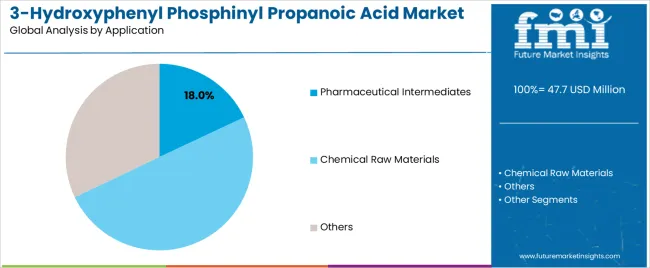
Application-wise, pharmaceutical intermediates lead market demand, accounting for the majority of revenue due to their critical role in drug development. Chemical raw materials and research-specific applications follow, supported by increasing interest from biotechnology firms and contract research organizations.
Regional Insights: East Asia and Europe Lead Expansion
China emerges as the fastest-growing market with a 5.6% CAGR, supported by strong government initiatives to modernize pharmaceutical and chemical industries. Local manufacturers are leveraging cost-effective synthesis methods while improving purity standards to align with global pharmaceutical expectations.
India, with a 5.2% CAGR, is also becoming a prominent hub for intermediate manufacturing. Local companies in Mumbai and Bangalore are focusing on quality-driven synthesis that complies with international regulatory frameworks.
In Europe, countries like Germany (4.8%) and the United Kingdom (3.5%) maintain strong positions owing to their established pharmaceutical infrastructure and emphasis on advanced synthesis technologies. Germany’s engineering expertise continues to push the limits of process innovation, while the UK’s integration of digital tracking and quality systems enhances operational precision.
Purchase this Report for USD 5,000 Only | Get an Exclusive Discount Instantly! https://www.futuremarketinsights.com/checkout/27277
Everything You Need—within Your Budget. Request a Special Price Now! https://www.futuremarketinsights.com/reports/sample/rep-gb-27277
Key Manufacturers and Competitive Landscape
The 3-hydroxyphenyl phosphinyl propanoic acid industry features a competitive but collaborative ecosystem with around a dozen credible producers. Leading companies such as Yingkou Sanzheng New Technology Chemical Industry, Hubei Wande Chemical, and Wuhan Shuer Biological Technology collectively account for a major share of global revenue.
Emerging participants—like Unilong Industry, Shanghai Aladdin Biochemical Technology, and Henan Tianfu Chemical—are investing in automation, quality-by-design methodologies, and integration with pharmaceutical ERP systems to ensure traceability and regulatory readiness. Meanwhile, regional specialists in India and Brazil are adopting technology transfer models to strengthen local production capacities and reduce import dependence.
The competition is shifting from standard compound manufacturing toward value-added services, including analytical validation, custom synthesis, and regulatory documentation support, marking a clear transition from commodity-based supply to performance-driven partnership models.
Technological and Strategic Imperatives
The market’s evolution depends on synthesis optimization and pharmaceutical compliance integration. Modern manufacturers are focusing on real-time quality monitoring, batch tracking, and analytical testing systems to enhance traceability and operational reliability.
Furthermore, custom synthesis services are becoming a key differentiator, particularly for pharmaceutical clients requiring specialized purity grades or compound variants for targeted drug development. By offering value-based pricing models and comprehensive intermediate packages—including stability data, handling guidelines, and storage protocols—suppliers are positioning themselves as trusted partners in pharmaceutical innovation.
About Future Market Insights (FMI)
Future Market Insights, Inc. (ESOMAR certified, recipient of the Stevie Award, and a member of the Greater New York Chamber of Commerce) offers profound insights into the driving factors that are boosting demand in the market. FMI stands as the leading global provider of market intelligence, advisory services, consulting, and events for the Packaging, Food and Beverage, Consumer Technology, Healthcare, Industrial, and Chemicals markets. With a vast team of over 400 analysts worldwide, FMI provides global, regional, and local expertise on diverse domains and industry trends across more than 110 countries.
Contact Us:
Future Market Insights Inc.
Christiana Corporate, 200 Continental Drive,
Suite 401, Newark, Delaware – 19713, USA
T: +1-347-918-3531
For Sales Enquiries: sales@futuremarketinsights.com
Website: https://www.futuremarketinsights.com
LinkedIn| Twitter| Blogs | YouTube