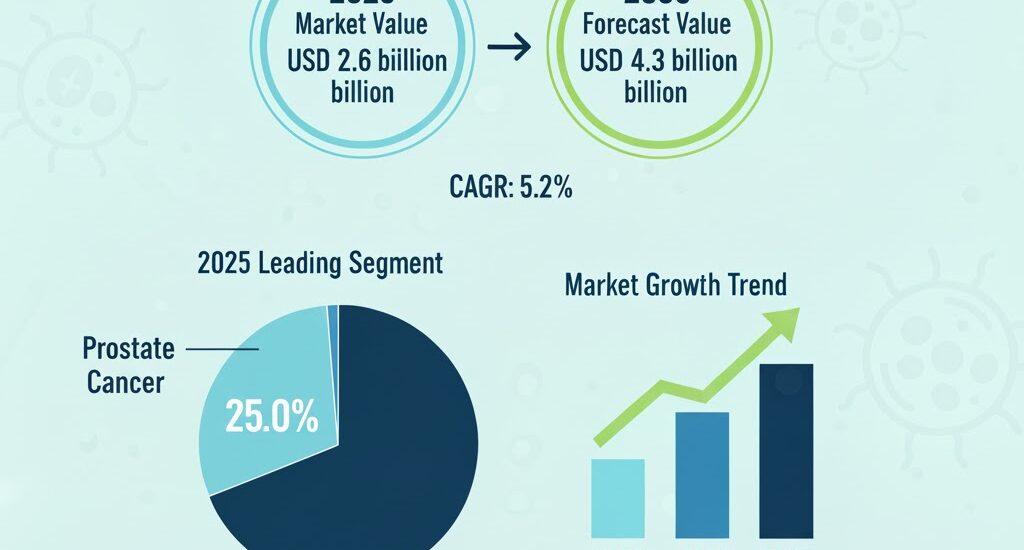
The Intensity Modulated Radiation Therapy (IMRT) Market is entering a decade of transformation, with its global valuation projected to rise from USD 2.6 billion in 2025 to USD 4.3 billion by 2035, reflecting a compound annual growth rate (CAGR) of 5.2%. This steady growth trajectory underscores a powerful trend toward precision oncology, where treatment accuracy, patient safety, and technological integration redefine the future of cancer care.
IMRT represents one of the most sophisticated advancements in radiation oncology. By delivering radiation doses that conform precisely to tumor geometry, IMRT minimizes harm to surrounding healthy tissue while maximizing therapeutic impact. This capability has made it a cornerstone of modern radiotherapy, setting the stage for sustained investment, innovation, and manufacturing expansion.
Market Dynamics Driving Growth
The market’s momentum is fueled by rising global cancer incidence and the expanding demand for high-precision treatment modalities. Patients and clinicians alike are seeking therapies that not only extend survival but also improve quality of life through reduced side effects. This trend places IMRT at the forefront of oncology’s evolution.
Manufacturers are uniquely positioned to benefit from these dynamics. The increasing adoption of advanced imaging integration, real-time dose modulation, and adaptive treatment planning systems is pushing the boundaries of radiotherapy technology. For equipment producers, software developers, and system integrators, this environment presents both a challenge and a substantial opportunity—to design systems that deliver greater precision, automation, and interoperability.
The expanding healthcare infrastructure in emerging economies further amplifies demand. Governments and private health systems in Asia-Pacific, the Middle East, and parts of Latin America are investing heavily in oncology care, creating fertile ground for technology providers. As cancer centers multiply and awareness of early detection grows, the global IMRT ecosystem is poised for broad-based expansion.
Segmental Insights: Prostate Cancer Leading the Way
By indication, prostate cancer remains the leading therapeutic application, accounting for 25% of IMRT market revenue in 2025. Its dominance is driven by both the high prevalence of prostate cancer among aging male populations and the therapy’s demonstrated ability to improve clinical outcomes.
IMRT’s ability to deliver radiation with remarkable accuracy has been a game-changer in prostate cancer treatment. By minimizing exposure to surrounding organs, such as the bladder and rectum, patients experience fewer side effects and better long-term outcomes. Manufacturers focusing on this segment are encouraged to align their innovation pipelines with evolving treatment needs, such as adaptive radiation delivery and AI-assisted planning.
As clinical research continues to refine protocols and improve personalization, the prostate cancer segment will likely remain a central growth pillar. Companies that can provide modular, cost-efficient, and scalable systems to hospitals and specialty centers will be best placed to capture this sustained demand.
Hospitals: The Epicenter of Market Expansion
The hospital segment is projected to represent 60% of IMRT market revenue in 2025, making it the largest end-user category. Hospitals’ dominance stems from their capacity to integrate advanced radiotherapy systems into multidisciplinary cancer care programs. They also benefit from strong infrastructure, qualified personnel, and the ability to manage complex treatment workflows.
For manufacturers, hospitals represent a primary gateway for technology adoption. As oncology departments expand and patient volumes increase, hospitals are investing in next-generation radiotherapy platforms that improve operational efficiency and treatment precision. Equipment makers that prioritize interoperability, service support, and system reliability are likely to strengthen long-term partnerships within this sector.
Specialty centers, while smaller in scale, are emerging as niche innovators—often leading early adoption of novel technologies. Their growing influence presents additional collaboration opportunities for system developers, particularly in regions with decentralized healthcare systems.
Buy Now & Save: Premium Market Report at $5,000 | Discount Details Inside:- https://www.futuremarketinsights.com/reports/sample/rep-gb-8093
Regional Outlook: A Global Market in Motion
The IMRT market exhibits strong regional diversity, with China leading the world at a projected CAGR of 7.0%, followed by India at 6.5%. Both nations benefit from rapidly developing healthcare infrastructure and expanding access to advanced cancer therapies. In Europe, Germany (6.0%) and France (5.5%) are sustaining steady growth through investment in precision oncology and public-private partnerships. Meanwhile, the United States, with a projected CAGR of 4.4%, continues to dominate in technological innovation and clinical adoption, valued at USD 931.3 million in 2025 and expected to reach USD 1.4 billion by 2035.
This broad geographic spread reflects a global shift toward digitalized, patient-centric oncology care. For manufacturers, regional diversification is essential. Companies able to tailor product designs, pricing strategies, and service models to the unique needs of each region will gain a competitive edge.
Leading Innovators Driving Market Evolution
The IMRT market’s growth is underpinned by a competitive landscape of global leaders and specialized innovators. Key participants include Varian Medical Systems, Inc., Siemens Healthineers, ViewRay, Inc., IBA Dosimetry, Mevion Medical Systems, Hitachi, Ltd., RaySearch Laboratories AB, Brainlab AG, ProTom International, Mitsubishi Electric Corporation, Sumitomo Heavy Industries, Ltd., ProNova Solutions, LLC, Elekta AB, and Accuray Incorporated.
These companies are driving continual advancements in treatment planning systems, imaging integration, and radiation delivery precision. Manufacturers investing in automation, artificial intelligence, and software-driven efficiency are shaping the next generation of IMRT platforms—solutions designed not only for treatment excellence but also for operational sustainability.
A Decade of Growth for Manufacturers
From 2025 through 2035, the IMRT market will transition from steady growth to strategic transformation. For manufacturers, this period represents more than expansion—it is an opportunity to redefine cancer treatment technology itself. As hospitals and oncology centers demand equipment that is faster, smarter, and more adaptive, the industry will reward companies capable of delivering measurable clinical and economic value.
The IMRT market’s projected USD 4.3 billion valuation by 2035 symbolizes both a business opportunity and a global health imperative. By aligning innovation with patient outcomes, and by fostering collaboration across clinical and industrial ecosystems, manufacturers can lead the next era of precision oncology—delivering not just advanced technology, but hope for millions of patients worldwide.
Click Here to Purchase the Report:- https://www.futuremarketinsights.com/checkout/8093
About Future Market Insights (FMI)
Future Market Insights, Inc. (ESOMAR certified, recipient of the Stevie Award, and a member of the Greater New York Chamber of Commerce) offers profound insights into the driving factors that are boosting demand in the market. FMI stands as the leading global provider of market intelligence, advisory services, consulting, and events for the Packaging, Food and Beverage, Consumer Technology, Healthcare, Industrial, and Chemicals markets. With a vast team of over 400 analysts worldwide, FMI provides global, regional, and local expertise on diverse domains and industry trends across more than 110 countries.
Contact Us:
Future Market Insights Inc.
Christiana Corporate, 200 Continental Drive,
Suite 401, Newark, Delaware – 19713, USA
T: +1-347-918-3531
For Sales Enquiries: sales@futuremarketinsights.com
Website: https://www.futuremarketinsights.com
LinkedIn| Twitter| Blogs | YouTube