The global Silicone Textile Softeners Market is entering a period of sustained expansion, projected to grow from USD 2.1 billion in 2025 to USD 3.6 billion by 2035, reflecting a CAGR of 5.4%. This upward trajectory is fueled by the growing global appetite for soft, high-quality, and performance-oriented fabrics across fashion, home textiles, and industrial applications. Manufacturers are increasingly adopting silicone-based softeners to achieve premium fabric finishes that offer both comfort and longevity, setting new benchmarks in textile innovation.
As textile producers continue to refine their operations through automation and modern finishing technologies, silicone textile softeners have become a key enabler of improved process efficiency and product quality. The market’s evolution is also closely tied to the rising consumer awareness around sustainable, durable, and comfortable fabrics—driving both established and emerging manufacturers to invest in next-generation silicone softening technologies.
Market Dynamics Driving Growth
The silicone textile softeners market is being driven by multiple converging trends in the textile industry. A major factor is the increasing consumer preference for premium and functional textiles, where fabric feel, durability, and performance play critical roles in purchase decisions. These softeners enhance the tactile smoothness, elasticity, and water repellency of fabrics while maintaining color fastness and breathability, making them indispensable in high-end clothing and technical textiles.
The textile and apparel industry’s shift toward sustainable manufacturing is another key growth catalyst. Silicone-based formulations are recognized for their chemical stability, low toxicity, and compatibility with eco-friendly production processes. Manufacturers are leveraging these benefits to meet environmental standards while maintaining cost efficiency and product performance.
Moreover, as developing economies in Asia-Pacific and Latin America become key textile hubs, new entrants are actively investing in silicone softening technologies to compete with established global players. These investments are helping balance global supply chains, encourage regional innovation, and strengthen local manufacturing capacity in response to growing global demand.
Dominance of the Liquid Silicone Segment
In 2025, liquid silicone textile softeners are projected to account for 49.6% of total market revenue, marking them as the leading material segment. Their dominance is largely due to their ease of application, superior consistency, and compatibility with a wide variety of fabric types and production methods. Liquid formulations provide excellent uniformity and penetration during textile finishing, enhancing softness and flexibility without compromising strength or color integrity.
In modern textile facilities equipped with automated dosing and coating systems, liquid silicone softeners enable streamlined production and reduce operational waste. The high adoption of this form reflects a larger industry shift toward optimized, high-throughput textile finishing processes. As sustainability becomes a defining theme in manufacturing, liquid formulations also offer the advantage of lower energy consumption and minimal effluent discharge, aligning well with cleaner production initiatives.
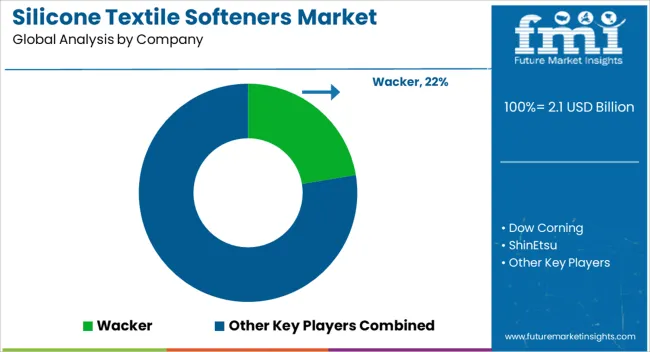
Leading companies such as Wacker, Dow Corning, and Momentive are continuing to innovate in this area by developing high-performance liquid silicone softeners that combine softness, breathability, and environmental safety. Simultaneously, emerging producers like Fineotex and Americos Nanosoft are leveraging technological partnerships to introduce cost-effective formulations tailored for small and mid-sized textile manufacturers.
Textile Industry Leads in Applications
The textile industry segment is expected to command approximately 46.8% of the silicone textile softeners market in 2025, maintaining its dominance throughout the forecast period. The growing need for premium apparel, high-performance fabrics, and home furnishings is fueling this demand. Silicone-based softeners are increasingly used in woven, knitted, and technical fabrics to enhance softness, drape, and wearability.
Beyond comfort, these softeners play a crucial role in ensuring the durability and functional efficiency of textiles. They improve resistance to abrasion, static, and pilling while imparting a smooth hand-feel highly valued in luxury and performance fabrics. The rising consumer inclination toward athleisure and activewear, along with eco-conscious clothing, is reinforcing demand for fabrics finished with silicone softeners.
Additionally, industries such as hospitality, healthcare, and institutional laundry services are integrating silicone softeners to enhance the feel and longevity of linens, uniforms, and workwear. This broader industrial adoption indicates a long-term growth opportunity for manufacturers offering tailored, application-specific softening solutions.
Purchase this Report for USD 5,000 Only | Get an Exclusive Discount Instantly! https://www.futuremarketinsights.com/checkout/7943
Everything You Need—within Your Budget. Request a Special Price Now! https://www.futuremarketinsights.com/reports/sample/rep-gb-7943
Regional and Country-Level Analysis
Geographically, the silicone textile softeners market shows dynamic growth patterns across continents. China leads globally with a forecasted CAGR of 7.3%, supported by its robust textile manufacturing base and heavy investments in automation and sustainable finishing technologies. India, following closely with a 6.8% CAGR, continues to strengthen its textile exports through capacity expansions and modernization initiatives.
In Western Europe, countries such as Germany (6.2%), France (5.7%), and the UK (5.1%) are witnessing stable growth driven by demand for high-end fabrics and increased emphasis on sustainable textile production. The United States, estimated at USD 762.1 million in 2025, is projected to reach USD 1.2 billion by 2035, growing at a steady 4.6% CAGR, reflecting strong domestic consumption of functional and luxury apparel.
Meanwhile, Brazil, though growing at a slower pace (4.1%), continues to demonstrate positive momentum, supported by gradual modernization in textile processing and an expanding local apparel market. In East Asia, Japan and South Korea remain innovation-driven markets, focusing on advanced silicone formulations for performance textiles used in sportswear and industrial applications.
Competitive Landscape and Innovation Outlook
The global silicone textile softeners market is characterized by a mix of established multinational corporations and emerging regional innovators. Industry leaders like Wacker, Dow Corning, and ShinEtsu continue to dominate through consistent R&D investments and the introduction of advanced silicone chemistries. Meanwhile, Fineotex, Momentive, Piedmont Chemical Industries, CHT/BEZEMA, and Americos Nanosoft are expanding their product portfolios to meet the evolving needs of small and mid-tier textile manufacturers seeking sustainable and cost-efficient softening agents.
Collaborations between chemical producers and textile manufacturers are becoming increasingly common, aimed at developing application-specific silicone formulations. New entrants are focusing on modular, easy-to-integrate solutions that reduce energy use and improve process control—strategies that resonate strongly with the sustainability goals of modern textile producers.
As global competition intensifies, manufacturers are expected to differentiate through technological innovation, localized production, and sustainability-driven partnerships, ensuring the market’s healthy expansion well into 2035.
About Future Market Insights (FMI)
Future Market Insights, Inc. (ESOMAR certified, recipient of the Stevie Award, and a member of the Greater New York Chamber of Commerce) offers profound insights into the driving factors that are boosting demand in the market. FMI stands as the leading global provider of market intelligence, advisory services, consulting, and events for the Packaging, Food and Beverage, Consumer Technology, Healthcare, Industrial, and Chemicals markets. With a vast team of over 400 analysts worldwide, FMI provides global, regional, and local expertise on diverse domains and industry trends across more than 110 countries.
Contact Us:
Future Market Insights Inc.
Christiana Corporate, 200 Continental Drive,
Suite 401, Newark, Delaware – 19713, USA
T: +1-347-918-3531
For Sales Enquiries: sales@futuremarketinsights.com
Website: https://www.futuremarketinsights.com
LinkedIn| Twitter| Blogs | YouTube