The global Inflammatory Diseases Market is experiencing a robust trajectory, with its estimated value projected to rise from USD 22.5 billion in 2025 to USD 34.9 billion by 2035, registering a CAGR of 4.5% over the forecast period. This growth is driven by increasing prevalence of chronic inflammatory conditions, ongoing innovations in therapeutics, and a growing demand for efficient, patient-centric treatment solutions.
For manufacturers and pharmaceutical innovators, this market represents a landscape of opportunity, combining medical urgency with evolving technology-driven approaches to treatment.
Understanding the Growth Dynamics
The market growth is underpinned by several key factors. Chronic conditions such as asthma, arthritis, inflammatory bowel disease, and psoriasis are rising due to aging populations, lifestyle factors, and environmental contributors such as pollution. Simultaneously, heightened public awareness and improved diagnostic capabilities are driving earlier detection, leading to broader adoption of advanced therapies.
Pharmaceutical companies are increasingly investing in biologics, targeted therapies, and personalized medicine, enabling treatments that address disease mechanisms rather than simply alleviating symptoms. Governments and healthcare organizations are supporting this shift through reimbursement initiatives and improved healthcare infrastructure, ensuring broader patient access to these advanced therapies.
For manufacturers, this presents a unique opportunity: producing high-quality, innovative therapies while navigating a market that increasingly values efficacy, affordability, and patient outcomes.
Buy Now & Save: Premium Market Report at $5,000 | Discount Details Inside:- https://www.futuremarketinsights.com/reports/sample/rep-gb-2723
Segment Insights: Disease Type
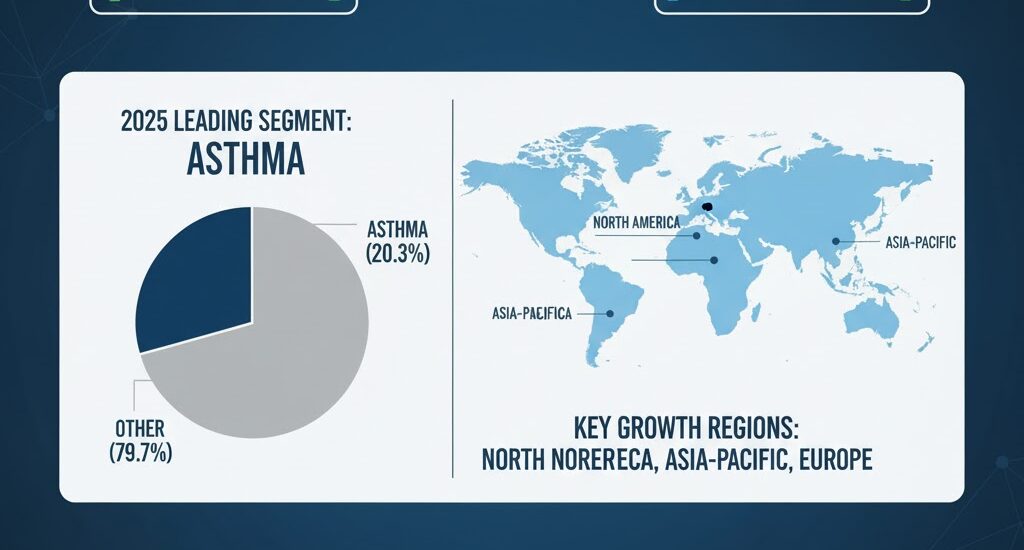
Among disease segments, asthma stands out as a leading contributor, accounting for 20.3% of the market revenue in 2025. Factors such as urbanization, pollution, and genetic predisposition are increasing the global burden of asthma. Innovations in inhalation therapies, biologics, and connected health technologies are enhancing patient management and adherence.
Manufacturers can capitalize on this segment by aligning production with the growing need for personalized and connected treatment solutions, ranging from specialized biologics to smart inhalation devices, ensuring patients receive precise and effective care.
Segment Insights: Drug Class
The anti-inflammatory biologics segment is anticipated to hold 41.5% of the market revenue in 2025, emerging as the dominant drug class. Biologics are preferred for their targeted mechanisms of action, offering improved outcomes for complex conditions such as rheumatoid arthritis, Crohn’s disease, ulcerative colitis, and severe asthma.
Expanding biosimilar portfolios increases affordability and broadens patient access, creating new revenue streams for manufacturers capable of delivering high-quality, scalable biologic production. The focus on next-generation biologics and personalized therapies further amplifies the market potential, making biologics a core area for long-term investment.
Segment Insights: Distribution Channels
Hospital pharmacies are the leading distribution channel, expected to account for 38.2% of market revenue in 2025. The controlled environment of hospitals is essential for the administration of complex biologics and infusion-based therapies, with pharmacists providing critical support in patient monitoring, dosage management, and side-effect mitigation.
For manufacturers, aligning production and supply chains with hospital distribution networks ensures safe, compliant, and reliable delivery of advanced therapies, enhancing market penetration and patient trust.
Regional Growth Opportunities
The Inflammatory Diseases Market demonstrates diverse regional momentum. North America dominates, driven by strong demand for branded medicines, while Asia-Pacific and Latin America are showing rising market share due to increasing disease prevalence and growing healthcare investments.
Country-specific growth rates highlight opportunities:
- China: 6.1% CAGR
- India: 5.6% CAGR
- Germany: 5.2% CAGR
- France: 4.7% CAGR
- USA: 3.8% CAGR
These insights provide manufacturers with actionable intelligence to prioritize production, supply, and market entry strategies in regions poised for rapid growth.
Market Overview
Inflammatory diseases, driven by immune system dysregulation, represent a global challenge impacting quality of life, morbidity, and mortality. With respiratory diseases, heart conditions, multiple sclerosis, psoriasis, inflammatory bowel disease, and bone disorders among the most prevalent, manufacturers have multiple pathways to develop targeted therapeutics.
Advances in non-steroidal anti-inflammatory drugs, corticosteroids, and biologics offer solutions that reduce side effects and improve patient outcomes. Coupled with digital health interventions and connected devices, these innovations support long-term patient adherence and management, further stimulating demand.
Key Industry Players
Major companies shaping the market include AbbVie Inc, CELLTRION INC., Pfizer Inc, Biogen, Novartis AG, Lilly, UCB S.A., Takeda Pharmaceutical Company Limited, Merck & Co., Inc., and Johnson & Johnson Services, Inc. Emerging competitors like Enlivex Therapeutics Ltd., Gilead Sciences, and Sandoz are also driving innovation through new product pipelines.
For manufacturers, this competitive landscape underscores the need for continuous innovation, strategic partnerships, and market differentiation.
Click Here to Purchase the Report:- https://www.futuremarketinsights.com/checkout/2723
Strategic Imperatives for Manufacturers
The Inflammatory Diseases Market offers manufacturers an expansive growth opportunity across disease types, drug classes, and global regions. Success will require:
- Investment in biologics and biosimilars to meet rising demand.
- Alignment with hospital pharmacy networks for safe, compliant distribution.
- Leveraging digital health solutions to improve patient adherence and outcomes.
- Targeting high-growth regions such as China, India, and North America for market expansion.
By addressing these imperatives, manufacturers can not only capture market share but also drive innovation that meets the evolving needs of patients worldwide, positioning themselves as leaders in a rapidly expanding sector.
About Future Market Insights (FMI)
Future Market Insights, Inc. (ESOMAR certified, recipient of the Stevie Award, and a member of the Greater New York Chamber of Commerce) offers profound insights into the driving factors that are boosting demand in the market. FMI stands as the leading global provider of market intelligence, advisory services, consulting, and events for the Packaging, Food and Beverage, Consumer Technology, Healthcare, Industrial, and Chemicals markets. With a vast team of over 400 analysts worldwide, FMI provides global, regional, and local expertise on diverse domains and industry trends across more than 110 countries.
Contact Us:
Future Market Insights Inc.
Christiana Corporate, 200 Continental Drive,
Suite 401, Newark, Delaware – 19713, USA
T: +1-347-918-3531
For Sales Enquiries: sales@futuremarketinsights.com
Website: https://www.futuremarketinsights.com
LinkedIn| Twitter| Blogs | YouTube