The global HSV (Herpes Simplex Virus) testing market is poised for remarkable expansion, presenting a strategic opportunity for manufacturers to capture emerging demand and drive innovation in diagnostic solutions. Forecasted to grow from USD 640.5 million in 2025 to approximately USD 1,142.7 million by 2035, the market is projected to achieve a robust CAGR of 6%, translating into a near doubling of market size over the next decade. This growth underscores a rising need for advanced, rapid, and reliable HSV testing solutions that can serve both clinical and home-care settings.
Market Dynamics: Addressing a Growing Clinical Need
The expansion of the HSV testing market is being fueled by a combination of increasing prevalence of HSV infections, heightened awareness of sexually transmitted diseases (STDs), and a growing preference for rapid diagnostic testing. For manufacturers, this signals a clear call to action: design and deliver testing solutions that are not only accurate but also versatile, scalable, and aligned with modern healthcare delivery models.
Between 2025 and 2030, the market is projected to increase from USD 640.5 million to USD 866.9 million, accounting for 45.1% of total growth in the decade. This phase is being shaped by growing adoption of point-of-care testing solutions, expansion of molecular diagnostic technologies in laboratories, and the diversification of product portfolios by leading diagnostic companies. From 2030 to 2035, another USD 275.8 million is expected to be added, representing 54.9% of market growth, driven by the rise of home-based testing, integration with digital health platforms, and next-generation molecular diagnostics.
Buy Now & Save: Premium Market Report at $5,000 | Discount Details Inside:- https://www.futuremarketinsights.com/reports/sample/rep-gb-26195
Key Market Segments: Strategic Insights for Manufacturers
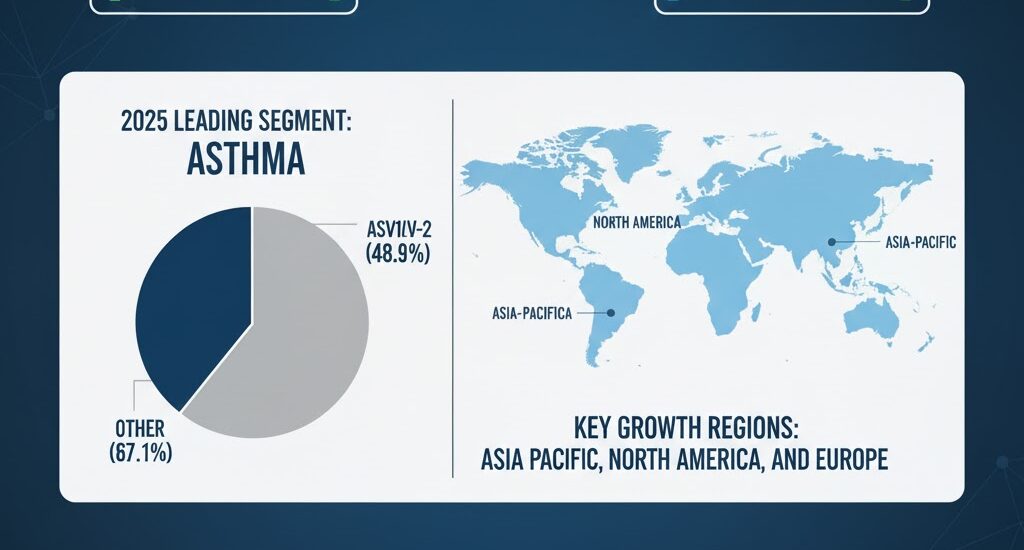
Type: HSV-1/HSV-2 combined testing dominates the market, accounting for 48.9% of the segment in 2025. Combined testing allows healthcare providers to evaluate both HSV-1 and HSV-2 in a single procedure, meeting the growing demand for comprehensive diagnostics that improve workflow efficiency and patient care. Manufacturers can leverage this preference by developing multiplex assays and integrated testing platforms to strengthen adoption.
Test Type: Serological tests hold a 49.8% market share, reflecting their role in detecting antibodies and asymptomatic infections. This positions them as essential tools for population health studies and partner notification programs. Manufacturers can benefit by refining immunoassay technologies and offering type-specific solutions that differentiate between HSV-1 and HSV-2 antibodies.
Sample Type: Blood remains the preferred sample type, representing 62.4% of testing demand due to its reliability and compatibility with serological and molecular testing methods. Manufacturers can focus on standardized blood-based testing kits that ensure consistent results and integrate seamlessly with laboratory workflows.
End-use: Hospitals are projected to account for 34.1% of the market, emphasizing the importance of HSV testing in inpatient care, emergency evaluations, and specialized clinical services. Manufacturers are encouraged to design solutions tailored for hospital laboratory infrastructure that enable rapid turnaround times and high diagnostic accuracy.
Drivers and Trends: Transforming Diagnostic Solutions
Point-of-Care and Home Testing Expansion: The increasing adoption of point-of-care testing platforms provides an opportunity for manufacturers to deliver rapid results without the need for traditional laboratory infrastructure. Similarly, home-based HSV testing solutions are gaining traction, driven by convenience, privacy, and integration with telemedicine platforms.
Integration of Molecular Diagnostics and Digital Health: Next-generation HSV testing platforms leverage PCR, isothermal amplification, and sequencing technologies to enhance diagnostic accuracy and provide comprehensive viral characterization. Digital integration with electronic health records further supports patient management and remote monitoring. Manufacturers investing in these technologies can differentiate their offerings and meet evolving healthcare provider expectations.
Global Growth Hotspots: China leads with a projected CAGR of 8%, fueled by massive healthcare infrastructure expansion and rising awareness of STD prevention. India follows at 7.5%, supported by expanding diagnostic networks and healthcare investment. Germany and France demonstrate strong growth at 6.9% and 6.3% respectively, emphasizing advanced molecular diagnostics and public health initiatives. The UK and the USA show steady growth at 5.7% and 5.1%, driven by evidence-based healthcare adoption and technological innovation, while Brazil presents growth potential at 4.5% due to expanding healthcare access. For manufacturers, these markets represent critical regions for investment, localized product development, and strategic partnerships.
Competitive Landscape: Opportunities for Innovation
Leading players such as Abbott, F. Hoffmann-La Roche Ltd., Thermo Fisher Scientific Inc., BD, Bio-Rad Laboratories Inc., bioMérieux SA, DiaSorin S.p.A., Hologic Inc., Cepheid, and QuidelOrtho Corporation are actively investing in molecular diagnostics, point-of-care testing, and digital health integration. Manufacturers entering this competitive space must prioritize product reliability, rapid turnaround times, and comprehensive diagnostic capabilities that address both hospital and home-care needs.
The market’s competitive intensity also underscores the importance of regulatory compliance, robust distribution networks, and ongoing R&D. Innovation in rapid testing, multiplex platforms, and home diagnostic solutions will define market leaders over the next decade.
Click Here to Purchase the Report:- https://www.futuremarketinsights.com/checkout/26195
Strategic Implications for Manufacturers
With a total market expansion of USD 502.2 million by 2035, the HSV testing sector offers compelling opportunities for manufacturers seeking to meet rising healthcare demands. By focusing on combined HSV testing, advancing molecular diagnostics, and integrating digital health solutions, manufacturers can position themselves at the forefront of diagnostic innovation.
Investing in point-of-care and home testing solutions not only addresses unmet clinical needs but also aligns with global trends toward personalized medicine, preventive healthcare, and telemedicine. Regional growth patterns in Asia Pacific, North America, and Europe highlight the importance of localized strategies that balance infrastructure readiness, healthcare provider preferences, and regulatory frameworks.
About Future Market Insights (FMI)
Future Market Insights, Inc. (ESOMAR certified, recipient of the Stevie Award, and a member of the Greater New York Chamber of Commerce) offers profound insights into the driving factors that are boosting demand in the market. FMI stands as the leading global provider of market intelligence, advisory services, consulting, and events for the Packaging, Food and Beverage, Consumer Technology, Healthcare, Industrial, and Chemicals markets. With a vast team of over 400 analystsworldwide, FMI provides global, regional, and local expertise on diverse domains and industry trends across more than 110 countries.
Contact Us:
Future Market Insights Inc.
Christiana Corporate, 200 Continental Drive,
Suite 401, Newark, Delaware – 19713, USA
T: +1-347-918-3531
For Sales Enquiries: sales@futuremarketinsights.com
Website: https://www.futuremarketinsights.com
LinkedIn| Twitter| Blogs | YouTube