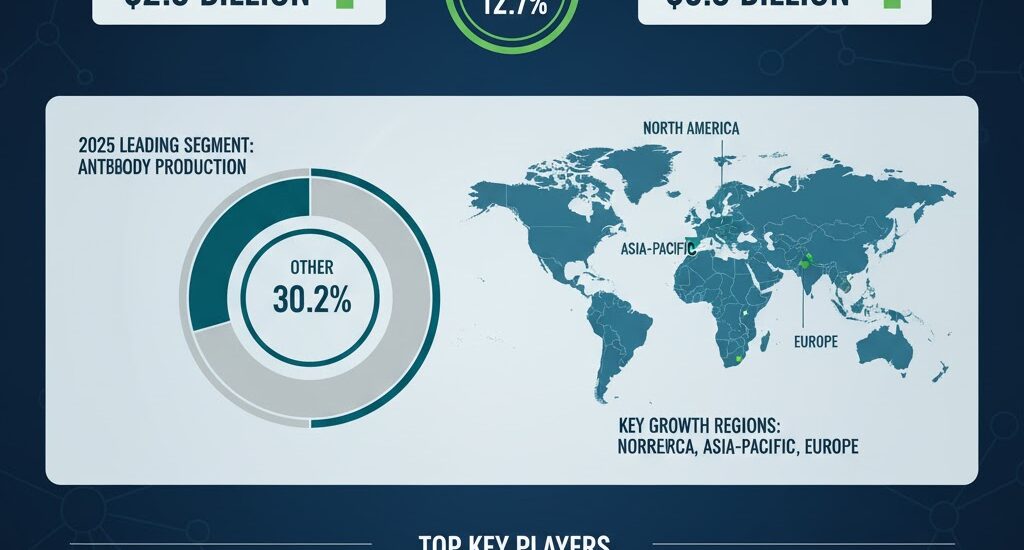
The global Cellbag Bioreactor Chambers market is entering a period of transformative growth, with market value projected to rise from USD 2.8 billion in 2025 to USD 9.3 billion by 2035, reflecting a robust CAGR of 12.7%. This growth underscores the increasing demand for flexible, efficient, and scalable bioprocessing solutions, providing manufacturers with a clear pathway to meet the evolving needs of the biopharmaceutical industry.
With single-use, disposable bioreactor systems becoming the industry standard, manufacturers now have the opportunity to streamline production, reduce contamination risks, and accelerate product development timelines.
Addressing Key Challenges in Biopharmaceutical Manufacturing
Biopharmaceutical manufacturers face constant pressure to enhance process efficiency, maintain product quality, and comply with strict regulatory standards. Traditional stainless steel bioreactors, while reliable, are resource-intensive and require lengthy cleaning and validation processes. Cellbag bioreactor chambers, on the other hand, offer a pre-sterilized, single-use solution that eliminates these bottlenecks.
By integrating advanced sensors, automated monitoring, and process control technologies, Cellbag systems allow precise management of oxygen levels, pH, and temperature. This ensures consistent cell growth and high-quality biologics while reducing the risk of contamination. Manufacturers can now scale operations from early-stage development to full commercial production with minimal disruption, effectively addressing one of the most pressing challenges in bioprocessing.
Buy Now & Save: Premium Market Report at $5,000 | Discount Details Inside:- https://www.futuremarketinsights.com/reports/sample/rep-gb-2752
Antibody Production Leads Market Demand
Among the various applications, antibody production is expected to account for 30.2% of the market revenue in 2025, emerging as the leading segment. Rising global demand for monoclonal antibodies for therapeutic, diagnostic, and research purposes is a major driver. Cellbag bioreactors support controlled cultivation of mammalian cells, providing high yield, reproducibility, and product quality—essential criteria for antibody manufacturing.
Automation and real-time monitoring capabilities reduce variability and contamination risk, enabling manufacturers to adapt quickly to changing production volumes. As investment in biologics research, clinical trials, and commercial-scale antibody production continues to rise, Cellbag bioreactor chambers are increasingly viewed as essential tools for maintaining competitiveness in the biopharmaceutical sector.
Small-Scale Flexibility Supports Innovation
The <50 L scale segment is poised to lead in terms of revenue share, accounting for 45.1% in 2025. These small-scale bioreactors are critical for early-stage development, process optimization, and preclinical studies. Compact systems allow manufacturers to efficiently evaluate cell growth, productivity, and process parameters before scaling up, reducing material usage and shortening production cycles.
Integration with sensors, automated controls, and monitoring systems enhances reproducibility and data accuracy, enabling regulatory compliance and quality assurance. For manufacturers, small-scale Cellbag systems provide a low-risk, cost-effective foundation for innovation, supporting the development of next-generation biologics while minimizing overhead.
Pharmaceutical Companies Drive Market Adoption
The pharmaceutical companies distribution channel is projected to generate 33.8% of market revenue in 2025, reflecting strong direct adoption for clinical and commercial-scale production. Manufacturers benefit from the flexibility, reliability, and high reproducibility of Cellbag systems, which are essential for monoclonal antibodies, vaccines, and recombinant proteins.
Advanced process monitoring and automation allow real-time control of critical culture parameters, ensuring consistent product quality. As pharmaceutical companies expand manufacturing capacities and prioritize regulatory compliance, Cellbag bioreactors offer future-ready platforms that support growth and innovation in an increasingly competitive market.
Regional Growth Highlights Opportunities
The Cellbag Bioreactor Chambers market exhibits diverse regional momentum, offering manufacturers targeted growth opportunities. China leads with a CAGR of 17.1%, followed by India at 15.9%, signaling strong expansion in the Asia-Pacific region. Developed markets like Germany, France, and the UK continue to grow steadily, while the USA is expected to expand from USD 1.0 billion in 2025 to USD 2.9 billion by 2035. Even Brazil, with a lower CAGR of 9.5%, reflects a positive trajectory, highlighting global demand for efficient bioprocessing platforms.
These regional insights enable manufacturers to strategically invest in markets with the highest growth potential, ensuring both operational efficiency and long-term profitability.
Leading Players and Industry Collaboration
Key players driving innovation in the market include GE Healthcare, Merck Millipore, Thermo Fisher Scientific, Danaher Corporation, Sartorius Stedim Biotech, JW Therapeutics, and Atara Biotherapeutics. Their commitment to process optimization, single-use technology, and advanced automation underscores the market’s focus on reliable, scalable, and compliant bioreactor solutions.
By leveraging these partnerships, manufacturers can gain access to cutting-edge technology, technical support, and global distribution networks, accelerating time-to-market and enhancing operational efficiency.
Click Here to Purchase the Report:- https://www.futuremarketinsights.com/checkout/2752
A Market Poised for Sustainable Growth
The global Cellbag Bioreactor Chambers market represents a transformative opportunity for manufacturers seeking to address key production challenges while supporting future growth. Single-use, scalable, and technologically advanced bioreactor systems enable companies to increase yield, reduce costs, and accelerate biologics development.
As demand for monoclonal antibodies, vaccines, and recombinant proteins continues to rise, manufacturers equipped with Cellbag bioreactor technology will be well-positioned to lead in innovation, meet regulatory expectations, and expand production capabilities worldwide.
About Future Market Insights (FMI)
Future Market Insights, Inc. (ESOMAR certified, recipient of the Stevie Award, and a member of the Greater New York Chamber of Commerce) offers profound insights into the driving factors that are boosting demand in the market. FMI stands as the leading global provider of market intelligence, advisory services, consulting, and events for the Packaging, Food and Beverage, Consumer Technology, Healthcare, Industrial, and Chemicals markets. With a vast team of over 400 analysts worldwide, FMI provides global, regional, and local expertise on diverse domains and industry trends across more than 110 countries.
Contact Us:
Future Market Insights Inc.
Christiana Corporate, 200 Continental Drive,
Suite 401, Newark, Delaware – 19713, USA
T: +1-347-918-3531
For Sales Enquiries: sales@futuremarketinsights.com
Website: https://www.futuremarketinsights.com
LinkedIn| Twitter| Blogs | YouTube