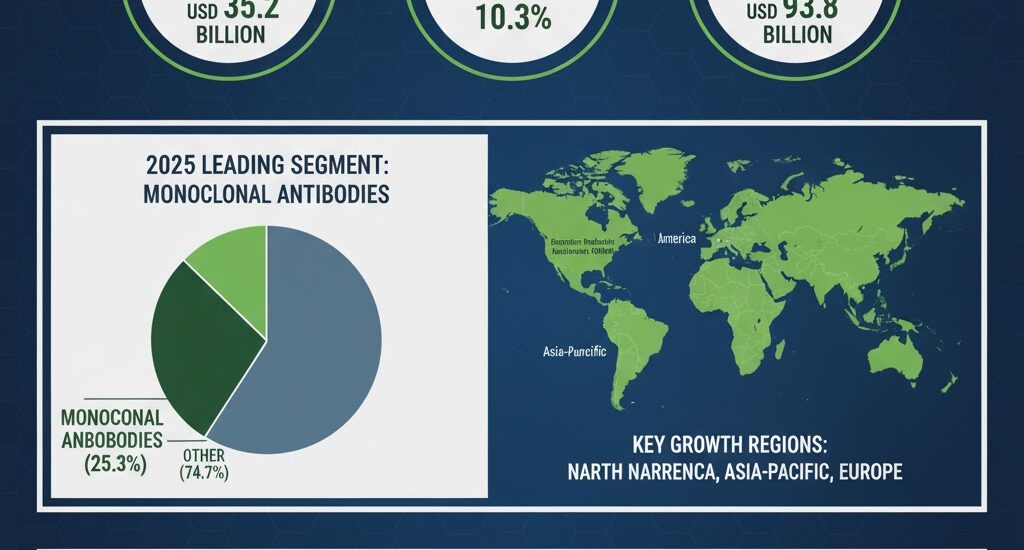
The global biologics contract manufacturing (BCM) market is entering a period of rapid expansion, projected to grow from USD 35.2 billion in 2025 to USD 93.8 billion by 2035, representing a compound annual growth rate (CAGR) of 10.3%. With the rising demand for complex biologic therapies, including monoclonal antibodies, vaccines, and recombinant proteins, manufacturers now have a strategic window to leverage outsourced production solutions to scale efficiently, reduce costs, and accelerate time-to-market.
Driving Forces Behind Market Expansion
The steady growth of the BCM market is fueled by multiple converging trends. Pharmaceutical and biotechnology companies are increasingly partnering with contract manufacturing organizations (CMOs) to handle production of sophisticated biologics that require highly specialized environments and technical expertise. Outsourcing allows manufacturers to focus on research, development, and commercialization while ensuring consistent quality, regulatory compliance, and operational scalability.
The prevalence of chronic diseases, oncology cases, and autoimmune disorders has amplified the need for biologics as targeted therapies. Monoclonal antibodies, in particular, have emerged as a cornerstone in precision medicine, offering superior clinical outcomes for conditions ranging from cancer to infectious diseases. As healthcare systems globally emphasize access to innovative therapies, contract manufacturing is becoming essential for ensuring supply chain reliability and cost-effective production.
Buy Now & Save: Premium Market Report at $5,000 | Discount Details Inside:- https://www.futuremarketinsights.com/reports/sample/rep-gb-2679
Segment Leadership: Monoclonal Antibodies
Among product types, monoclonal antibodies are projected to capture 25.3% of market revenue in 2025, solidifying their position as the leading biologic. Contract manufacturing enables scalable, high-quality production of these complex molecules through advanced cell culture technologies, high-yield bioreactors, and robust purification processes.
For manufacturers, outsourcing monoclonal antibody production provides several advantages: accelerated development timelines, access to specialized expertise, and minimized capital expenditure. The growing number of monoclonal antibody approvals worldwide ensures continued demand, positioning contract manufacturing as a critical growth driver for pharmaceutical companies pursuing oncology, autoimmune, and infectious disease therapies.
Oncology Leading Indication Segment
Cancer is the leading therapeutic indication within the BCM market, accounting for 21.2% of projected 2025 revenue. The integration of biologics into oncology treatment regimens has surged due to their targeted mechanisms and efficacy in precision medicine applications. Contract manufacturing supports the large-scale production of these complex therapeutics while maintaining regulatory compliance, quality standards, and operational efficiency.
The oncology segment underscores the transformative potential of BCM partnerships. Manufacturers benefit from scalable production capabilities that meet clinical trial needs and commercial demand simultaneously. As innovative therapies continue to enter the pipeline, contract manufacturing will remain essential for delivering life-saving cancer treatments to a growing global patient population.
Regional Growth Hotspots
Geographically, North America, Asia-Pacific, and Europe are key growth regions for biologics contract manufacturing. Notably, China and India exhibit the highest CAGR rates at 13.9% and 12.9%, respectively, highlighting the strategic importance of these markets for manufacturers seeking expansion. Developed markets, including Germany, France, and the UK, demonstrate steady growth, while the United States is projected to rise from USD 12.7 billion in 2025 to USD 29.3 billion by 2035, reflecting a CAGR of 8.8%.
This diverse regional landscape offers manufacturers the ability to optimize production and distribution strategies based on local market dynamics, regulatory frameworks, and access to skilled labor, while mitigating operational risks through geographically diversified partnerships.
Market Opportunities for Manufacturers
The biologics contract manufacturing sector addresses key challenges faced by manufacturers, including:
- Complex Production Requirements: Biologics are highly sensitive, heat-labile products requiring aseptic environments and stringent quality controls. CMOs provide the necessary infrastructure and expertise to maintain product integrity.
- Capital and Operational Efficiency: Outsourcing reduces the need for heavy investment in facilities and equipment, allowing manufacturers to allocate resources toward innovation and clinical development.
- Scalability and Supply Reliability: Contract manufacturing ensures scalable production to meet rising demand across multiple therapeutic areas, reducing bottlenecks and supply chain disruptions.
- Regulatory Compliance: CMOs support adherence to international quality standards, easing the burden of regulatory oversight and accelerating approval timelines.
Leading Industry Players
The BCM market is shaped by prominent players including Wuxi Biologics, FUJIFILM Diosynth Biotechnologies, Boehringer Ingelheim International GmbH, Lonza, Samsung Biologics, AbbVie Inc., Catalent, Bioreliance (Merck KGaA), Thermo Fisher Scientific Inc., and Eurofins Scientific. These organizations exemplify the expertise, technological infrastructure, and global reach required to support manufacturers in achieving operational excellence and long-term growth.
Click Here to Purchase the Report:- https://www.futuremarketinsights.com/checkout/2679
Strategic Outlook
The biologics contract manufacturing market is expected to continue its robust expansion through 2035, driven by technological advancements, a growing pipeline of personalized therapies, and increasing demand for cost-effective, high-quality biologics. For manufacturers, strategic partnerships with CMOs provide a critical pathway to reduce time-to-market, scale efficiently, and navigate the evolving regulatory landscape.
As the market transitions to meet the needs of precision medicine and innovative biologics, manufacturers that embrace contract manufacturing solutions will position themselves for sustainable growth, enhanced competitive advantage, and the ability to deliver transformative therapies to patients worldwide.
About Future Market Insights (FMI)
Future Market Insights, Inc. (ESOMAR certified, recipient of the Stevie Award, and a member of the Greater New York Chamber of Commerce) offers profound insights into the driving factors that are boosting demand in the market. FMI stands as the leading global provider of market intelligence, advisory services, consulting, and events for the Packaging, Food and Beverage, Consumer Technology, Healthcare, Industrial, and Chemicals markets. With a vast team of over 400 analystsworldwide, FMI provides global, regional, and local expertise on diverse domains and industry trends across more than 110 countries.
Contact Us:
Future Market Insights Inc.
Christiana Corporate, 200 Continental Drive,
Suite 401, Newark, Delaware – 19713, USA
T: +1-347-918-3531
For Sales Enquiries: sales@futuremarketinsights.com
Website: https://www.futuremarketinsights.com
LinkedIn| Twitter| Blogs | YouTube