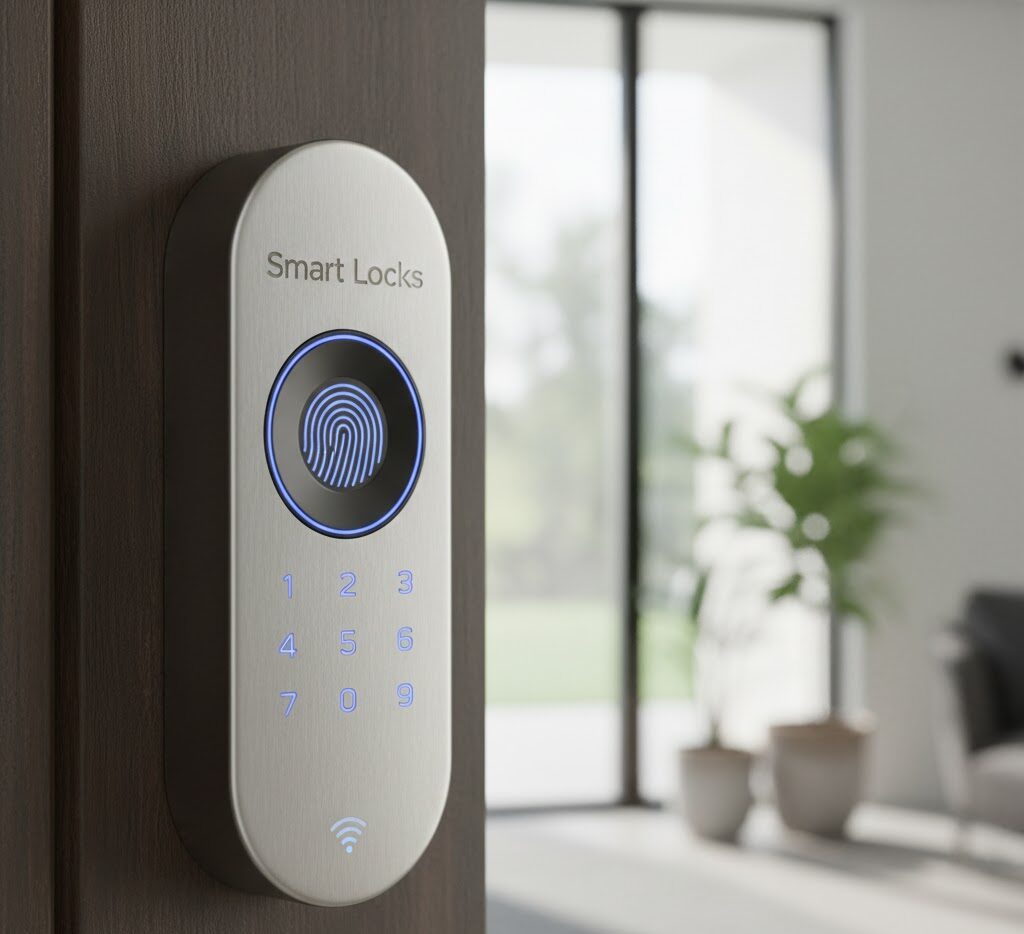
The global smart locks market is on track to witness an exceptional decade of growth, forecast to increase from USD 2.8 billion in 2025 to approximately USD 8.4 billion by 2035. This represents a 200% total increase, driven by the expanding influence of smart home technologies, Internet of Things (IoT) adoption, and the rising demand for secure, keyless access systems.
As homeowners, businesses, and institutional facilities continue to prioritize digital transformation and connected security, both established manufacturers and new entrants are leveraging innovation to redefine access control and home automation standards.
Quick Market Overview
- Market Value (2025): USD 2.8 billion
- Forecast Value (2035): USD 8.4 billion
- CAGR (2025–2035): 11.6%
- Leading Product Category: Bluetooth-Enabled Locks (52%)
- Top Growth Regions: North America, Europe, and Asia Pacific
- Key Industry Players: August Home Inc., Yale (ASSA ABLOY), Schlage (Allegion plc), Samsung Electronics, Kwikset (Spectrum Brands)
Market Dynamics and Growth Phases
Between 2025 and 2030, the smart locks market is expected to grow from USD 2.8 billion to USD 4.9 billion, accounting for 37.5% of total decade growth. This phase will be marked by increasing smartphone penetration, integration of remote access capabilities, and rapid adoption of biometric authentication technologies.
From 2030 to 2035, the market will accelerate further, expanding from USD 4.9 billion to USD 8.4 billion. This phase will see enhanced AI-powered access control, voice assistant integration, and cloud-based access management systems, transforming how consumers and businesses secure their properties.
Why the Smart Locks Market Is Growing
The growth of the smart locks market is underpinned by:
- Rising Demand for Connected Security: Property owners seek solutions offering remote monitoring, keyless entry, and real-time access tracking.
- Smart Home Integration: Smart locks are increasingly being integrated into IoT ecosystems alongside lighting, HVAC, and surveillance systems.
- Technological Advancement: Continuous innovation in biometric sensors, encryption technology, and battery optimization ensures reliability and security.
- Urbanization and Smart Cities: Emerging economies are investing in smart infrastructure, fueling adoption across residential and commercial developments.
Segmental Analysis of the Smart Locks Market
By Lock Type
- Deadbolts
- Lever Handles
- Padlocks
- Mortise Locks
By Authentication Method
- Bluetooth-Enabled Locks (52% market share in 2025)
- Wi-Fi-Enabled Locks
- Keypad-Based Locks
- Biometric Locks
Bluetooth-enabled locks remain the most preferred choice due to their power efficiency, ease of installation, and reliable connectivity. They represent the foundation of keyless entry systems and are integral to smartphone-based access management.
By Communication Protocol
- Bluetooth
- Wi-Fi
- Z-Wave
- Zigbee
- Other Protocols
By End-Use Application
- Residential (71% share in 2025)
- Commercial
- Institutional
- Hospitality
- Other Applications
The residential sector dominates due to increasing consumer demand for convenience, enhanced safety, and integration with home automation systems. Continuous improvement in mobile app functionality and compatibility with smart home platforms is driving adoption.
Key Market Drivers and Challenges
Growth Drivers
- Smart Home Expansion: Increased penetration of connected devices and automation systems globally.
- Enhanced Security Awareness: Rising concerns over unauthorized access and data breaches.
- IoT and AI Integration: The use of predictive analytics and behavioral recognition for intelligent access control.
- Commercial Applications: Adoption in office complexes, hotels, and shared workspaces.
Challenges
- High Initial Installation Costs
- Battery Dependence and Maintenance
- Cybersecurity Vulnerabilities
Manufacturers are responding with encrypted communication systems, tamper alerts, and robust firmware updates to strengthen security and consumer confidence.
Regional Outlook
North America
- Leading Region due to strong smart home culture, high disposable incomes, and proactive home automation adoption.
- The USA alone is projected to grow at a CAGR of 11.2%, driven by expanding IoT infrastructure and security awareness.
Europe
- Market expected to grow from USD 0.9 billion in 2025 to USD 2.3 billion in 2035 (CAGR 9.8%).
- Germany leads with engineering excellence, followed by the UK and France, emphasizing quality and security standards.
Asia Pacific
- China leads with an impressive 13.8% CAGR, propelled by large-scale smart city initiatives and strong manufacturing capabilities.
- Japan follows with 9.7% CAGR, focusing on reliability and advanced engineering standards.
- The region represents a hub for new entrants investing in IoT-enabled security systems.
Emerging and Established Players: Driving Innovation
The smart locks market showcases healthy competition among global leaders and emerging innovators:
- August Home Inc. – Specializes in smart home connectivity and wireless locking systems.
- Yale (ASSA ABLOY) – Combines heritage craftsmanship with modern IoT technology.
- Schlage (Allegion plc) – Offers robust commercial and residential locking solutions.
- Samsung Electronics – Focuses on AI-integrated home security with seamless digital compatibility.
- Kwikset (Spectrum Brands) – Provides affordable, high-quality keyless locks for mass markets.
- Honeywell International, Dormakaba Holding AG, and UniKey Technologies – Continue to pioneer innovations in biometric, touchless, and cloud-based authentication.
Emerging companies like Goji Smart Locks and UniKey Technologies Inc. are rapidly expanding their global footprint, introducing cost-effective, AI-driven, and energy-efficient solutions for both residential and commercial markets.
How Governments and Industry Bodies Can Accelerate Market Growth
- Policy Incentives: Offer subsidies for smart home technology integration and domestic manufacturing of security equipment.
- Global Trade Agreements: Promote exports through easier certification of “connected security” technologies.
- R&D Collaboration: Encourage innovation centers focused on encryption, biometric access, and IoT interoperability.
- Upskilling Workforce: Develop training programs for installers and technicians in cybersecurity and smart lock integration.
Outlook: The Future of Smart Security
As the world transitions toward intelligent living spaces, smart locks are emerging as essential components of connected security ecosystems. The next decade will see manufacturers — both established giants and new entrants — forming strategic partnerships, investing in AI-driven development, and prioritizing cybersecurity excellence.
With technology transforming how we secure, monitor, and manage access, the global smart locks market is poised to unlock the next era of digital home protection and intelligent property management.
Grab This Report Now at Just $2000 | Limited-Time Discount Offer! https://www.futuremarketinsights.com/reports/sample/rep-gb-1063
Checkout Now to Access Industry Insights: https://www.futuremarketinsights.com/checkout/1063
About Future Market Insights (FMI)
Future Market Insights, Inc. (ESOMAR certified, recipient of the Stevie Award, and a member of the Greater New York Chamber of Commerce) offers profound insights into the driving factors that are boosting demand in the market. FMI stands as the leading global provider of market intelligence, advisory services, consulting, and events for the Packaging, Food and Beverage, Consumer Technology, Healthcare, Industrial, and Chemicals markets. With a vast team of over 400 analysts worldwide, FMI provides global, regional, and local expertise on diverse domains and industry trends across more than 110 countries.
Contact Us:
Future Market Insights Inc.
Christiana Corporate, 200 Continental Drive,
Suite 401, Newark, Delaware – 19713, USA
T: +1-347-918-3531
For Sales Enquiries: sales@futuremarketinsights.com
Website: https://www.futuremarketinsights.com
LinkedIn| Twitter| Blogs | YouTube