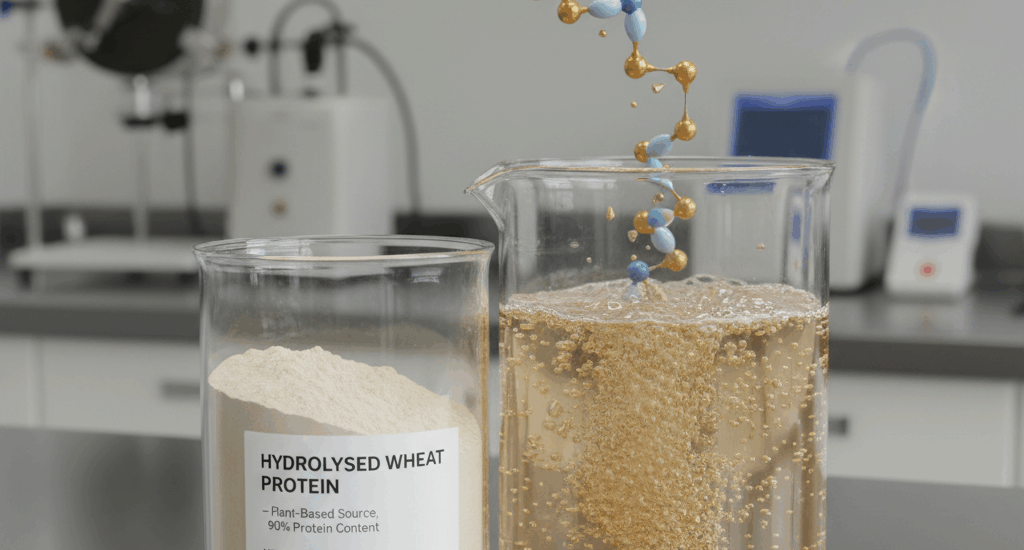
The latest report, “Hydrolysed Wheat Protein Market Size and Share Forecast Outlook 2025 to 2035,” reveals a robust market expansion driven by shifting consumer preferences toward natural, plant-based, and protein-rich formulations. The Hydrolysed Wheat Protein Market is projected to grow from USD 301.0 billion in 2025 to USD 531.5 billion by 2035, reflecting a compound annual growth rate (CAGR) of 5.9% during the forecast period.
Get this Report at $3500 | Get Your Discounted Report Now: https://www.futuremarketinsights.com/reports/sample/rep-gb-8722
Rising Health Awareness Boosts Demand for Hydrolysed Wheat Protein
The surge in health-conscious lifestyles and the global move toward plant-based diets are propelling demand for hydrolysed wheat protein across food, beverage, nutraceutical, and personal care sectors. The ingredient’s superior digestibility, solubility, and bioavailability—enhanced by advanced enzymatic hydrolysis—make it a preferred choice for manufacturers formulating functional foods and protein-enriched cosmetics.
Growing investments in bakery and confectionery segments, where hydrolysed wheat protein enhances texture and nutritional quality, further bolster market growth. Additionally, clean-label trends and organic certifications are encouraging food producers to transition toward naturally derived ingredients, promoting transparency and sustainability in production.
As consumers increasingly associate hydrolysed wheat protein with improved nutrition and reduced allergenicity, the market outlook remains highly positive. Expanding research into protein-based applications for sports nutrition, functional foods, and personal care continues to create new opportunities for both established and emerging players.
Segmental Insights: Organic Segment Leads with 55% Market Share
Within the nature category, the organic hydrolysed wheat protein segment is forecasted to capture 55.0% of the total market share in 2025. Consumers’ growing trust in organic and clean-label certifications, combined with heightened awareness of health and environmental sustainability, has strengthened the segment’s dominance.
Organic hydrolysed wheat protein is increasingly incorporated into bakery, beverages, and personal care formulations, offering enhanced nutritional profiles and eco-friendly appeal. Premium and niche brands are capitalizing on this trend to differentiate their offerings, while new entrants are leveraging sustainable sourcing to gain competitive ground.
Bakery Applications Dominate with 25% Market Revenue
Among various applications, the bakery segment is expected to account for 25.0% of total market revenue in 2025, emerging as the leading category. Hydrolysed wheat protein is prized for its ability to improve dough elasticity, retain moisture, and enhance structural integrity in breads, pastries, and other baked goods.
The segment’s growth aligns with urbanization and shifting dietary habits, as consumers seek convenient, protein-fortified bakery options. Manufacturers have integrated hydrolysed wheat protein into large-scale production systems to extend shelf life and achieve consistent quality, further solidifying its position in industrial food processing.
85% Concentration Type Dominates Market Demand
The 85% concentrated subsegment will account for approximately 50% of market revenue in 2025, driven by its superior solubility, nutritional density, and versatility in formulations. Its performance benefits—ranging from rapid dispersibility to enhanced viscosity control—make it ideal for applications in bakery, beverages, and nutraceuticals.
This high concentration enables manufacturers to maintain desired protein levels while optimizing formulation efficiency, appealing to producers focused on functional and performance-driven ingredients.
Regional Outlook: Asia-Pacific Leads Global Expansion
The Hydrolysed Wheat Protein Market demonstrates strong regional diversity, with North America, Asia-Pacific, and Europe as primary growth hubs. China and India are projected to record the fastest growth, with CAGRs of 7.9% and 7.3%, respectively, fueled by population growth, evolving dietary habits, and increased focus on wellness.
Germany continues to lead Western Europe with a 6.7% CAGR, supported by rising demand for organic and fortified bakery products. Meanwhile, the U.S. market, valued at USD 109.5 billion in 2025, remains steady with mature consumption patterns in both food and personal care sectors. Although Japan exhibits a slower growth rate of 4.4%, it maintains significant market share through innovations in cosmetic and skincare applications.
Market Drivers: Clean Label, Sustainability, and Technology Integration
The industry’s expansion is underpinned by three key trends:
- Clean-label and Organic Shift: Growing demand for transparent labeling and organic certification is reshaping formulation strategies across global markets.
- Technological Advancements: Modern protein hydrolysis techniques enhance digestibility and stability, creating value-added solutions for manufacturers.
- Sustainability Focus: Increasing adoption of eco-conscious production and supply chain practices aligns with corporate sustainability commitments and consumer expectations.
Competitive Landscape: Innovation and Collaboration Define Growth
Key players such as Archer Daniels Midland Company, Cargill, Roquette Frères, MGP Ingredients, Kerry Group, Manildra Group, The Scoular Company, and Tereos SCA are investing in new extraction technologies and plant-based protein research to expand their global presence. Emerging manufacturers are exploring strategic partnerships and vertical integration to secure raw material sources and develop customized solutions for specialized applications.
The competitive landscape continues to evolve as companies focus on innovation, sustainability, and regional expansion, with newer entrants aiming to capture niche opportunities in organic, fortified, and clean-label segments.
Get the Complete Brochure Instantly: https://www.futuremarketinsights.com/reports/brochure/rep-gb-8722
Outlook: Expanding Opportunities in Functional Foods and Personal Care
As the global appetite for plant-based and functional ingredients continues to rise, hydrolysed wheat protein stands at the forefront of sustainable nutrition and clean beauty innovation. Backed by continuous R&D, strategic collaborations, and evolving consumer lifestyles, the market is poised for steady and profitable expansion through 2035.
Manufacturers that integrate advanced hydrolysis technologies with environmentally responsible production practices are expected to gain a lasting competitive edge in this rapidly transforming global market.
About Future Market Insights (FMI)
Future Market Insights, Inc. (ESOMAR certified, recipient of the Stevie Award, and a member of the Greater New York Chamber of Commerce) offers profound insights into the driving factors that are boosting demand in the market. FMI stands as the leading global provider of market intelligence, advisory services, consulting, and events for the Packaging, Food and Beverage, Consumer Technology, Healthcare, Industrial, and Chemicals markets. With a vast team of over 400 analysts worldwide, FMI provides global, regional, and local expertise on diverse domains and industry trends across more than 110 countries.
Contact Us:
Future Market Insights Inc.
Christiana Corporate, 200 Continental Drive,
Suite 401, Newark, Delaware – 19713, USA
T: +1-347-918-3531
For Sales Enquiries: sales@futuremarketinsights.com
Website: https://www.futuremarketinsights.com
LinkedIn| Twitter| Blogs | YouTube