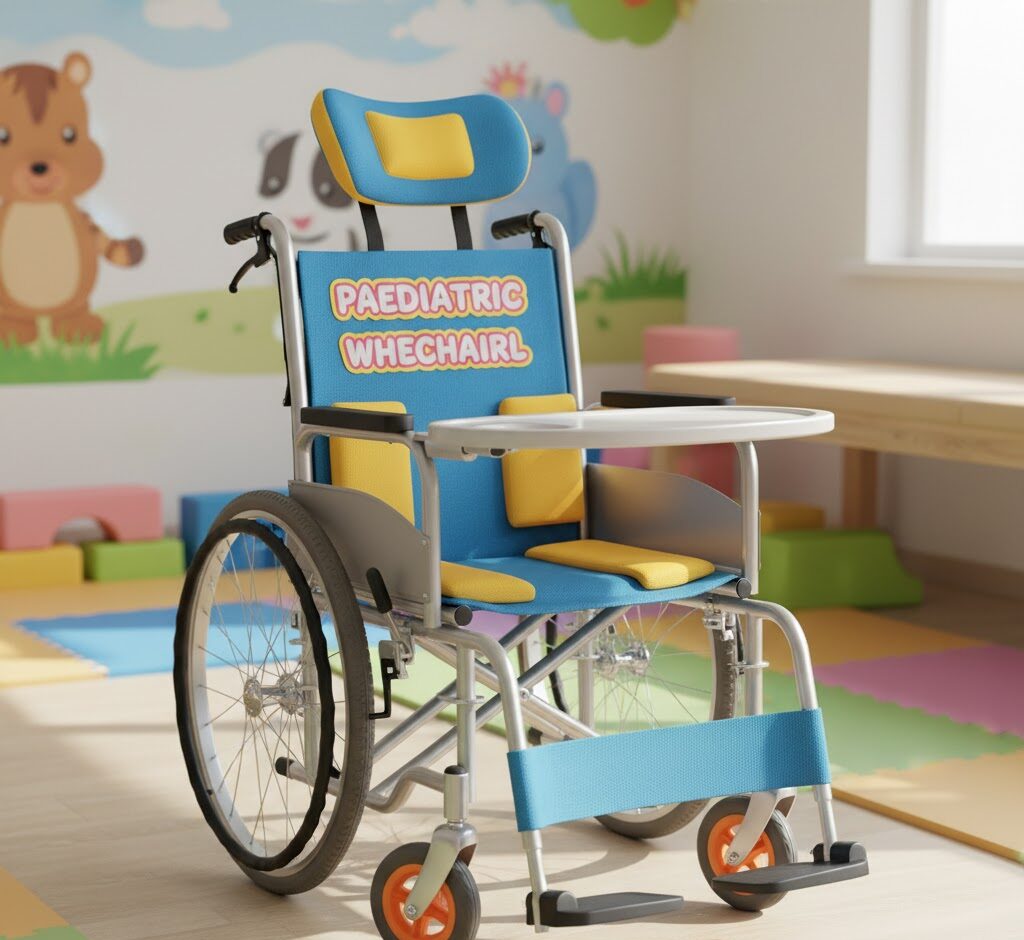
The Paediatric Wheelchairs Market is poised for substantial growth, projected to rise from USD 2.6 billion in 2025 to USD 5.1 billion by 2035, expanding at a CAGR of 7.0% during the forecast period. Increasing awareness about mobility support for children with disabilities, advancements in lightweight and ergonomic designs, and supportive healthcare initiatives are propelling global demand.
Paediatric wheelchairs are designed to cater to the evolving needs of children with mobility impairments, emphasizing adaptability, comfort, and safety. With innovations in foldable and modular wheelchair designs, the market is experiencing robust momentum in homecare and rehabilitation sectors.
Report Coverage & Deliverables
This comprehensive report provides a detailed analysis of the Paediatric Wheelchairs Market, including market valuation, growth drivers, and future forecasts.
Key Deliverables Include:
- Market size estimates (2025–2035) with CAGR projections
- Segmental analysis by product type, frame, and application
- Regional and country-level insights
- Competitive landscape and profiling of leading players
- Market dynamics, technological trends, and emerging opportunities
Quantitative Units: USD Billion
Product Segments: Manual, Electric
Frame Types: Foldable, Rigid
Applications: Homecare, Hospitals, Others
Regions Covered: North America, Europe, Asia-Pacific, Latin America, Middle East & Africa
Key Companies Profiled: MEYRA GmbH, Sunrise Medical, SORG Rollstuhltechnik GmbH, Invacare, Momentum Healthcare, Permobil, AKCES-MED sp.z., Medline, Drive Medical, Numotion, Carex Health, and Pride Mobility
Key Factors Shaping Market Dynamics
- Rising Awareness of Pediatric Mobility Solutions:
Increasing recognition of the importance of early mobility intervention for children with disabilities has been a major growth driver. Healthcare systems and parents alike are prioritizing child independence and quality of life, boosting adoption rates globally. - Technological Advancements in Design and Functionality:
The development of lightweight materials, ergonomic seating, and modular structures enhances usability, making paediatric wheelchairs more adaptable to a child’s growth. Foldable and portable designs are particularly gaining traction in urban and homecare settings. - Supportive Government Policies and Healthcare Initiatives:
Government-led child accessibility programs and funding for pediatric assistive devices are creating favorable conditions for manufacturers and suppliers. - Growing Homecare and Rehabilitation Demand:
The rising focus on home-based healthcare solutions for children with mobility impairments has led to an increased preference for compact, customizable, and easy-to-use wheelchairs. - Collaborative Industry Ecosystem:
Partnerships among healthcare providers, wheelchair manufacturers, and caregivers are fostering innovation in safety, comfort, and pediatric ergonomics — ensuring tailored solutions for diverse needs.
Key Takeaways
| Metric | Value |
| Market Value (2025E) | USD 2.6 Billion |
| Forecast Value (2035F) | USD 5.1 Billion |
| CAGR (2025–2035) | 7.0% |
| Leading Product Segment (2025) | Manual Wheelchairs (57.6%) |
| Dominant Frame Segment (2025) | Foldable Wheelchairs (52.4%) |
| Top Growth Application (2025) | Homecare (43.7%) |
| Key Growth Regions | North America, Asia-Pacific, Europe |
The market’s expansion is fueled by strong consumer awareness, innovative designs, and rising disposable incomes, allowing families to invest in advanced pediatric mobility aids that enhance daily comfort and independence.
Regional Analysis
- North America
North America remains a leading region in the paediatric wheelchairs market, driven by strong healthcare infrastructure, insurance support for assistive mobility devices, and the presence of key manufacturers such as Invacare and Drive Medical. The U.S. market alone is projected to grow from USD 976.6 million in 2025 to USD 1.7 billion by 2035, at a CAGR of 6.0%.
- Europe
Europe demonstrates steady growth, with countries like Germany, France, and the U.K. maintaining high adoption rates due to comprehensive pediatric care systems. Germany is expected to record a CAGR of 8.1%, supported by rising investments in rehabilitation technologies and mobility innovation.
- Asia-Pacific
Asia-Pacific is the fastest-growing region, led by China (CAGR 9.5%) and India (CAGR 8.8%). Expanding healthcare infrastructure, rising awareness of disability rights, and affordable local manufacturing are propelling regional demand. Government funding and NGO initiatives promoting child accessibility further support growth.
- Latin America & Middle East & Africa
Although relatively smaller markets, Latin America (notably Brazil) and MEA are showing promising trends as healthcare access improves. Brazil, with a CAGR of 5.3%, is witnessing rising adoption in hospitals and rehabilitation centers.
Key Segments of the Market Report
By Product Type
- Manual Wheelchairs:
Dominating with a 57.6% share in 2025, manual wheelchairs are preferred for their affordability, portability, and ease of maintenance. Lightweight materials and ergonomic designs make them ideal for both indoor and outdoor environments. - Electric Wheelchairs:
Expected to witness steady growth as technological integration improves, offering enhanced independence and usability for children with severe mobility limitations.
By Frame Type
- Foldable Wheelchairs:
Leading with 52.4% market share in 2025, foldable models are favored for their convenience in storage and transportation. Their adaptability to compact living spaces and travel-friendly design make them highly desirable in homecare applications. - Rigid Wheelchairs:
Valued for their structural strength and long-term durability, particularly in clinical or rehabilitation settings.
By Application
- Homecare:
The leading segment with 43.7% market share in 2025, driven by rising awareness of child mobility independence, home-based therapy, and improved wheelchair ergonomics. - Hospitals & Others:
These segments continue to grow steadily, supported by the rising need for rehabilitation infrastructure and pediatric patient care facilities.
Grab This Report Now at Just $5000| Limited-Time Discount Offer! https://www.futuremarketinsights.com/reports/sample/rep-gb-2238
Checkout Now to Access Industry Insights: https://www.futuremarketinsights.com/checkout/2238
About Future Market Insights (FMI)
Future Market Insights, Inc. (ESOMAR certified, recipient of the Stevie Award, and a member of the Greater New York Chamber of Commerce) offers profound insights into the driving factors that are boosting demand in the market. FMI stands as the leading global provider of market intelligence, advisory services, consulting, and events for the Packaging, Food and Beverage, Consumer Technology, Healthcare, Industrial, and Chemicals markets. With a vast team of over 400 analysts worldwide, FMI provides global, regional, and local expertise on diverse domains and industry trends across more than 110 countries.
Contact Us:
Future Market Insights Inc.
Christiana Corporate, 200 Continental Drive,
Suite 401, Newark, Delaware – 19713, USA
T: +1-347-918-3531
For Sales Enquiries: sales@futuremarketinsights.com
Website: https://www.futuremarketinsights.com
LinkedIn| Twitter| Blogs | YouTube