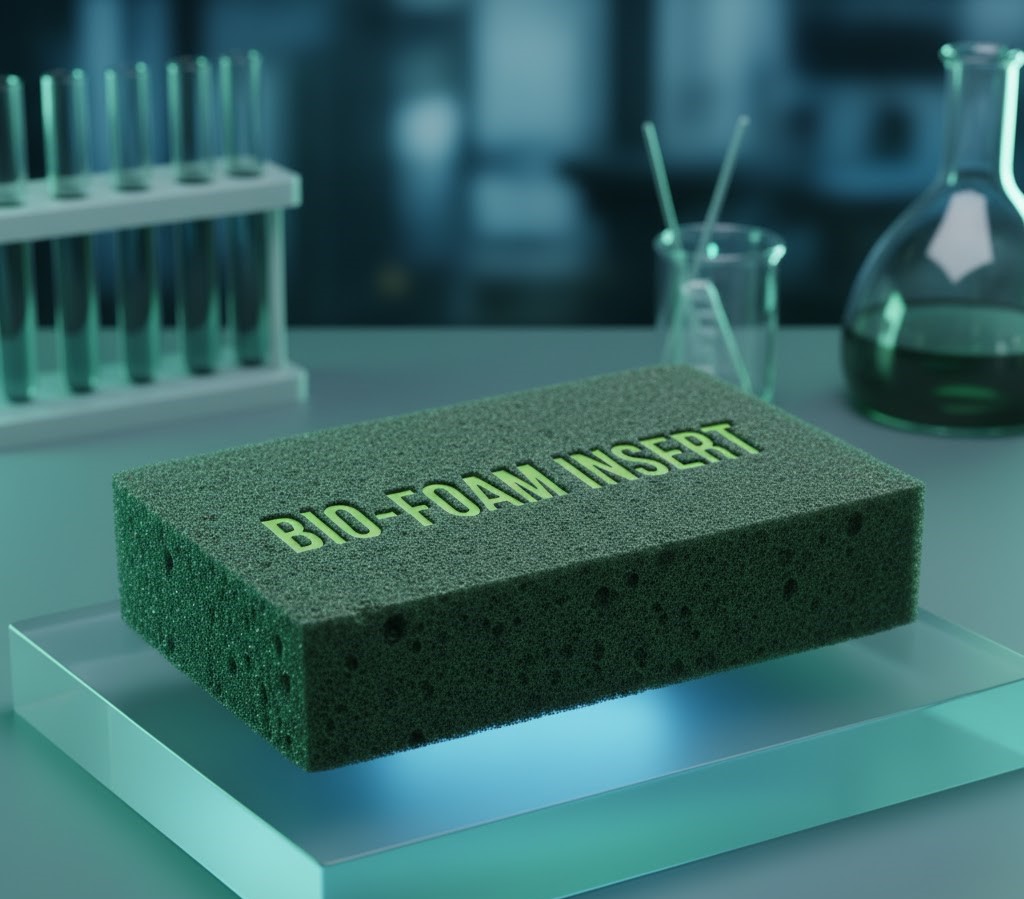
The Bio-Foam Insert Market is poised for robust expansion, projected to grow from USD 1.4 billion in 2025 to USD 2.8 billion by 2035, registering a CAGR of 7.2%. The growth is primarily fueled by the global transition toward eco-friendly, biodegradable packaging solutions in industries such as electronics, food, healthcare, and industrial goods. Increasing bans on single-use plastics and regulatory support for circular economy models continue to drive bio-foam insert adoption globally.
Market Trends Highlighted
- Shift Toward Sustainable Packaging: Global regulations restricting EPS and PU foams are accelerating adoption of bio-based alternatives like starch, PLA, and PHA foams.
- Rising Electronics Packaging Demand: Electronics and industrial sectors account for nearly 40% of bio-foam insert consumption due to the need for protective, recyclable materials.
- Emergence of Hybrid Bio-Foams: Innovations combining mycelium, cellulose, and PLA materials are improving durability, moisture resistance, and cushioning efficiency.
- E-commerce Growth Impact: Online retail and logistics sectors are increasingly using bio-foam inserts to ensure product safety while aligning with sustainability goals.
- Global Certifications: Compostability and recyclability certifications enhance manufacturer credibility and consumer trust.
Recent Developments
- 2024 – Cruz Foam: Expanded commercial rollout of compostable foam packaging for electronics and e-commerce logistics.
- 2023 – Evoco Ltd: Introduced advanced bio-based foam inserts designed for enhanced durability in industrial packaging.
- Smithers-Oasis (BIO-FOAM): Strengthened its product line in consumer goods packaging with biodegradable foam solutions.
- Ramfoam and Snehal Packaging: Increased production capacity to meet growing demand for starch-based inserts in Asia-Pacific markets.
Key Takeaways of the Report
- Market Size (2025): USD 1.4 billion
- Forecast Value (2035): USD 2.8 billion
- CAGR (2025–2035): 7.2%
- Leading Product Type: Protective Packaging Inserts (42.1%)
- Top Material: Starch-Based Bio-Foam (36.5%)
- Fastest-Growing Region: Asia-Pacific, led by South Korea (7.8% CAGR)
- Top Companies: Evoco Ltd, BioViron International Ltd, Cruz Foam, Smithers-Oasis, Ramfoam, and Sheela Foam Ltd
Market Drivers
- Global Sustainability Regulations: Bans on non-biodegradable foams like EPS and PU are compelling manufacturers to adopt green alternatives.
- Growing Electronics Sector: Rising shipments of consumer electronics, smart devices, and wearables are boosting the need for eco-friendly protective packaging.
- Expansion of E-commerce: The surge in online retail logistics drives adoption of durable, recyclable inserts to reduce product damage.
- Cost Efficiency of Starch-Based Foams: Starch-based bio-foams offer affordable scalability, making them ideal for high-volume packaging.
- Consumer Demand for Eco-Conscious Brands: Rising environmental awareness is encouraging brands to prioritize biodegradable packaging.
Regional Insights
- Asia-Pacific:
The fastest-growing region, led by Japan (7.6% CAGR) and South Korea (7.8% CAGR), where electronics and e-commerce sectors dominate adoption. China follows closely, driven by large-scale packaging needs and regulatory support for biodegradable materials. - North America:
Growth at 7.1% CAGR, propelled by regulatory compliance and increasing electronics exports in the U.S. - Europe:
Germany (6.8%) and UK (6.9%) lead due to EU environmental mandates and Extended Producer Responsibility (EPR) policies, emphasizing recyclable, sustainable packaging. - Emerging Markets:
India (6.9%) shows strong potential, driven by FMCG and electronics industries, supported by national plastic bans.
Country-Wise CAGR Analysis (2025–2035)
The bio-foam insert market is witnessing consistent growth across major economies, driven by regulatory mandates, e-commerce expansion, and rising demand for sustainable packaging materials.
- South Korea (7.8% CAGR): Leads the global market with strong growth in e-commerce and electronics packaging. Retailers are rapidly transitioning to biodegradable inserts to meet sustainability goals.
- Japan (7.6% CAGR): Growth driven by advanced electronics and healthcare packaging industries. Government regulations promoting recyclability and material innovation further boost adoption.
- China (7.0% CAGR): Expanding e-commerce and industrial packaging sectors drive large-scale demand for cost-efficient starch-based bio-foams.
- United States (7.1% CAGR): Increasing adoption in healthcare logistics and electronics packaging, supported by growing corporate sustainability initiatives.
- Germany (6.8% CAGR): Growth underpinned by stringent EU environmental standards and the rapid replacement of EPS foams in industrial packaging.
- United Kingdom (6.9% CAGR): Expansion led by Extended Producer Responsibility (EPR) regulations, with strong uptake in food and electronics packaging.
- India (6.9% CAGR): Driven by surging FMCG and electronics sectors, coupled with nationwide bans on single-use plastics and preference for affordable starch-based materials.
Competition Outlook
The market is moderately fragmented, with major players focusing on innovation, cost optimization, and regional expansion.
Key Players Include:
- Evoco Ltd – Pioneering PHA-based bio-foams.
- BioViron International Ltd – Focused on starch-based foam inserts.
- Cruz Foam – Leading compostable packaging for electronics.
- Smithers-Oasis (BIO-FOAM) – Specializing in consumer and industrial packaging.
- Ramfoam & Parva Foam Technologies – Expanding cost-effective foam production in Asia.
- Sheela Foam Ltd & Snehal Packaging – Strengthening market presence in India and Southeast Asia.
Competition revolves around product sustainability, recyclability certifications, affordability, and customizability. Partnerships between electronics OEMs and bio-foam producers are expected to intensify through 2035.
Key Segments of the Market Report
By Material:
Starch-Based, PLA (Polylactic Acid), PHA (Polyhydroxyalkanoates), Cellulose-Based, Mycelium-Based
By Product Type:
Protective Inserts, Cushioning Inserts, Trays & Liners, Corner & Edge Protectors
By Application:
Electronics, Food & Beverages, Healthcare, Industrial Goods, Consumer Packaging
By End-Use Industry:
Electronics, Food, Pharmaceuticals, Retail, Industrial Manufacturing
Grab This Report Now at Just $5000| Limited-Time Discount Offer! https://www.futuremarketinsights.com/reports/sample/rep-gb-26739
Checkout Now to Access Industry Insights: https://www.futuremarketinsights.com/checkout/26739
About Future Market Insights (FMI)
Future Market Insights, Inc. (ESOMAR certified, recipient of the Stevie Award, and a member of the Greater New York Chamber of Commerce) offers profound insights into the driving factors that are boosting demand in the market. FMI stands as the leading global provider of market intelligence, advisory services, consulting, and events for the Packaging, Food and Beverage, Consumer Technology, Healthcare, Industrial, and Chemicals markets. With a vast team of over 400 analysts worldwide, FMI provides global, regional, and local expertise on diverse domains and industry trends across more than 110 countries.
Contact Us:
Future Market Insights Inc.
Christiana Corporate, 200 Continental Drive,
Suite 401, Newark, Delaware – 19713, USA
T: +1-347-918-3531
For Sales Enquiries: sales@futuremarketinsights.com
Website: https://www.futuremarketinsights.com
LinkedIn| Twitter| Blogs | YouTube