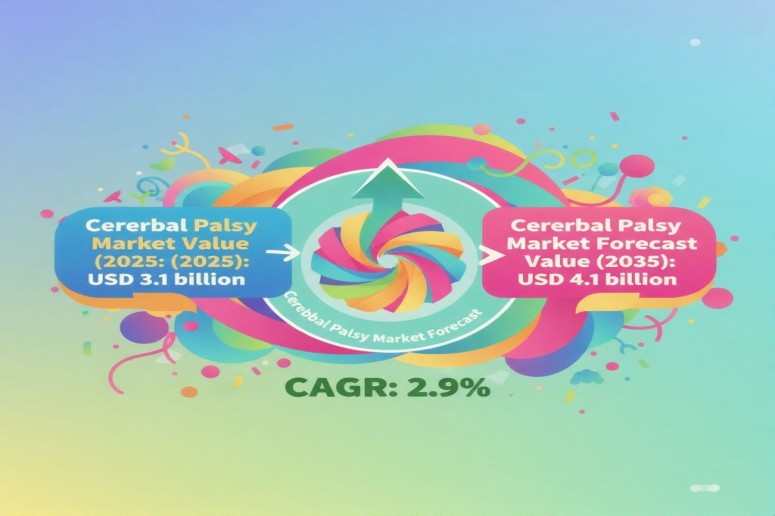
The global Cerebral Palsy Market is poised for steady expansion over the coming decade, with an estimated valuation of USD 3.1 billion in 2025, projected to reach approximately USD 4.1 billion by 2035, registering a compound annual growth rate (CAGR) of 2.9%. This growth underscores increasing awareness of neurological disorders, advances in therapeutic interventions, and the sustained focus of healthcare providers and pharmaceutical companies on improving patient outcomes for individuals affected by cerebral palsy.
Rising Need for Comprehensive Cerebral Palsy Management
Cerebral palsy (CP) is a neurological condition caused by brain damage during or shortly after birth, impacting movement, muscle coordination, and motor skills. Patients may experience a range of symptoms, from spasticity, abnormal gait patterns, and motor impairments to seizures, vision or hearing deficits, and intellectual challenges. The spectrum of severity varies significantly, with some individuals requiring aggressive pharmacological and rehabilitative interventions, while others benefit primarily from physical therapy and supportive care.
The increasing prevalence of cerebral palsy, coupled with advancements in early diagnosis, has driven demand for effective therapies and long-term management solutions. Healthcare systems worldwide are prioritizing multidisciplinary care approaches that combine pharmacological treatment, physiotherapy, occupational therapy, and assistive devices. Such integrated care strategies are improving quality of life for patients and enabling tailored interventions that address individual needs.
Anticonvulsants Lead Drug Segment
Among drug therapies, anticonvulsants remain the leading segment, representing 39.6% of the market revenue in 2025. This dominance reflects the high prevalence of seizure-related complications in cerebral palsy patients and the clinical preference for anticonvulsants to control neurological instability. Recent advancements in formulation development, dosage optimization, and safety profiles have further enhanced the adoption of these drugs.
Pharmaceutical companies are increasingly focusing on combining anticonvulsants with complementary therapies, such as physical and occupational therapy, to deliver holistic patient care. As research continues to explore novel and targeted anticonvulsant therapies, this segment is expected to maintain its leadership, supported by widespread clinical use, regulatory approvals, and ongoing investments in innovation.
Spastic Cerebral Palsy Remains Prevalent
Within cerebral palsy types, spastic cerebral palsy is projected to account for 32.4% of market revenue in 2025, highlighting its clinical and economic significance. Characterized by muscle stiffness and impaired motor function, spastic cerebral palsy requires targeted interventions to improve mobility and daily functioning. Pharmacological therapies—including muscle relaxants and anticonvulsants—alongside physiotherapy have proven effective in managing symptoms and enhancing patient outcomes.
Healthcare providers are increasingly adopting multidisciplinary care models, integrating medical treatment with rehabilitative support to optimize patient functionality. As awareness of long-term rehabilitation and quality-of-life improvements grows among caregivers and healthcare professionals, demand for therapies addressing spastic cerebral palsy is expected to continue rising.
Hospitals Remain Central Distribution Channel
From a distribution perspective, hospitals represent the leading channel, accounting for 41.7% of market revenue in 2025. Hospitals serve as primary centers for diagnosis, treatment, and rehabilitation, offering access to specialized clinicians, structured care programs, and advanced medications. The combination of pharmacological therapies, physiotherapy, and assistive devices in hospital settings ensures comprehensive care for cerebral palsy patients.
Collaborations between hospitals and pharmaceutical providers, alongside streamlined procurement processes, are further supporting the growth of hospital-based distribution. Increased awareness of early intervention and best clinical practices is driving caregivers to prefer hospital-based care, reinforcing this channel’s dominant position.
Regional Market Insights
The Cerebral Palsy Market exhibits significant regional variations, with North America, Asia-Pacific, and Europe identified as key growth areas. Among individual countries, China leads with a projected CAGR of 3.9%, followed closely by India at 3.6%, reflecting robust healthcare investment, expanding access to therapies, and growing awareness of neurological disorders.
In Europe, Germany is expected to maintain steady growth at a CAGR of 3.3%, while the UK and France follow closely. The USA market is estimated at USD 1.1 billion in 2025, projected to reach USD 1.4 billion by 2035, with a CAGR of 2.5%, underscoring consistent demand for advanced cerebral palsy treatments. Emerging markets, including Brazil, Japan, and South Korea, are also contributing to global market momentum, highlighting a broadly positive trajectory for the industry.
Key Players Driving Innovation
The cerebral palsy market is characterized by a mix of established pharmaceutical giants and emerging players seeking to expand their presence. Leading companies include AbbVie, Amneal, CHEPLAPHARM, Dr. Reddy’s, GSK, IPSEN, Merz Pharmaceuticals, Novartis, Roche, Teva, UCB, and VIATRIS. These organizations are investing in research and development, clinical trials, and new therapeutic technologies to enhance the efficacy of existing drugs and introduce novel treatment options.
Several manufacturers are exploring personalized therapy approaches, advanced formulations, and combination therapies to meet the diverse needs of cerebral palsy patients. Technological advancements, including digital monitoring tools and innovative drug delivery systems, are enabling improved symptom management and patient engagement. For new entrants, the market offers opportunities to leverage cutting-edge technologies, strategic partnerships, and regional expansions to capture emerging demand.
Technological Innovations Shaping the Market
Innovation remains a central driver of market growth. Advances in assistive devices, rehabilitation technologies, and pharmacological interventions are enabling better management of cerebral palsy symptoms. Drug development is increasingly focused on targeted mechanisms, reduced side effects, and combination therapies that complement rehabilitative care.
Additionally, the integration of multidisciplinary digital health solutions is improving access to patient data, facilitating personalized care plans, and enabling remote monitoring. Such innovations are particularly valuable in emerging regions where access to specialized care remains limited, creating opportunities for manufacturers and service providers to expand their footprint.
Get this Report at $5,000 Only | Exclusive Discount Inside!
https://www.futuremarketinsights.com/reports/sample/rep-gb-2784
Checkout Now to Access Industry Insights:
https://www.futuremarketinsights.com/checkout/2784
About Future Market Insights (FMI)
Future Market Insights, Inc. (ESOMAR certified, recipient of the Stevie Award, and a member of the Greater New York Chamber of Commerce) offers profound insights into the driving factors that are boosting demand in the market. FMI stands as the leading global provider of market intelligence, advisory services, consulting, and events for the Packaging, Food and Beverage, Consumer Technology, Healthcare, Industrial, and Chemicals markets. With a vast team of over 400 analysts worldwide, FMI provides global, regional, and local expertise on diverse domains and industry trends across more than 110 countries.
Contact Us:
Future Market Insights Inc.
Christiana Corporate, 200 Continental Drive,
Suite 401, Newark, Delaware – 19713, USA
T: +1-347-918-3531
For Sales Enquiries: sales@futuremarketinsights.com
Website: https://www.futuremarketinsights.com
LinkedIn| Twitter| Blogs | YouTube