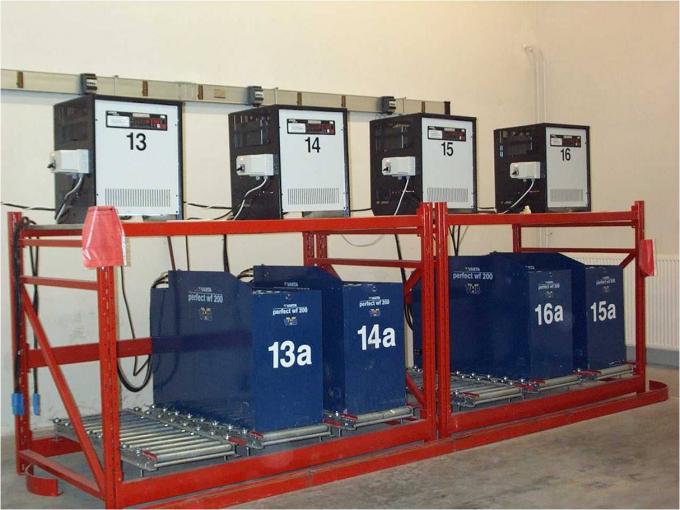
The industrial battery chargers market is entering a period of unprecedented growth, offering manufacturers the opportunity to address critical operational challenges while enhancing energy efficiency. Valued at USD 2,735.3 million in 2025, the market is projected to nearly double to USD 6,184.4 million by 2035, exhibiting a robust CAGR of 8.5% over the forecast period.
Market Growth Driven by Technology Advancements
Recent technological advances are reshaping the industrial battery chargers sector. High-frequency switch-mode chargers are increasingly favored for their compact design, rapid charging capabilities, and energy efficiency, particularly in telecommunications and IT infrastructure. In contrast, SCR and Thyristor-based chargers remain essential for large-scale industrial applications such as railways and energy storage, where stable, continuous power is critical.
Manufacturers are now evaluating chargers based on battery voltage requirements, with 24V, 48V, 60V, and 110V systems supporting diverse power loads across sectors like manufacturing, mining, and energy. Higher-voltage chargers, exceeding 110V, are essential for data centers and large infrastructure projects. Equally important is the output charging current; high-capacity chargers delivering 250A to 500A or more are critical for sectors demanding uninterrupted operations.
Buy Now & Save: Premium Market Report at $5,000 | Discount Details Inside:- https://www.futuremarketinsights.com/reports/sample/rep-gb-5587
Battery Compatibility and Configuration Options
The market is witnessing a shift toward lithium batteries due to their long lifespan and superior energy efficiency, alongside traditional SLA and NiCd batteries. Preferred charger configurations include float and boost (FC & BC) and dual float cum boost (FCBC), ensuring reliable, continuous power for oil and gas, telecom, and infrastructure operations.
Integration of IoT-enabled chargers is increasingly solving operational inefficiencies. Real-time monitoring, predictive maintenance, and remote control capabilities reduce downtime and operational costs, particularly in critical sectors like IT, renewable energy, and telecommunications.
Semi-Annual Market Insights
Market trends indicate steady growth across the forecast horizon. From H1 2025 to H2 2025, the CAGR is projected to rise from 8.4% to 8.6%, reflecting a consistent upward trajectory. These incremental improvements highlight the sector’s resilience and the growing adoption of advanced charging systems globally.
Key Drivers Fueling Market Expansion
- Telecommunications and 5G Expansion
The global rollout of 5G networks is driving demand for high-performance industrial battery chargers. Telecom providers require uninterrupted power for base stations and data centers, and advanced chargers ensure operational reliability. For example, China Mobile’s 2024 plan to install 500,000 5G base stations underscores the critical role of industrial chargers in supporting network expansions. - IoT Integration and Smart Energy Management
IoT-compatible chargers, offering predictive maintenance and energy optimization, are becoming vital tools in manufacturing and critical infrastructure. Companies such as Schneider Electric have led innovation in this space, providing smart chargers that reduce downtime and enhance energy efficiency. - Government Support and Green Energy Initiatives
Favorable policies and incentives promoting renewable energy, smart grids, and sustainable infrastructure are boosting market growth. India, for instance, is expanding its National Grid to 326.8 GW by 2030, creating significant demand for industrial battery chargers in energy transmission and distribution. - Ultra-Fast Charging Technology
The emergence of ultra-fast chargers allows manufacturers to maintain operational continuity without compromising battery longevity. Hitachi Energy’s 2024 high-speed charging solution exemplifies how data centers and manufacturing plants benefit from rapid, reliable energy replenishment.
Regional Market Insights
Global demand for industrial battery chargers is concentrated in key regions:
- China: Projected market value of USD 1,190.5 million by 2035, driven by renewable energy projects and smart grid expansion.
- USA: Demand expected to reach USD 816.3 million by 2035, with data centers increasingly relying on high-capacity battery chargers.
- India: Projected USD 455.2 million market by 2035, fueled by railway electrification and EV charging infrastructure.
- Australia: High CAGR of 10.6%, reflecting regional industrial and energy storage growth.
Industry Segmentation and Competitive Landscape
Technology Type: Hybrid (SCR + Ferroresonant) chargers are expected to dominate the market with a 30.2% share in 2025, balancing efficiency and reliability.
End-Use Sector: IT and data centers are the leading adopters, accounting for 32.4% of the market. With the rise of cloud computing, AI, and energy-intensive operations, reliable battery charging solutions are essential to avoid downtime.
Market Leaders: Tier-1 manufacturers such as ABB Ltd, Hitachi Ltd, and Exide Technologies control 60–65% of the market. Tier-2 players, including Sevcon and Lester Electrical, capture the remaining 35–40%, offering targeted solutions for niche applications.
Click Here to Purchase the Report:- https://www.futuremarketinsights.com/checkout/5587
Overcoming Challenges
High initial costs remain a barrier for small and medium enterprises. Advanced chargers, particularly hybrid and IoT-enabled models, require significant upfront investment. Manufacturers can overcome this through cost-effective solutions, government subsidies, and financial incentives to enable broader adoption.
Outlook 2025–2035: A Transformative Decade
The industrial battery chargers market is poised for transformational growth, driven by ultra-fast charging, smart IoT integration, and government-backed green initiatives. Manufacturers adopting these technologies will gain operational resilience, reduce energy costs, and support sustainability goals. By 2035, the market is expected to achieve USD 6,184.4 million, nearly 2.2X the 2025 value, reflecting the sector’s potential to revolutionize industrial energy management worldwide.
About Future Market Insights (FMI)
Future Market Insights, Inc. (ESOMAR certified, recipient of the Stevie Award, and a member of the Greater New York Chamber of Commerce) offers profound insights into the driving factors that are boosting demand in the market. FMI stands as the leading global provider of market intelligence, advisory services, consulting, and events for the Packaging, Food and Beverage, Consumer Technology, Healthcare, Industrial, and Chemicals markets. With a vast team of over 400 analystsworldwide, FMI provides global, regional, and local expertise on diverse domains and industry trends across more than 110 countries.
Contact Us:
Future Market Insights Inc.
Christiana Corporate, 200 Continental Drive,
Suite 401, Newark, Delaware – 19713, USA
T: +1-347-918-3531
For Sales Enquiries: sales@futuremarketinsights.com
Website: https://www.futuremarketinsights.com
LinkedIn| Twitter| Blogs | YouTube