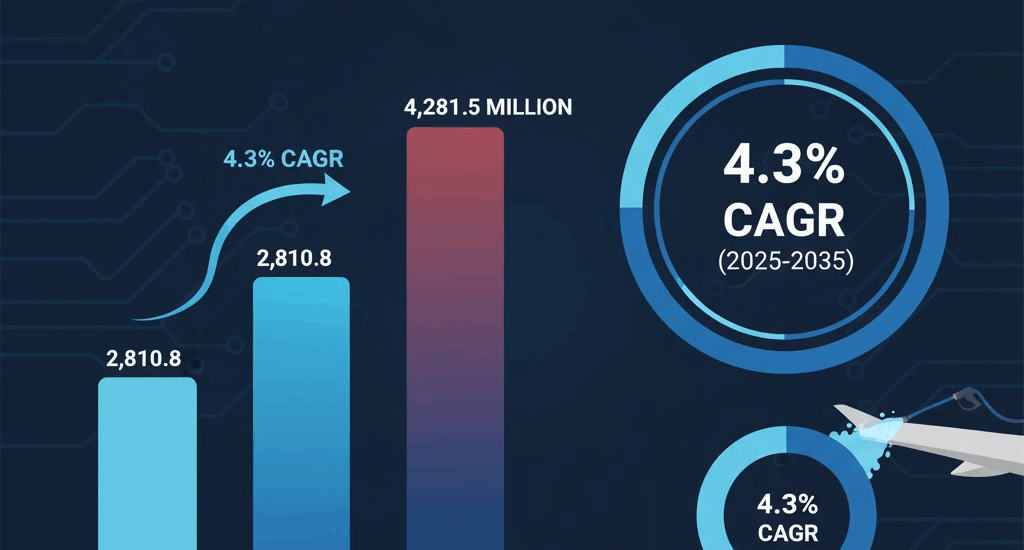
The global aircraft cleaning chemicals market is on the brink of substantial growth, projected to expand from USD 2,810.8 million in 2025 to USD 4,281.5 million by 2035, at a CAGR of 4.3%. Increasing air traffic, stricter hygiene regulations, and sustainability initiatives are driving demand for high-performance cleaning solutions across commercial aviation sectors.
Airlines and maintenance providers are now prioritizing eco-friendly cleaning agents that not only maintain passenger safety but also protect aircraft longevity. The market’s growth reflects the convergence of rising hygiene standards, technological innovation, and the aviation industry’s commitment to environmental sustainability.
Driving Forces Behind Aircraft Cleaning Chemicals Demand
The demand for aircraft cleaning chemicals is largely fueled by rising global air traffic and post-pandemic hygiene requirements. Interior cabins, exterior fuselages, and critical engine components require specialized cleaning to prevent corrosion, remove dirt residues, and ensure optimal performance. Airlines now focus on disinfectants and cleaning chemicals that safeguard passenger health while maintaining operational efficiency.
In addition, regulatory frameworks are pushing airlines to adopt stringent sanitation protocols. High-touch areas, such as armrests, overhead bins, and lavatories, require frequent disinfection. These regulations not only drive demand for interior cleaning chemicals but also expand market opportunities for environmentally friendly solutions that reduce chemical pollution and carbon footprints.
Buy Now & Save: Premium Market Report at $5,000 | Discount Details Inside:- https://www.futuremarketinsights.com/reports/sample/rep-gb-3155
Sustainability as a Core Market Driver
Environmental responsibility has become a central focus for the aviation and aircraft cleaning industries. Traditional solvent-based chemicals often pose risks to ecosystems, prompting the shift toward biodegradable, non-toxic, and low-VOC cleaning products. Airlines are increasingly prioritizing aircraft cleaning chemicals that align with sustainability objectives, promoting resource efficiency and reducing hazardous waste.
Leading manufacturers are investing heavily in green formulations that meet regulatory standards while maintaining cleaning performance. The adoption of eco-friendly chemicals helps airlines enhance brand image, attract environmentally-conscious passengers, and contribute to net-zero carbon goals.
Aviation Growth Fueling Market Opportunities
The booming aviation sector provides a significant growth engine for the aircraft cleaning chemicals market. Rising passenger numbers, fleet expansions, and increased MRO (maintenance, repair, and overhaul) activities are expected to elevate demand. For instance, air passenger traffic in 2022 already exceeded 3.4 billion, highlighting the enormous market potential for cleaning chemicals.
Emerging markets, particularly in Asia Pacific and the Middle East, represent high-growth regions. Increasing investments in aviation infrastructure, government incentives, and supportive FDI policies are expected to further accelerate the adoption of aircraft cleaning products in these areas.
Extending Aircraft Lifespan and Reducing Operational Risks
Aircraft cleaning chemicals play a vital role in preserving aircraft integrity. Protective coatings and cleaning agents prevent corrosion caused by sea salt, oil residues, and dust accumulation. Regular cleaning of engines, landing gears, and fuselages not only enhances fuel efficiency but also reduces maintenance costs.
Interior cleaning chemicals are equally crucial, maintaining passenger comfort, health, and safety. Airlines that invest in superior cleaning solutions demonstrate a proactive approach to hygiene, which, in turn, can drive customer satisfaction and loyalty.
Market Segmentation and Key Insights
The interior cleaning segment is expected to lead the market during the forecast period, growing at a CAGR of 5.4% in 2025. Airlines increasingly prioritize cabin hygiene, especially for high-touch surfaces, to ensure compliance with post-pandemic safety standards.
Solvent-based chemicals are projected to maintain the highest share of the market, with a 28.3% value share in 2024. Their efficacy in removing grease, oil, and grime from exterior and engine surfaces makes them indispensable for aircraft maintenance operations.
Tier 1 companies, including BASF SE, Honeywell International, Callington Haven, and McGean-Rohco, capture a dominant share globally, leveraging high production capacity, extensive product portfolios, and regulatory expertise. Tier 2 players cater to local demands, often focusing on niche cleaning solutions for smaller operators.
Regional Outlook: Opportunities Across Global Markets
- United States: With stringent hygiene regulations and strong R&D investments, the U.S. market is expected to remain a key revenue contributor. Ammonia-free aircraft cleaners are gaining traction, further expanding market share.
- China: Projected to reach USD 800 million by 2034, China’s booming aviation market and growing MRO sector create substantial opportunities for aircraft cleaning chemicals. Daily flight numbers and government initiatives support long-term market expansion.
- Germany: As a hub for aviation manufacturing and R&D, Germany continues to drive demand for advanced and eco-friendly cleaning chemicals. High-quality production standards and innovation position the country as a critical market.
Technological Innovation and Competitive Landscape
Automation and advanced chemical formulations are shaping the future of aircraft cleaning chemicals. Automated cleaning devices reduce labor costs while improving cleaning efficiency, and high-performance nontoxic solutions meet both operational and environmental demands.
Major industry players focus on sustainability, innovation, and regulatory compliance to maintain competitive advantage. Recent product launches include PPG Industries’ eco-friendly exterior cleaning solution and Illinois Tool Works’ high-performance interior disinfectants, reflecting the growing emphasis on green and effective cleaning solutions.
Click Here to Purchase the Report:- https://www.futuremarketinsights.com/checkout/3155
A Market Poised for Long-Term Growth
From 2025 to 2035, the aircraft cleaning chemicals market is positioned for steady expansion, driven by rising air traffic, fleet growth, and regulatory pressures. The demand for environmentally friendly, high-performance, and automated cleaning solutions will continue to rise, particularly in emerging economies.
For manufacturers, this market presents an opportunity to align innovation with sustainability, enhance passenger safety, and support the longevity of aircraft fleets. The combination of aviation growth, regulatory enforcement, and technological advancements ensures that the aircraft cleaning chemicals market will remain a key contributor to the aviation industry’s operational and environmental objectives.
About Future Market Insights (FMI)
Future Market Insights, Inc. (ESOMAR certified, recipient of the Stevie Award, and a member of the Greater New York Chamber of Commerce) offers profound insights into the driving factors that are boosting demand in the market. FMI stands as the leading global provider of market intelligence, advisory services, consulting, and events for the Packaging, Food and Beverage, Consumer Technology, Healthcare, Industrial, and Chemicals markets. With a vast team of over 400 analysts worldwide, FMI provides global, regional, and local expertise on diverse domains and industry trends across more than 110 countries.
Contact Us:
Future Market Insights Inc.
Christiana Corporate, 200 Continental Drive,
Suite 401, Newark, Delaware – 19713, USA
T: +1-347-918-3531
For Sales Enquiries: sales@futuremarketinsights.com
Website: https://www.futuremarketinsights.com
LinkedIn| Twitter| Blogs | YouTube