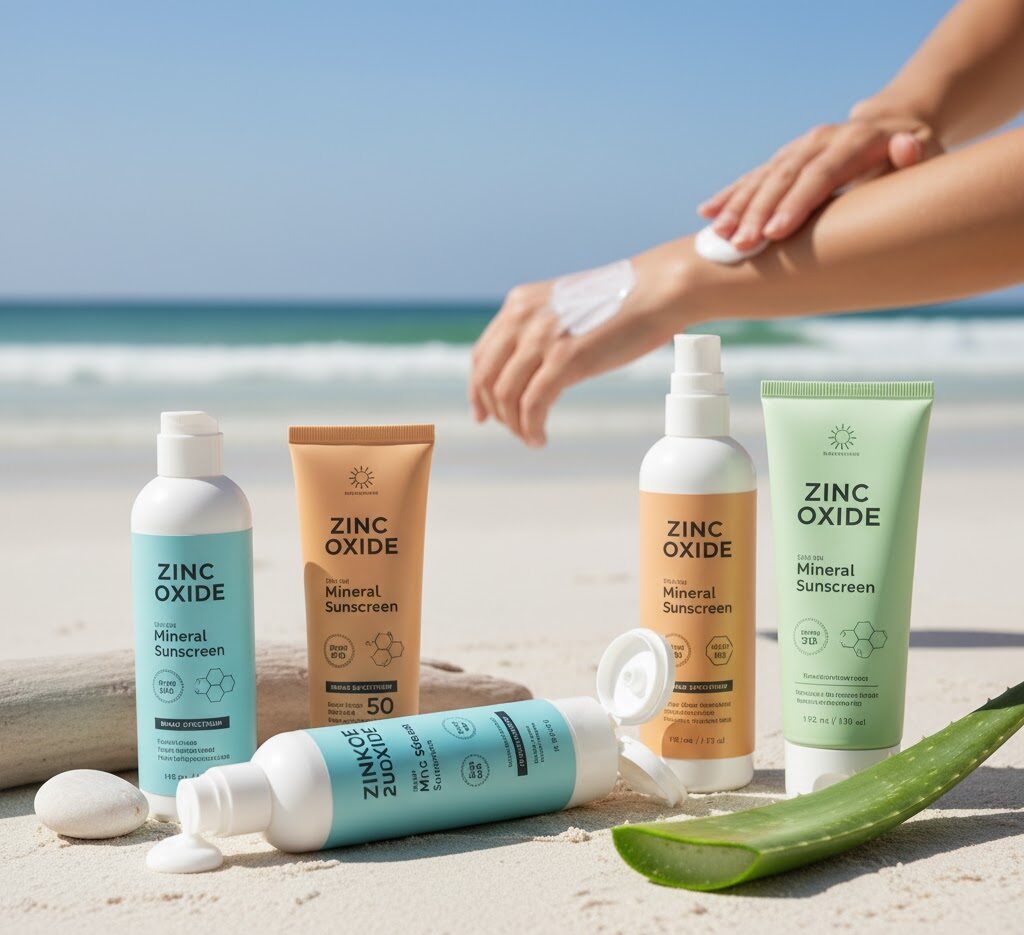
The global Zinc Oxide Sunscreens Market is poised for substantial growth, projected to reach USD 11,203.4 million by 2035, up from USD 4,201.4 million in 2025. This represents an impressive CAGR of 10.3%, translating to a 2.7X expansion over the forecast decade. The surge is driven by growing consumer preference for clean-label, reef-safe sunscreens, heightened dermatologist endorsements, and stricter regulatory scrutiny of chemical UV filters. Rising disposable incomes, digital retail expansion, and innovation in sheer, tinted mineral formats are further propelling the market’s evolution from niche to mainstream skincare.
Market Trends Highlighted
- Mainstreaming of Mineral-Only Formulations: The dominance of 100% mineral sunscreens (57.0% market share in 2025) reflects consumer trust in safer, dermatologist-approved solutions.
- Reef-Safe and Sustainability Focus: Global alignment with reef-safe regulations is driving the transition away from chemical UV filters, positioning zinc oxide as a universally safe alternative.
- Digital and Dermatology Channels: E-commerce and derm-led retail models are amplifying accessibility, particularly across Asia and North America.
- Cosmetic Integration: Innovation in sheer and tinted formulations is improving cosmetic compatibility, expanding usage among diverse skin tones.
- Personalization and Subscriptions: Subscription-based sunscreen routines and customized skincare bundles are boosting reapplication and loyalty rates.
Recent Developments
- March 2025: Augustinus Bader launched a premium SPF 50 non-nano mineral sunscreen integrating zinc oxide and titanium dioxide, emphasizing skin renewal through TFC8 technology.
- June 2025: The SAFE Sunscreen Standards Act was introduced in the U.S. Congress to modernize sunscreen ingredient approval, accelerating adoption of zinc oxide-based formulations.
Key Takeaways of the Report
- 2025 Market Valuation: USD 4,201.4 Million
- 2035 Market Projection: USD 11,203.4 Million
- Forecast CAGR (2025–2035): 10.3%
- Leading Segment (2025): 100% mineral formulations (57.0%)
- Top Growth Regions: North America, East Asia, South Asia & Pacific, Europe
- Major Brands: EltaMD, La Roche-Posay, Neutrogena, Supergoop!, Blue Lizard, CeraVe, Aveeno, Thinksport, Badger, Coola
Market Drivers
- Rising Awareness of Skin Health: Heightened sensitivity to UV exposure and skin damage is encouraging daily sunscreen use.
- Regulatory Scrutiny on Chemical Filters: Global agencies are tightening rules around oxybenzone and octinoxate, benefiting mineral formulations.
- Dermatologist Endorsements: Zinc oxide’s non-irritating and broad-spectrum properties are increasingly recommended for sensitive and pediatric skin.
- Eco-conscious Consumers: Non-nano and reef-safe formulations are gaining momentum due to environmental activism and NGO support.
- Digital Commerce Acceleration: E-commerce platforms and influencer dermatology are driving visibility and education around mineral sunscreens.
Regional Insights
- North America: The U.S. market, valued at USD 974.25 million in 2025, is expected to grow at a CAGR of 7.3%. Clinical endorsement and reef-safe claims continue to strengthen adoption.
- Europe: The UK and Germany are set for steady growth at 11.4% and 8.6% CAGR, respectively, fueled by regulatory compliance and high consumer trust in dermatologist-led brands.
- Asia-Pacific: Emerging as the fastest-growing region, led by India (19.8%) and China (17.6%), driven by affordability-led innovation, e-commerce penetration, and localized product development.
- Japan: Anticipated CAGR of 14.3%, leveraging strong cosmetic innovation and daily skincare integration.
Country-wise CAGR Snapshot (2025–2035):
India leads global expansion with a 19.8% CAGR, followed by China (17.6%) and Japan (14.3%). The UK (11.4%) and Germany (8.6%) show steady growth driven by reef-safe compliance, while the USA (7.3%) maintains consistent momentum supported by dermatologist-led adoption. Asia remains the powerhouse region for future market acceleration.
Competition Outlook
The Zinc Oxide Sunscreens Market is moderately fragmented.
- EltaMD leads with 8.1% global value share, leveraging dermatologist partnerships and pediatric positioning.
- Other major players include La Roche-Posay, Neutrogena, Supergoop!, Blue Lizard, and CeraVe—focusing on hybrid aesthetics, e-commerce, and evidence-backed marketing.
- Eco-focused brands like Thinksport and Badger are strengthening loyalty among reef-safe and natural skincare users.
Competition is shifting from portfolio breadth to scientific credibility, ingredient transparency, and personalized engagement, reinforcing long-term brand differentiation.
Key Segments of the Market Report
- By Formulation:
- 100% Mineral (57%)
- Hybrid/Others (43%)
Dominance of mineral-only formats driven by clean-label demand and dermatologist validation.
- By Zinc Type:
- Non-Nano (44%)
- Others (56%)
Non-nano variants gain traction due to reef-safe compliance and retailer policies.
- By Format:
- Lotions & Creams (52%)
- Sprays, Sticks, Tints (48%)
Lotions and creams remain mainstream, while new formats grow on convenience and aesthetic appeal.
Market Outlook 2025–2035
Between 2025 and 2030, the market will expand by USD 2,659.4 million, representing 38% of the decade’s total growth, largely driven by daily-wear lotions and 100% mineral products. From 2030 to 2035, an additional USD 4,342.6 million will be added—primarily from emerging markets with booming e-commerce and consumer education initiatives.
By 2035, innovation in sheer, reef-safe formulations and digital subscription ecosystems will redefine loyalty dynamics. Brands investing in dermatologist collaboration, sustainability, and transparent labeling will capture the strongest consumer retention and premium positioning in the evolving global sunscreen landscape.
Grab This Report Now at Just $2000 | Limited-Time Discount Offer! https://www.futuremarketinsights.com/reports/sample/rep-gb-26601
Checkout Now to Access Industry Insights: https://www.futuremarketinsights.com/checkout/26601
About Future Market Insights (FMI)
Future Market Insights, Inc. (ESOMAR certified, recipient of the Stevie Award, and a member of the Greater New York Chamber of Commerce) offers profound insights into the driving factors that are boosting demand in the market. FMI stands as the leading global provider of market intelligence, advisory services, consulting, and events for the Packaging, Food and Beverage, Consumer Technology, Healthcare, Industrial, and Chemicals markets. With a vast team of over 400 analysts worldwide, FMI provides global, regional, and local expertise on diverse domains and industry trends across more than 110 countries.
Contact Us:
Future Market Insights Inc.
Christiana Corporate, 200 Continental Drive,
Suite 401, Newark, Delaware – 19713, USA
T: +1-347-918-3531
For Sales Enquiries: sales@futuremarketinsights.com
Website: https://www.futuremarketinsights.com
LinkedIn| Twitter| Blogs | YouTube