Korea’s Functional Food Industry Embraces Fiber Innovation
The Korean market for digestion resistant maltodextrin is preparing for a decade of steady growth. Valued at USD 11.1 million in 2025, it is projected to nearly double, reaching USD 22.3 million by 2035. This progress, translating to a compound annual growth rate (CAGR) of 7.2%, underlines the increasing integration of functional fibers into everyday nutrition and the growing awareness among Koreans about gut health, weight management, and preventive wellness.
Consumers in Korea are gradually embracing plant-based, clean-label, and functional food products that not only satisfy hunger but also provide long-term health benefits. Digestion resistant maltodextrin, often positioned as a soluble dietary fiber, plays an essential role in this shift. Its proven ability to aid digestion, regulate glycemic response, and support satiety is making it a sought-after ingredient for food and beverage manufacturers eager to align with modern health trends.
Why the Market is Expanding
The momentum behind digestion resistant maltodextrin adoption in Korea stems from three major forces. First, dietary fiber intake is gaining importance as Koreans adopt urban lifestyles often associated with reduced fiber consumption. Second, functional foods and nutraceuticals are rapidly becoming mainstream, with government regulations supporting safe innovation. Third, technological improvements in maltodextrin production are making it easier for manufacturers to deliver superior taste and solubility without compromising functionality.
These factors have created a fertile environment for both established companies and new entrants to explore opportunities in beverages, bakery, dairy, and ready-to-eat formats. Beyond traditional applications, innovators are beginning to include digestion resistant maltodextrin in novel product categories such as nutrition bars, low-calorie desserts, and fortified snacks—ensuring long-term relevance across demographics.
Segmental Insights: Forms, Sources, and Applications
In terms of form, spray-dried powder dominates the Korean market, projected to account for 55.4% of the category in 2025. Its success lies in its adaptability—it dissolves easily, integrates seamlessly into industrial food processes, and retains fiber content without altering taste or texture. Manufacturers increasingly favor spray-dried powder because it simplifies production while ensuring consistent product quality.
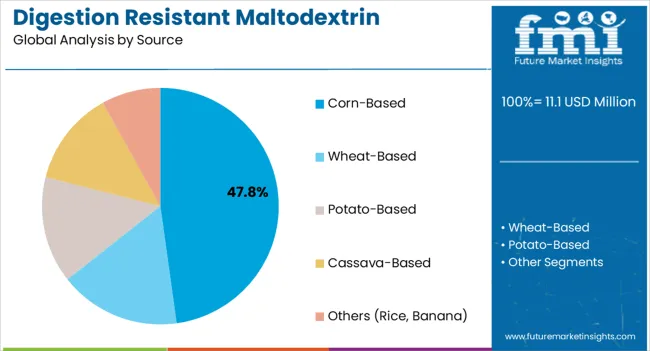
From a sourcing perspective, corn-based digestion resistant maltodextrin holds nearly half of the market at 47.8% in 2025. Corn is abundant, cost-efficient, and already familiar to Korean consumers, making it the most practical raw material. Strong supply chains and well-established extraction techniques provide manufacturers with a dependable base for scaling production. As plant-based demand continues to climb, corn-based formulations are expected to retain their leadership, supported by consumer acceptance and regulatory alignment.
Application-wise, the beverages category emerges as the standout leader with 39.6% share in 2025. Functional drinks, fortified waters, and fiber-enriched teas are rapidly gaining traction among urban consumers who want convenient, health-boosting solutions. With excellent solubility and minimal impact on flavor, digestion resistant maltodextrin has become a natural fit for these products. As the functional beverage trend accelerates, this segment is set to drive the majority of demand, paving the way for further innovation in health-focused liquid nutrition.
Market Trends Shaping the Future
Several trends are reinforcing the trajectory of Korea’s digestion resistant maltodextrin industry. Plant-based and organic food consumption is on the rise, creating a natural space for this fiber-rich ingredient. Consumer education, while still at an early stage, is improving as scientific research continues to highlight the health benefits of digestion resistant maltodextrin. Nutraceuticals are expanding as a category, and with this ingredient increasingly appearing in supplements, growth opportunities are multiplying.
Corn-based digestion resistant maltodextrin has gained particular momentum, expected to represent 57.3% of the industry share by 2025. Meanwhile, spray-dried powder is forecast to secure as much as 63.5% of the market by form, underscoring its critical role in bridging industrial efficiency with consumer-friendly formulations.
Competitive Landscape and Strategic Opportunities
The Korean digestion resistant maltodextrin market is still in a relatively early growth phase, offering ample room for innovation. Leading domestic companies such as Samyang Corporation, VitaminHouse Inc., Fine Food Tech Co. Ltd., Amicogen, DAESANG Co. Ltd., and Global Food Korea Co. Ltd. are actively advancing product development, emphasizing both quality and consumer education.
Samyang Corporation recently showcased fiber-enriched beverages, cereal bars, and spreads at the International Food Technology Fair in the United States, reflecting the company’s global ambitions and ability to integrate digestion resistant maltodextrin into mainstream foods. Meanwhile, Korea’s Ministry of Food and Drug Safety has updated labeling rules to clarify recommended intake guidelines, providing consumers with greater transparency and confidence in products.
For new entrants, this market offers untapped opportunities. By forming strategic partnerships with beverage brands, health food chains, and nutraceutical companies, emerging players can gain quicker access to health-conscious audiences. At the same time, focusing on sustainable sourcing and eco-friendly packaging will resonate strongly with Korean consumers who increasingly prioritize environmental responsibility in their purchasing decisions.
Opportunities for Stakeholders and Manufacturers
For established players, the next decade will revolve around scale, diversification, and global competitiveness. By investing in advanced spray-drying technologies, refining corn-based extraction processes, and expanding into neighboring Asian markets, companies can secure stronger margins and market influence.
For new manufacturers and investors, Korea represents a high-potential entry point into the broader Asian dietary fiber space. By tapping into local consumer trends—such as functional beverages, urban convenience foods, and preventive health solutions—emerging businesses can carve niches and establish strong footholds. Collaboration with research institutions, universities, and healthcare providers will further enhance credibility and adoption.
Purchase this Report for USD 3,500 Only | Get an Exclusive Discount Instantly! https://www.futuremarketinsights.com/checkout/18712
Everything You Need—within Your Budget. Request a Special Price Now! https://www.futuremarketinsights.com/reports/sample/rep-gb-18712
About Future Market Insights (FMI)
Future Market Insights, Inc. (ESOMAR certified, recipient of the Stevie Award, and a member of the Greater New York Chamber of Commerce) offers profound insights into the driving factors that are boosting demand in the market. FMI stands as the leading global provider of market intelligence, advisory services, consulting, and events for the Packaging, Food and Beverage, Consumer Technology, Healthcare, Industrial, and Chemicals markets. With a vast team of over 400 analysts worldwide, FMI provides global, regional, and local expertise on diverse domains and industry trends across more than 110 countries.
Contact Us:
Future Market Insights Inc.
Christiana Corporate, 200 Continental Drive,
Suite 401, Newark, Delaware – 19713, USA
T: +1-347-918-3531
For Sales Enquiries: sales@futuremarketinsights.com
Website: https://www.futuremarketinsights.com
LinkedIn| Twitter| Blogs | YouTube