The global craniofacial implants market is poised for significant growth in the coming decade. Valued at USD 63.4 billion in 2025, the market is projected to nearly double, reaching USD 129.0 billion by 2035. This impressive expansion reflects a compound annual growth rate (CAGR) of 7.4% between 2025 and 2035, powered by advances in biomaterials, 3D printing, and growing awareness of reconstructive and cosmetic procedures.
A Market Shaped by Need and Innovation
Craniofacial implants play a vital role in both reconstructive and aesthetic medicine. They are used to restore facial symmetry after trauma, congenital defects, or tumor removal, and are increasingly sought after for elective cosmetic enhancements. Falls, traffic accidents, and other forms of injury remain leading causes of facial fractures globally, underscoring the critical role of these implants in modern healthcare systems.
The last decade witnessed a surge in surgical precision due to 3D printing and digital imaging, enabling patient-specific implants with higher success rates and fewer complications. Hospitals, cosmetic surgery clinics, and specialized surgical centers are now adopting implants designed with biocompatible materials such as titanium, polyetheretherketone (PEEK), and innovative hydrogels to improve integration and recovery.
Leading Segments in the Market
Among procedures, malar augmentation stands as the frontrunner, expected to generate 38.6% of total revenue in 2025. This dominance stems from the rising demand for midface volume restoration, with patients seeking both functional reconstruction and aesthetic enhancements.
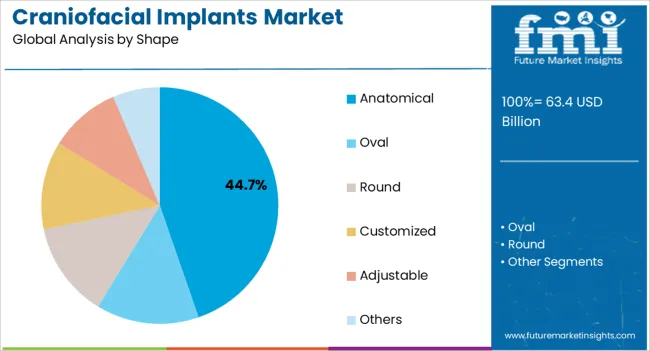
In terms of implant shapes, anatomical designs are projected to account for 44.7% of the market share in 2025. Surgeons prefer these implants due to their ability to replicate natural bone structures, resulting in better cosmetic outcomes and reduced complications.
Hospitals are anticipated to represent the largest end-user segment, with a commanding 53.2% share in 2025. Their role as the hub for advanced surgical infrastructure, skilled specialists, and comprehensive care ensures their continued dominance.
Regional Growth Dynamics
North America continues to lead the global market, with the United States holding a 30.9% share in 2025. The country’s high healthcare expenditure, coupled with rising demand for cosmetic enhancements, drives significant adoption. With healthcare benefit costs expected to rise by 10% in 2025, patients are increasingly seeking cost-effective solutions such as implants for long-term results.
In Asia-Pacific, China dominates the regional landscape, holding 56.8% of East Asia’s market share in 2025. The nation’s rapid urbanization, increase in car ownership, and growing incidence of road accidents fuel demand for reconstructive procedures. India, with a 4.2% global share, is emerging as one of the most lucrative markets, propelled by its vast population, expanding healthcare infrastructure, and growing reputation as a destination for medical tourism.
Europe remains a stronghold for innovation, with Germany and Switzerland contributing significantly through advanced healthcare systems and favorable regulatory frameworks that encourage faster approvals and safer innovations.
Opportunities for Stakeholders and Manufacturers
For manufacturers, the next decade is filled with opportunities to innovate and expand. Technological advancements in biomaterials, particularly PEEK and novel hydrogels, are paving the way for implants that enhance bone regeneration, reduce recovery times, and provide more natural aesthetics.
A recent study published in Nature’s Scientific Reports (2025) highlighted injectable PEEK-containing hydrogels with silk fibroin, showing promising results in tissue regeneration. Such breakthroughs are expected to transform patient outcomes and create fresh avenues for product development.
Collaboration between surgeons, material scientists, and device manufacturers will also remain a key driver of innovation. With patient demand shifting toward customized, durable, and minimally invasive solutions, the ability to offer tailored implants will become a competitive advantage.
Challenges on the Horizon
Despite its growth potential, the craniofacial implants market faces notable challenges. Global shortages of healthcare professionals, particularly surgeons and nurses, could create bottlenecks in service delivery. Rising treatment costs, longer wait times, and uneven insurance coverage may limit accessibility, particularly in recession-affected economies.
Economic downturns, such as those seen in Ireland and Greece during past crises, highlight how reduced healthcare expenditure can delay elective and reconstructive surgeries. In the years ahead, affordability will be a key determinant of demand across both developed and emerging markets.
Competitive Landscape
The competitive landscape is a blend of established global leaders and emerging innovators. Companies such as Stryker, Zimmer Biomet, Johnson & Johnson Medical GmbH (DePuy Synthes), and KLS Martin Group have long dominated the space with robust portfolios and global reach.
Meanwhile, agile players like Implantech, Matrix Surgical USA, Yuyao Jiusheng Medical Supplies Factory, Surgusil L.L.P., and Poriferous are carving out niches in aesthetic and specialized implant design. Asian manufacturers such as Guangzhou Wanhe Plastic Materials Co. Ltd. and GRAND AESPIO INC are strengthening their global presence with cost-competitive offerings.
Innovative entrants such as Calavera Surgical Design and Alpha Aesthetics (AART, Inc.) are emphasizing patient-specific and 3D-printed solutions, aligning with the growing shift toward personalized medicine.
The industry is also witnessing transformative acquisitions and partnerships. In January 2024, Stryker acquired OrthoSensor, integrating smart sensor technology into musculoskeletal implants. Such advancements, combined with FDA-approved innovations like OssDsign Cranial PSI, underscore the sector’s push toward intelligent, safer, and more effective solutions.
Purchase this Report for USD 5,000 Only | Get an Exclusive Discount Instantly! https://www.futuremarketinsights.com/checkout/17479
Everything You Need—within Your Budget. Request a Special Price Now! https://www.futuremarketinsights.com/reports/sample/rep-gb-17479
About Future Market Insights (FMI)
Future Market Insights, Inc. (ESOMAR certified, recipient of the Stevie Award, and a member of the Greater New York Chamber of Commerce) offers profound insights into the driving factors that are boosting demand in the market. FMI stands as the leading global provider of market intelligence, advisory services, consulting, and events for the Packaging, Food and Beverage, Consumer Technology, Healthcare, Industrial, and Chemicals markets. With a vast team of over 400 analysts worldwide, FMI provides global, regional, and local expertise on diverse domains and industry trends across more than 110 countries.
Contact Us:
Future Market Insights Inc.
Christiana Corporate, 200 Continental Drive,
Suite 401, Newark, Delaware – 19713, USA
T: +1-347-918-3531
For Sales Enquiries: sales@futuremarketinsights.com
Website: https://www.futuremarketinsights.com
LinkedIn| Twitter| Blogs | YouTube