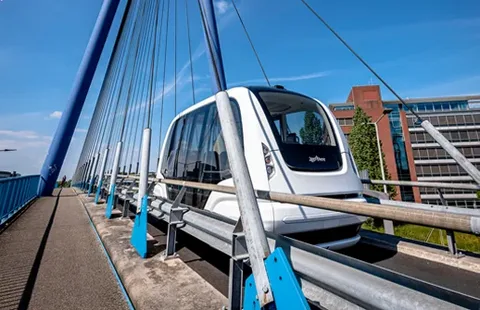
The Western Europe Automated People Mover Industry is estimated to be valued at USD 0.7 billion in 2025 and is projected to reach USD 1.3 billion by 2035, registering a compound annual growth rate (CAGR) of 6.0% over the forecast period.
The automated people mover (APM) industry in Western Europe is experiencing significant advancement as cities intensify efforts to enhance public transit efficiency, reduce carbon emissions, and improve urban mobility. These driverless, automated transport systems play a critical role in connecting airports, transit hubs, business districts, and urban centers, offering reliable and sustainable alternatives to traditional transportation modes.
Growing urban populations and the need for seamless last-mile connectivity are fueling investments into expanding and modernizing APM networks. Innovations in autonomous technology, digital control systems, and energy-efficient designs are enabling operators to deliver safer, higher-frequency services that meet the demands of increasingly complex metropolitan environments.
Building Resilience Through Smart and Sustainable Transit Solutions
The Western European region is at the forefront of adopting smart transit initiatives that integrate automated people movers into broader mobility ecosystems. These systems are designed to alleviate urban congestion while promoting cleaner air and reduced noise pollution, aligning with local governments’ climate action plans and sustainability commitments.
By deploying real-time monitoring, predictive maintenance, and data-driven scheduling, operators are optimizing performance, lowering operational costs, and enhancing passenger experience. Energy-efficient propulsion technologies, including electric and hybrid configurations, further contribute to reducing the carbon footprint of urban transportation.
Urbanization and Infrastructure Expansion Driving Market Growth
Rapid urban expansion and the development of modern infrastructure across cities in Germany, France, the United Kingdom, the Netherlands, and beyond are key drivers for the APM industry. Airports and large transit terminals are prioritizing advanced people mover systems to facilitate smooth passenger flows and efficient baggage handling. Similarly, key business districts and tourist centers benefit from integrated APM solutions that connect sprawling areas while minimizing reliance on private vehicles.
Enhancing accessibility through barrier-free design and multi-modal integration is fostering greater adoption of automated people movers across public and private transit networks. Government initiatives geared toward smart city development and digital transformation reinforce the market’s momentum, encouraging public-private partnerships and innovative financing models for new deployments and technology upgrades.
Innovation in Automation and Passenger Experience
Technological advancements in automation and AI-powered control systems are drastically reshaping the capabilities of automated people movers. Enhanced safety features such as collision avoidance, emergency response automation, and intelligent speed regulation improve operational reliability and passenger confidence.
Additionally, passenger amenities like contactless payment systems, real-time information displays, and personalized travel assistance are increasingly standard, reflecting shifting consumer expectations for a seamless, digitally connected journey. These innovations place Western Europe’s APM industry at the cutting edge of transit technology, setting benchmarks for global metro and urban transit systems.
Regulatory Framework and Investment Trends
Stringent safety standards and regulatory frameworks regulating urban mobility systems in Western Europe ensure that automated people movers adhere to the highest operational and environmental criteria. Regulatory agencies work in collaboration with manufacturers and transit authorities to enforce compliance, facilitate certification processes, and foster innovation under a secure policy environment.
Investment flows into APM infrastructure are supported by both public funds and private enterprises seeking sustainable transit solutions that boost economic productivity while enhancing urban quality of life. European Union funding programs and regional green initiatives play an instrumental role in enabling large-scale upgrades, modernization projects, and the launch of new automated transit corridors.
Competitive Dynamics and Strategic Collaborations
The competitive landscape in Western Europe’s automated people mover industry features a mix of well-established multinational manufacturers, technology providers, and emerging startups focused on niche innovations. Leading companies leverage decades of expertise in rail transit engineering, software development, and operational management to deliver integrated solutions tailored to regional requirements.
Collaborations between transit authorities, municipalities, and technology partners are common, aimed at co-developing systems that address specific urban mobility challenges. Partnerships also facilitate technology transfer, reduce deployment risks, and accelerate adaptation of new systems across varying geographies within Western Europe.
Future Outlook: Expanding Automated Transit Networks
Looking forward, the Western Europe automated people mover industry is set for steady growth propelled by escalating urbanization, increasing smart city initiatives, and evolving passenger needs for reliable, accessible transit. Innovations in sustainable vehicle technologies, including battery-electric and hydrogen-fueled propulsion, will underpin future expansions, reducing environmental impacts further.
Integration with complementary transit modes such as trams, metros, and autonomous shuttle services will enhance network connectivity and multi-modal travel experiences. This convergence lowers barriers to adoption for new riders and expands the role of APM systems as vital components of the region’s urban mobility infrastructure.
As cities embrace increasingly complex and interconnected transit solutions, the industry stands as a catalyst for innovation and resilience in Western Europe’s pursuit of efficient, green, and passenger-friendly transportation solutions. Both longstanding providers and emerging entrants poised to invest in new technologies and regional expansion will find vast potential in this growing sector.
Get Instant Access for Only $5,000 | Don’t Miss This Exclusive Offer!
https://www.futuremarketinsights.com/reports/sample/rep-gb-18314
Checkout Now to Access Industry Insights:
https://www.futuremarketinsights.com/checkout/18314
About Future Market Insights (FMI)
Future Market Insights, Inc. (ESOMAR certified, recipient of the Stevie Award, and a member of the Greater New York Chamber of Commerce) offers profound insights into the driving factors that are boosting demand in the market. FMI stands as the leading global provider of market intelligence, advisory services, consulting, and events for the Packaging, Food and Beverage, Consumer Technology, Healthcare, Industrial, and Chemicals markets. With a vast team of 400 analysts worldwide, FMI provides global, regional, and local expertise on diverse domains and industry trends across more than 110 countries.
Contact Us:
Future Market Insights Inc.
Christiana Corporate, 200 Continental Drive,
Suite 401, Newark, Delaware – 19713, USA
T: +1-845-579-5705
For Sales Enquiries: sales@futuremarketinsights.com
Website: https://www.futuremarketinsights.com
LinkedIn| Twitter| Blogs | YouTube