The global Preclinical MRI Equipment Market is projected to grow significantly from USD 1,156.0 million in 2025 to USD 2,274.1 million by 2035, registering a CAGR of 7.0% during the forecast period. This expansion is driven by technological advancements, increasing investments in biomedical research, and the growing demand for non-invasive imaging in drug discovery and disease modeling.
Market Overview
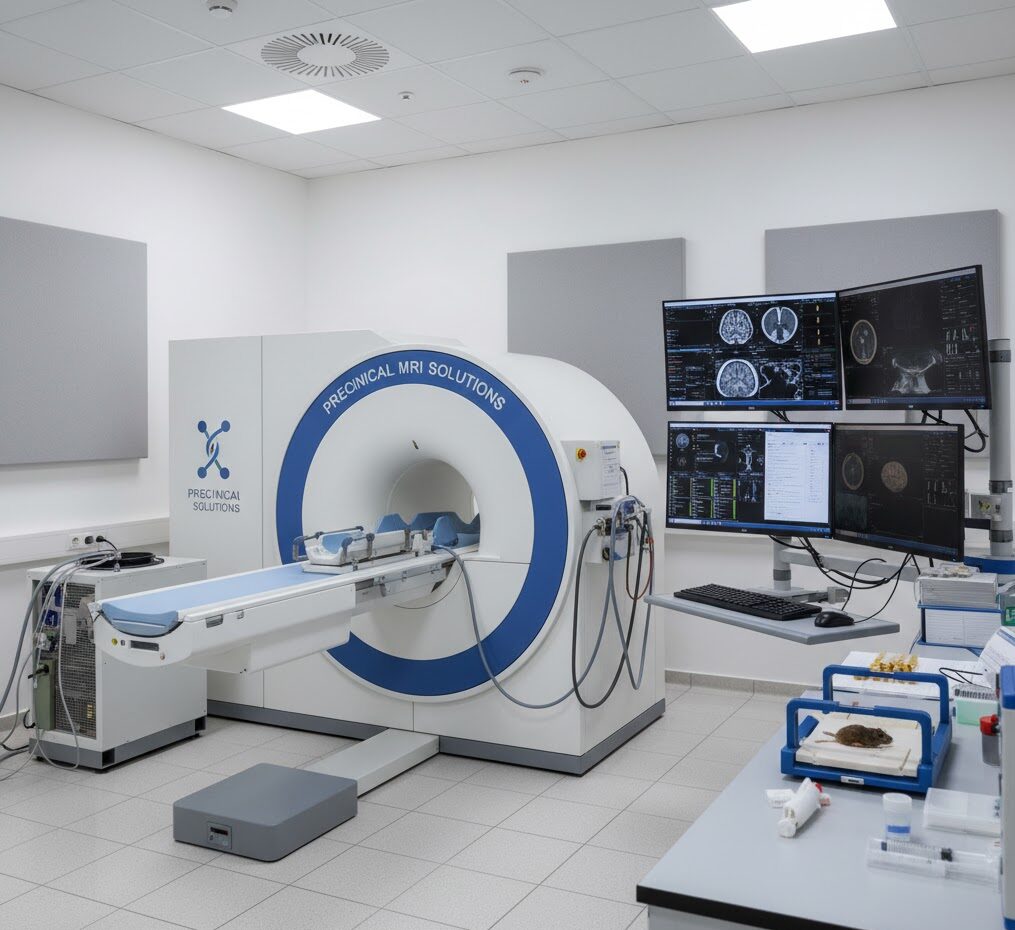
The preclinical MRI equipment market is witnessing rapid evolution due to its critical role in preclinical research. MRI imaging enables non-invasive visualization of small animal models, offering detailed anatomical and functional insights into disease mechanisms. As researchers seek precise tools for drug validation and translational medicine, preclinical MRI systems have become indispensable in oncology, neurology, cardiology, and infectious disease research.
Advances in magnet design, image reconstruction algorithms, and integration with hybrid modalities like PET-MRI are reshaping the research landscape. Furthermore, increased collaboration between academic institutions and pharmaceutical companies, coupled with government-funded research programs, continues to fuel market growth globally.
Market Trends Highlighted
- Shift Toward Compact Imaging Systems: Bench top MRI equipment dominates due to lower installation costs, compact size, and efficiency, appealing to academic and small research facilities.
- Integration with Hybrid Imaging Technologies: Combining MRI with modalities like PET and CT enhances functional and molecular imaging for more comprehensive preclinical data.
- Increased Funding for Translational Research: Governments and private organizations are investing heavily in advanced imaging infrastructure for early-stage drug development.
- Technological Innovations: High magnetic field strength and AI-assisted image reconstruction are improving data accuracy and speed, boosting adoption.
- Rising Focus on Oncology Research: Growing cancer prevalence globally is accelerating the demand for preclinical MRI in tumor modeling and therapy evaluation.
Recent Developments
- Expansion by Major Players: Companies like Bruker Corporation and FUJIFILM Holdings Corporation are launching next-generation high-field MRI systems with enhanced spatial resolution.
- Collaborative Research Programs: Partnerships between universities and biotech firms have increased access to advanced imaging infrastructure.
- Software Advancements: AI-based imaging analytics are enabling real-time visualization, reducing data processing times, and improving reproducibility.
- Hybrid Imaging Adoption: Integration of MRI with PET and CT scanners is becoming standard in preclinical research centers for multimodal imaging.
Key Takeaways of the Report
- Market Value (2025): USD 1,156.0 million
- Market Value (2035): USD 2,274.1 million
- Forecast CAGR: 7.0% (2025–2035)
- Leading Modality Segment: Bench Top Preclinical MRI Equipment (55.1%)
- Top Application Area: Oncology (33.7% market share)
- Major End Users: Academic and Research Institutes (42.8% share)
- Key Regions: North America, Asia-Pacific, and Europe
- Top Companies: Bruker Corporation, Agilent Technologies, Siemens Healthcare, Aspect Imaging, FUJIFILM Holdings Corporation, MR Solutions Ltd, PerkinElmer Inc., Mediso Medical Imaging Systems
Market Drivers
- Rising Demand for Non-Invasive Imaging: Increasing focus on in-vivo imaging for longitudinal animal studies enhances drug development efficiency.
- Growth in Biomedical Research Funding: Governments and research foundations are supporting imaging-based translational research.
- Technological Advancements: Developments in high-field MRI magnets, imaging speed, and resolution strengthen market performance.
- Shift Toward Precision Medicine: The need for early-stage drug validation and personalized therapeutic testing drives adoption.
- Collaborative Ecosystem: Expanding partnerships between academia and industry stimulate product innovation and global reach.
Regional Insights
North America holds the largest market share due to well-established research infrastructure and funding for preclinical drug studies.
Europe follows closely, driven by strong adoption in Germany, France, and the UK.
Asia-Pacific is poised for the fastest growth, fueled by expanding biomedical research hubs in China and India, growing investments, and rising local manufacturing capabilities.
Emerging regions like Latin America and the Middle East & Africa are gradually adopting MRI technologies to strengthen clinical research capacities.
Country-wise CAGR Analysis
The preclinical MRI equipment market exhibits diverse growth patterns across regions, reflecting variations in research infrastructure, funding, and technological adoption.
- China leads the global market with an impressive CAGR of 9.5%, supported by substantial government investments in biomedical research and the expansion of academic imaging facilities. India follows closely at 8%, driven by its rapidly growing pharmaceutical and biotechnology sectors and increasing emphasis on translational medicine.
- In Europe, Germany (8.1%) and France (7.4%) demonstrate strong growth trajectories, fueled by robust R&D initiatives and funding from public-private partnerships. The United Kingdom maintains steady momentum with a 7% CAGR, underpinned by advancements in precision medicine and academic research programs.
- In North America, the United States remains a key contributor, expanding at 0% CAGR, supported by well-established research institutions, technological innovation, and consistent federal funding.
- Meanwhile, emerging markets like Brazil show a 3% CAGR, reflecting growing awareness and gradual adoption of advanced imaging technologies across Latin America. Overall, the Asia-Pacific region is poised to outpace global averages, positioning itself as the next hub for preclinical imaging innovation and investment.
Competition Outlook
The preclinical MRI equipment market is moderately consolidated with key players focusing on innovation and strategic partnerships.
Bruker Corporation remains a global leader, offering a comprehensive range of preclinical imaging systems. Agilent Technologies and Siemens Healthcare are investing in hybrid imaging technologies, while Aspect Imaging and MR Solutions Ltd focus on compact, cost-effective solutions for smaller research facilities.
Mergers, acquisitions, and R&D collaborations continue to define competitive strategies in the market as companies strive to expand product portfolios and regional presence.
Key Segments of the Market Report
By Modality:
- Bench Top Preclinical MRI Equipment
- Standalone Preclinical MRI Equipment
By Application:
- Oncology
- Cardiology
- Neurology
- Inflammatory & Infectious Diseases
- Others
By End User:
- Academic & Research Institutes
- Biotechnology & Pharmaceutical Companies
- Diagnostic Centers
- Contract Research Organizations
By Region:
- North America
- Europe
- Asia-Pacific
- Latin America
- Middle East & Africa
Grab This Report Now at Just $5000 | Limited-Time Discount Offer! https://www.futuremarketinsights.com/reports/sample/rep-gb-2891
Checkout Now to Access Industry Insights: https://www.futuremarketinsights.com/checkout/2891
About Future Market Insights (FMI)
Future Market Insights, Inc. (ESOMAR certified, recipient of the Stevie Award, and a member of the Greater New York Chamber of Commerce) offers profound insights into the driving factors that are boosting demand in the market. FMI stands as the leading global provider of market intelligence, advisory services, consulting, and events for the Packaging, Food and Beverage, Consumer Technology, Healthcare, Industrial, and Chemicals markets. With a vast team of over 400 analysts worldwide, FMI provides global, regional, and local expertise on diverse domains and industry trends across more than 110 countries.
Contact Us:
Future Market Insights Inc.
Christiana Corporate, 200 Continental Drive,
Suite 401, Newark, Delaware – 19713, USA
T: +1-347-918-3531
For Sales Enquiries: sales@futuremarketinsights.com
Website: https://www.futuremarketinsights.com
LinkedIn| Twitter| Blogs | YouTube