A Steady Rise for Pearl Eye Drops in Global Wellness
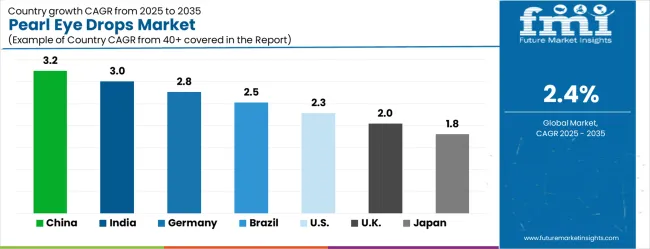
The global pearl eye drops market is set to witness a period of steady growth, expanding from USD 916.7 million in 2025 to USD 1,162.0 million by 2035, registering a 2.4% compound annual growth rate (CAGR). While this may not appear explosive, the market’s gradual and linear progression highlights consistent demand across ophthalmology clinics, hospitals, and retail pharmacies, underscoring its resilience in the broader eye care industry.
The appeal of pearl eye drops lies in their unique ability to combine traditional therapeutic heritage with modern healthcare needs. With consumers becoming more conscious about eye health—whether from increased screen time, environmental pollution, or aging-related conditions—these formulations are stepping into the spotlight as both preventive and therapeutic solutions.
Market Dynamics: Growth Across Three Phases
Between 2025 and 2028, growth is supported by high consumer awareness and adoption in developed regions such as North America, Europe, and parts of Asia. Here, hydration, irritation relief, and sensitive-eye formulations are gaining popularity.
From 2028 to 2032, stable growth will be driven by expansion into emerging economies where access to healthcare is improving and disposable income is rising. Manufacturers focusing on product standardization, quality certifications, and multi-purpose applications will find themselves well-positioned in these regions.
The final phase, 2032 to 2035, will see demand sustained through recurring use, ongoing product enhancements, and wider regulatory approvals that allow pearl eye drops to enter new markets. This indicates a long-term opportunity for both established players and new entrants willing to innovate in formulation and distribution.
Segments Driving Demand
The pearl eye drops market is segmented into multiple therapeutic categories. Dry eye treatment leads with a 36% share, followed by anti-allergy drops at 25%, lubricating and moisturizing drops at 18%, post-surgery care at 12%, and specialty or niche formulations at 9%.
The dominance of dry eye formulations is not surprising. As urban lifestyles are increasingly dominated by screens and outdoor pollution, more consumers are experiencing ocular dryness. This demographic shift, coupled with aging populations, has created a sustained base of demand.
Meanwhile, anti-allergy drops are on the rise globally, responding to a surge in seasonal and environmental allergens. Specialty formulations, often developed through research collaborations, are appealing to niche patient groups and will likely gain more visibility in the years ahead.
E-Commerce and Packaging Innovations
One of the most significant trends is the dominance of online sales, valued at USD 323.7 million in 2025. Consumers are increasingly choosing to purchase pearl eye drops through e-commerce platforms, where they can compare brands, read reviews, and subscribe for regular deliveries. This trend highlights how digital convenience is reshaping even traditional medicine categories.
Packaging innovation is also playing a role in consumer adoption. Single-use vials, preservative-free dropper bottles, and hygienic delivery systems not only improve safety but also enhance consumer trust, a vital factor in the sensitive category of ophthalmic care.
Opportunities for New and Existing Players
The market offers several strategic growth pathways. Companies optimizing their presence on digital platforms through education and authenticity verification are well-placed to capture new consumers. Expanding beyond traditional Asian markets into North America and Europe opens premium opportunities, especially for certified, clinically validated products.
For manufacturers, innovation in compound formulations—combining pearl powder with advanced therapeutic ingredients—presents the chance to command premium pricing. Standardization and medical validation, meanwhile, open doors to healthcare practitioner channels and potential insurance coverage.
Emerging opportunities also exist in private-label manufacturing for wellness brands, premium organic product lines for high-income consumers, and even partnerships with wellness tourism facilities, where products can be marketed as part of holistic experiences.
Regional Outlook: China and India at the Forefront
China leads global adoption, expanding at a CAGR of 3.2% through 2035, supported by its rich heritage of traditional medicine and strong domestic production. Demand is concentrated in regions such as Guangdong, Jiangsu, and Zhejiang, where healthcare infrastructure is well established.
India follows with a 3.0% CAGR, driven by high rates of digital eye strain, rising awareness of natural health, and expanding distribution networks in states like Maharashtra, Karnataka, and Tamil Nadu.
In Europe, Germany shows notable growth at 2.8% CAGR, reflecting its strong acceptance of natural health products and wellness integration. Meanwhile, the United States grows at 2.3% CAGR, driven by increasing consumer interest in alternative and natural eye care, alongside retail and e-commerce adoption.
Japan, with a 1.8% CAGR, remains a stable but mature market, while Brazil and the UK are witnessing steady interest as awareness of holistic eye health gains traction.
Established Leaders and New Innovators
The competitive landscape is defined by both long-standing pharmaceutical companies and emerging traditional medicine specialists.
Global leaders such as Suzhou Tianlong Pharmaceutical, Rohto Pharmaceutical, and Yunnan Baiyao Group are leveraging their heritage and R&D strength to expand product portfolios. Pearl Drops and Renhe Pharmaceutical are focused on accessibility and authentic formulations, while Taiji Group emphasizes cultural authenticity and broad-spectrum wellness.
At the same time, smaller firms and regional players are bringing innovation to niche categories, whether through preservative-free solutions, herbal blends, or contract manufacturing for global wellness brands. For stakeholders considering entry into this market, the growing acceptance of traditional medicine presents a favorable environment to innovate and scale.
Why Buyers Should Pay Attention
For businesses, investors, and healthcare stakeholders looking to buy this report, the insights reveal a market that is steady, resilient, and full of cultural as well as commercial significance. Unlike volatile high-growth markets, pearl eye drops offer stability, long-term consumer trust, and alignment with the surging global interest in natural health and preventive wellness.
Buyers gain a roadmap to opportunities across digital expansion, geographic diversification, premiumization, and practitioner integration. With consumers increasingly seeking authentic and gentle alternatives to synthetic eye care, pearl eye drops are positioned to become a cornerstone in both traditional wellness and modern healthcare ecosystems.
Purchase this Report for USD 5,000 Only | Get an Exclusive Discount Instantly! https://www.futuremarketinsights.com/checkout/26630
Everything You Need—within Your Budget. Request a Special Price Now! https://www.futuremarketinsights.com/reports/sample/rep-gb-26630
About Future Market Insights (FMI)
Future Market Insights, Inc. (ESOMAR certified, recipient of the Stevie Award, and a member of the Greater New York Chamber of Commerce) offers profound insights into the driving factors that are boosting demand in the market. FMI stands as the leading global provider of market intelligence, advisory services, consulting, and events for the Packaging, Food and Beverage, Consumer Technology, Healthcare, Industrial, and Chemicals markets. With a vast team of over 400 analysts worldwide, FMI provides global, regional, and local expertise on diverse domains and industry trends across more than 110 countries.
Contact Us:
Future Market Insights Inc.
Christiana Corporate, 200 Continental Drive,
Suite 401, Newark, Delaware – 19713, USA
T: +1-347-918-3531
For Sales Enquiries: sales@futuremarketinsights.com
Website: https://www.futuremarketinsights.com
LinkedIn| Twitter| Blogs | YouTube