Rising Demand for Packaging Reliability
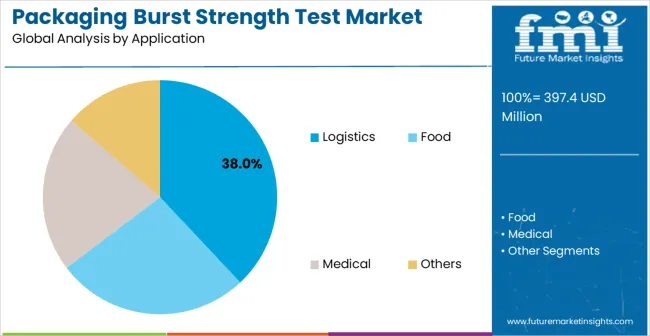
The global packaging burst strength test market is poised for steady expansion as industries increasingly prioritize packaging durability and quality assurance. Valued at USD 397.4 million in 2025, the market is forecast to reach USD 732.1 million by 2035, growing at a CAGR of 6.3%.
This growth underscores the importance of packaging integrity in a world where food safety, e-commerce logistics, and consumer trust are tightly linked to the strength of packaging materials. With global trade volumes rising and supply chains becoming more complex, burst strength testing has emerged as a non-negotiable standard for manufacturers and distributors seeking to avoid costly damage and ensure compliance with international regulations.
Why the Market Continues to Expand
The core driver behind this market’s growth is the increasing need for stronger, more sustainable packaging solutions. From food and beverage to pharmaceuticals, logistics, and personal care, industries depend on packaging that can withstand stress during transport and handling. A burst or failure in packaging does not just lead to financial losses—it can compromise safety, regulatory compliance, and brand reputation.
The logistics sector, accounting for 38% of market share in 2025, highlights this urgency. Packaging in shipping channels must endure long-distance transport, repeated handling, and last-mile delivery challenges. Reliable testing provides companies with the assurance that packages reach consumers intact, thereby protecting both goods and corporate reputations.
Market Evolution: From Growth to Mainstream Integration
Between 2025 and 2030, the market will transition from an early adoption stage to broader integration, expanding from USD 397.4 million to USD 539.4 million. This phase will see industries such as pharmaceuticals and personal care increasingly adopting burst strength testing to meet safety and compliance standards.
From 2030 to 2035, the market is projected to rise further to USD 732.1 million. While growth will remain steady, signs of maturity will begin to appear as most large-scale manufacturers already integrate these systems. Growth beyond this stage will likely be driven by replacement demand, upgrades, and regional expansion into developing economies where packaging standards are still evolving.
Segmental Dynamics: Paper-Based Testing Takes the Lead
Among material types, paper-based packaging testing dominates with a projected 46% share in 2025. The growing use of corrugated cardboard and paperboard in e-commerce and retail packaging underscores the appeal of sustainable, cost-effective solutions that balance strength with environmental responsibility.
The popularity of paper-based solutions is further strengthened by international testing standards that provide consistent, globally recognized performance validation. As industries push for greener solutions, this segment will remain a cornerstone of the market.
Opportunities Shaping the Future
The decade ahead presents multiple opportunity pathways for established players and new entrants:
- Food packaging compliance is expected to generate strong growth as safety standards tighten and food-grade materials require specialized validation.
- Healthcare packaging will emerge as a critical area, with pharmaceuticals and medical devices demanding advanced testing to ensure sterility and integrity.
- Digital integration and IoT monitoring will transform traditional testing into smart, real-time quality assurance systems, creating new value propositions for manufacturers.
- Sustainability-driven innovation in biodegradable and recycled packaging materials will fuel demand for customized testing solutions that address eco-conscious consumer preferences.
Together, these opportunities could unlock an additional USD 200–250 million in revenue beyond baseline growth by 2035.
Regional Insights: Asia-Pacific Leads the Charge
Geographically, Asia-Pacific holds the spotlight. China leads with an anticipated CAGR of 8.5% through 2035, driven by rapid manufacturing expansion, e-commerce boom, and government initiatives supporting quality assurance systems. India follows with 7.9%, propelled by its growing manufacturing base and strengthening quality standards.
Germany, a hub of advanced manufacturing, grows steadily at 7.2%, integrating cutting-edge testing technologies into its industrial ecosystem. The United States, already a mature market, expands at 6.0%, with e-commerce optimization playing a key role. Meanwhile, Brazil and the UK are projected to grow at 6.6% and 5.4% respectively, reinforcing steady adoption across both emerging and established economies.
Competitive Landscape: Innovation and Expertise at the Forefront
The packaging burst strength test market is defined by a competitive mix of global leaders and specialized service providers. Companies like Westpak, Cardinal Health, Keystone Package Testing, Japan Business Logistics Co., Ltd., Smithers, TEN-E Packaging Services, Xometry, DDL, Inc., Nelson Labs, and Kalite are leading innovation in testing technology and service offerings.
These players are not only investing in automation and advanced analytics but also expanding consulting services to help manufacturers optimize packaging designs. Partnerships, collaborations, and regional expansions are central strategies as companies position themselves to meet rising demand across diverse applications.
For new entrants, opportunities lie in niche areas such as eco-packaging validation, digital testing platforms, and cost-effective solutions for small and medium-sized manufacturers in emerging markets. By focusing on specialized expertise and flexible solutions, new players can carve a competitive space in this expanding landscape.
Outlook for Stakeholders
For stakeholders, including manufacturers, logistics providers, and investors, the forecast presents both stability and opportunity. With market value expected to nearly double over the next decade, aligning with innovative players and technologies will be essential.
The move toward sustainable materials, the integration of smart technologies, and the expansion of e-commerce and healthcare packaging present fertile ground for businesses seeking long-term growth. While saturation may approach beyond 2035, the next decade offers unmatched opportunities for growth, collaboration, and innovation.
Purchase this Report for USD 5,000 Only | Get an Exclusive Discount Instantly! https://www.futuremarketinsights.com/checkout/26618
Everything You Need—within Your Budget. Request a Special Price Now! https://www.futuremarketinsights.com/reports/sample/rep-gb-26618
About Future Market Insights (FMI)
Future Market Insights, Inc. (ESOMAR certified, recipient of the Stevie Award, and a member of the Greater New York Chamber of Commerce) offers profound insights into the driving factors that are boosting demand in the market. FMI stands as the leading global provider of market intelligence, advisory services, consulting, and events for the Packaging, Food and Beverage, Consumer Technology, Healthcare, Industrial, and Chemicals markets. With a vast team of over 400 analysts worldwide, FMI provides global, regional, and local expertise on diverse domains and industry trends across more than 110 countries.
Contact Us:
Future Market Insights Inc.
Christiana Corporate, 200 Continental Drive,
Suite 401, Newark, Delaware – 19713, USA
T: +1-347-918-3531
For Sales Enquiries: sales@futuremarketinsights.com
Website: https://www.futuremarketinsights.com
LinkedIn| Twitter| Blogs | YouTube