The PCR tire building machine market begins its steady growth decade from a USD 790.8 million foundation in 2025, establishing a robust platform for sustained expansion across global tire manufacturing operations. The initial development phase demonstrates consistent momentum building, with market value climbing from USD 830.4 million in 2026 to USD 1,059.8 million by 2030. This foundational period reflects increasing automotive production demands and expanding tire manufacturing capacity requirements across emerging and developed automotive markets.
The global PCR (Passenger Car Radial) Tire Building Machine Market is witnessing significant evolution driven by advancements in tire manufacturing technology, increasing demand for high-performance tires, and the need for more sustainable and efficient production processes. PCR tire building machines are essential for manufacturing passenger car radial tires, which are the standard type of tires used in most vehicles worldwide. As the automotive industry accelerates its adoption of innovative materials and sustainable practices, the market for tire building machinery is poised for substantial growth.
Market Overview: Foundations of Tire Manufacturing Automation
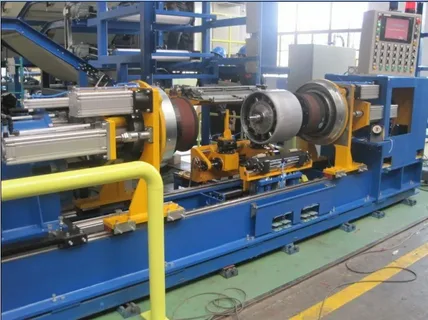
PCR tire building machines are sophisticated systems designed to assemble various tire components, such as inner liners, carcass plies, belts, sidewalls, and treads, into a finished tire. These machines must operate with precision and consistency to produce high-quality tires that meet stringent safety and performance standards. Given the increasing complexity of tire designs — including the integration of eco-friendly materials and advanced tread patterns — the demand for automated, versatile, and high-efficiency tire building machines is rising.
The market’s expansion is fueled by the automotive sector’s need for reliable, consistent tire production that can meet global safety norms, adapt to regional regulations, and accommodate evolving consumer preferences for durability, fuel efficiency, and reduced noise. Machinery manufacturers are continuously upgrading their systems with innovative features, such as computer-controlled processes, real-time quality monitoring, and modular designs to address these complex requirements.
Driving Factors of Market Growth: Industry Trends and Regulatory Environment
Multiple factors are propelling the growth of the PCR tire building machine market. The increasing production of passenger vehicles globally, especially in regions like Asia-Pacific, accounts for a rising demand for tires and, consequently, tire manufacturing machinery. Consumer preferences are shifting toward energy-efficient tires that reduce rolling resistance and improve fuel economy, prompting tire manufacturers to invest in advanced tire construction technologies.
Environmental regulations and safety standards are also key drivers. Governments worldwide impose strict emission and safety norms that influence tire design and manufacturing processes. To comply with these standards, tire producers are adopting eco-friendly materials and processes, which require specialized machinery capable of handling new compounds and complex assembly procedures.
Moreover, the ongoing trend toward automation and Industry 4.0 integration in manufacturing facilities enhances production efficiency, reduces wastage, and minimizes labor costs. These factors incentivize tire manufacturers to invest in high-tech PCR tire building machines equipped with advanced controls, data analytics, and predictive maintenance capabilities.
Product Segments: Standard vs. Customized Solutions
The market comprises a range of tire building machines tailored to various production needs. Standard machines are designed for mass production of conventional passenger vehicle tires, emphasizing speed, consistency, and high throughput. On the other hand, customized or modular tire building systems cater to niche markets, such as specialty tires, high-performance tires, or tires with specific design features requiring flexible manufacturing setups.
Further segmentation includes machines based on the type of tire, size capabilities, and automation level. Increasingly, manufacturers favor integrated systems that combine multiple stages — from component assembly to curing and finishing — within a single automated line, improving overall efficiency and reducing turnaround times.
Industry Applications: Meeting the Demands of Modern Vehicle Markets
Passenger car tire manufacturing constitutes the primary application of PCR tire building machines. These machines are used across different vehicle segments, including economy, mid-range, and luxury cars. The rise of electric vehicles (EVs) also influences tire development, encouraging manufacturers to produce tires with lower rolling resistance, enhanced durability, and specialized tread patterns. This shift fuels demand for advanced tire construction machinery that can handle unique requirements.
Additionally, the aftermarket segment benefits from the adoption of automated tire building systems that allow tire producers to quickly respond to regional demand fluctuations and customized tire specifications.
Regional Trends: Asia-Pacific and Beyond
Asia-Pacific remains the largest and fastest-growing market for PCR tire building machines due to rapid automotive manufacturing, increasing vehicle ownership, and expanding economies like China and India. Manufacturers in this region are investing heavily in modernizing their tire production facilities with state-of-the-art machinery.
North America and Europe maintain a steady market presence owing to established tire manufacturers focused on innovation, sustainability, and compliance with safety standards. These regions are also leaders in adopting Industry 4.0 technologies, integrating digitized systems for higher precision and operational transparency.
Competitive Landscape: Innovation as a Differentiator
The market landscape features major global players competing through innovation, technological superiority, and service offerings. Leading companies focus on developing intelligent machines equipped with automation, data-driven diagnostics, and energy-efficient operations to streamline production and reduce environmental impacts.
Collaborations with automotive OEMs and research institutions enable machinery providers to incorporate cutting-edge features such as lightweight component handling, high-speed manufacturing, and eco-friendly material processing, thereby positioning themselves for sustainable growth.
Future Outlook: Embracing Sustainability and Digital Transformation
Looking ahead, the PCR tire building machine market is expected to expand as manufacturers emphasize sustainability, material innovation, and smart manufacturing solutions. The integration of Industry 4.0 principles, such as IoT connectivity and AI-based predictive maintenance, will further enhance machine performance, reduce downtime, and optimize production workflows.
Furthermore, the demand for high-performance, eco-friendly tires will stimulate investments in flexible, modular machinery capable of handling new compositional requirements and complex designs. As the automotive industry transitions toward electric and autonomous vehicles, the tire manufacturing sector will continue to evolve, making advanced tire building machinery an essential element in delivering innovative and sustainable mobility solutions.
In conclusion, the PCR tire building machine market will play a critical role in shaping the future of automotive tire manufacturing — driven by technological innovation, regulatory standards, and evolving consumer demands for safer, greener, and high-performance tires.
Get Instant Access for Only $5,000 | Don’t Miss This Exclusive Offer!
https://www.futuremarketinsights.com/reports/sample/rep-gb-26769
Checkout Now to Access Industry Insights:
https://www.futuremarketinsights.com/checkout/26769
About Future Market Insights (FMI)
Future Market Insights, Inc. (ESOMAR certified, recipient of the Stevie Award, and a member of the Greater New York Chamber of Commerce) offers profound insights into the driving factors that are boosting demand in the market. FMI stands as the leading global provider of market intelligence, advisory services, consulting, and events for the Packaging, Food and Beverage, Consumer Technology, Healthcare, Industrial, and Chemicals markets. With a vast team of 400 analysts worldwide, FMI provides global, regional, and local expertise on diverse domains and industry trends across more than 110 countries.
Contact Us:
Future Market Insights Inc.
Christiana Corporate, 200 Continental Drive,
Suite 401, Newark, Delaware – 19713, USA
T: +1-845-579-5705
For Sales Enquiries: sales@futuremarketinsights.com
Website: https://www.futuremarketinsights.com
LinkedIn| Twitter| Blogs | YouTube