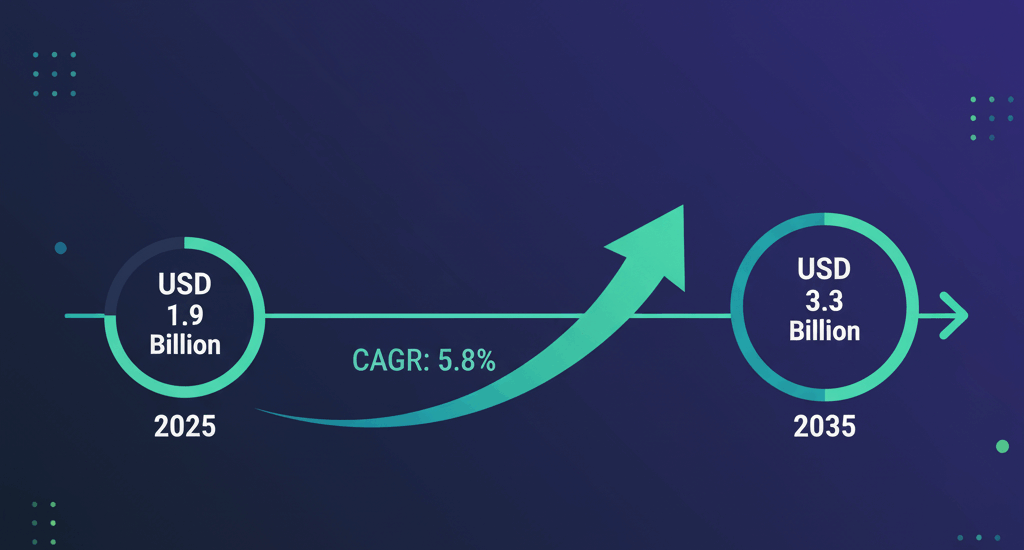
The global automatic die cutting machines market is preparing for a decade of accelerated growth, with projections indicating an increase from USD 1.9 billion in 2025 to USD 3.3 billion by 2035. This steady expansion, marked by a compound annual growth rate (CAGR) of 5.8%, reflects the evolving demand for precision, efficiency, and automation across diverse industries such as automotive, packaging, pharmaceuticals, and textiles.
Automatic die cutting machines have emerged as an essential part of modern manufacturing, helping businesses achieve faster production cycles, consistent quality, and reduced labor dependency. With industries under constant pressure to optimize performance and minimize costs, the adoption of automated solutions has become less of a choice and more of a strategic imperative.
Automation Takes Center Stage
One of the strongest signals in the market is the shift from semi-automatic to fully automatic machines. By 2025, fully automatic systems are expected to account for 57.6% of market revenue. Their appeal lies in their ability to run with minimal human intervention, deliver precise cuts at high speeds, and adapt to complex production requirements.
These systems have gained favor in sectors where efficiency and consistency are critical, particularly in large-scale operations where downtime and production errors can lead to significant financial losses. Manufacturers are increasingly drawn to the long-term benefits, including reduced labor costs, less material wastage, and improved production quality.
Paper Materials Lead the Way
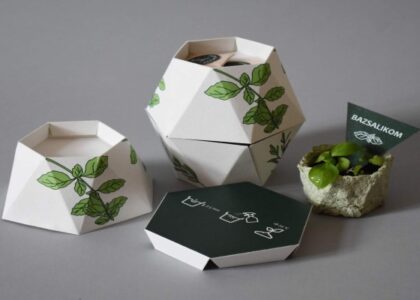
By processing material, the paper segment is projected to dominate with a 42.8% share in 2025. This reflects the growing global appetite for paper-based packaging, printing products, and eco-friendly solutions. As sustainability initiatives intensify, companies are turning to recyclable paper products, which, in turn, require high-precision die cutting for labels, cartons, and custom packaging designs.
Automatic die cutting machines enable this transition by ensuring accuracy, speed, and adaptability, especially when switching between different paper grades and thicknesses. This versatility has reinforced paper’s position as the most prominent processing material segment in the global market.
Automotive Industry Drives Revenue
In terms of end use, the automotive industry is forecast to command 38.5% of market revenues in 2025. The sector’s reliance on precision cutting for components such as gaskets, insulation, and interior finishes has strengthened demand for automated solutions. Automotive manufacturers are adopting die cutting technologies not only to maintain uniform quality but also to address the growing demand for lightweight and customized parts.
As the industry transitions toward electric vehicles, the need for innovative and precise die cutting applications is expected to rise further. From battery components to intricate interior detailing, the automotive sector continues to be one of the strongest growth engines for the market.
A Global Growth Story
The market’s expansion is not limited to one region—it is unfolding worldwide. Asia-Pacific is leading the charge, with China forecasted to grow at a robust CAGR of 7.8%, followed by India at 7.3%. Both countries benefit from rapid industrialization, large-scale automotive and packaging production, and growing investments in manufacturing modernization.
Germany remains a key driver in Europe, expanding at a 6.7% CAGR, thanks to its strong reputation in precision engineering and high-quality manufacturing practices. France and the UK follow closely, highlighting the region’s steady demand for automated production technologies.
In the United States, the market is set to grow from USD 690.9 million in 2025 to USD 1.1 billion by 2035, with a CAGR of 4.9%. The country’s growth is largely driven by modernization and replacement demand, as industries upgrade older systems with advanced, automated technologies. Brazil, while posting a modest CAGR of 4.4%, remains an important Latin American hub for automotive and industrial applications.
Established Leaders and Emerging Innovators
The competitive landscape reflects a balance between industry stalwarts and ambitious new entrants. Leading global players such as Bobst, Heidelberger Druckmaschinen, Koenig & Bauer, and Komori continue to dominate with comprehensive product portfolios and strong technical support. These companies have invested heavily in automation and precision to maintain their edge in highly competitive markets.
At the same time, companies like Asahi Machinery, Berhalter, Duplo, Kama, Masterwork (MK) Machinery, and ThermoFlexX (Xeikon) are carving their niches with application-specific innovations and regional expansions. Their efforts underline the opportunities available for manufacturers who bring fresh ideas, from modular designs to smart monitoring technologies, into the market.
This dual momentum between established stakeholders and emerging innovators highlights an ecosystem that thrives on collaboration, competition, and constant technological evolution.
Opportunities for Buyers and Stakeholders
For businesses considering investment in the automatic die cutting machines market, the outlook offers compelling opportunities. Buyers of this report gain insights into not only the overall market trajectory but also the nuanced country-level growth dynamics and segment-specific developments.
Manufacturers seeking expansion can identify high-growth regions such as China, India, and Germany, where automation adoption is rapidly scaling. Investors can tap into the innovation wave, supporting manufacturers who are integrating smart systems, IoT-enabled monitoring, and eco-friendly solutions. Established players can reinforce their market dominance through partnerships, acquisitions, and technology advancements, while new entrants can target specialized segments with differentiated products.
Purchase this Report for USD 5,000 Only | Get an Exclusive Discount Instantly! https://www.futuremarketinsights.com/checkout/7834
Everything You Need—within Your Budget. Request a Special Price Now! https://www.futuremarketinsights.com/reports/sample/rep-gb-7834
About Future Market Insights (FMI)
Future Market Insights, Inc. (ESOMAR certified, recipient of the Stevie Award, and a member of the Greater New York Chamber of Commerce) offers profound insights into the driving factors that are boosting demand in the market. FMI stands as the leading global provider of market intelligence, advisory services, consulting, and events for the Packaging, Food and Beverage, Consumer Technology, Healthcare, Industrial, and Chemicals markets. With a vast team of over 400 analysts worldwide, FMI provides global, regional, and local expertise on diverse domains and industry trends across more than 110 countries.
Contact Us:
Future Market Insights Inc.
Christiana Corporate, 200 Continental Drive,
Suite 401, Newark, Delaware – 19713, USA
T: +1-347-918-3531
For Sales Enquiries: sales@futuremarketinsights.com
Website: https://www.futuremarketinsights.com
LinkedIn| Twitter| Blogs | YouTube