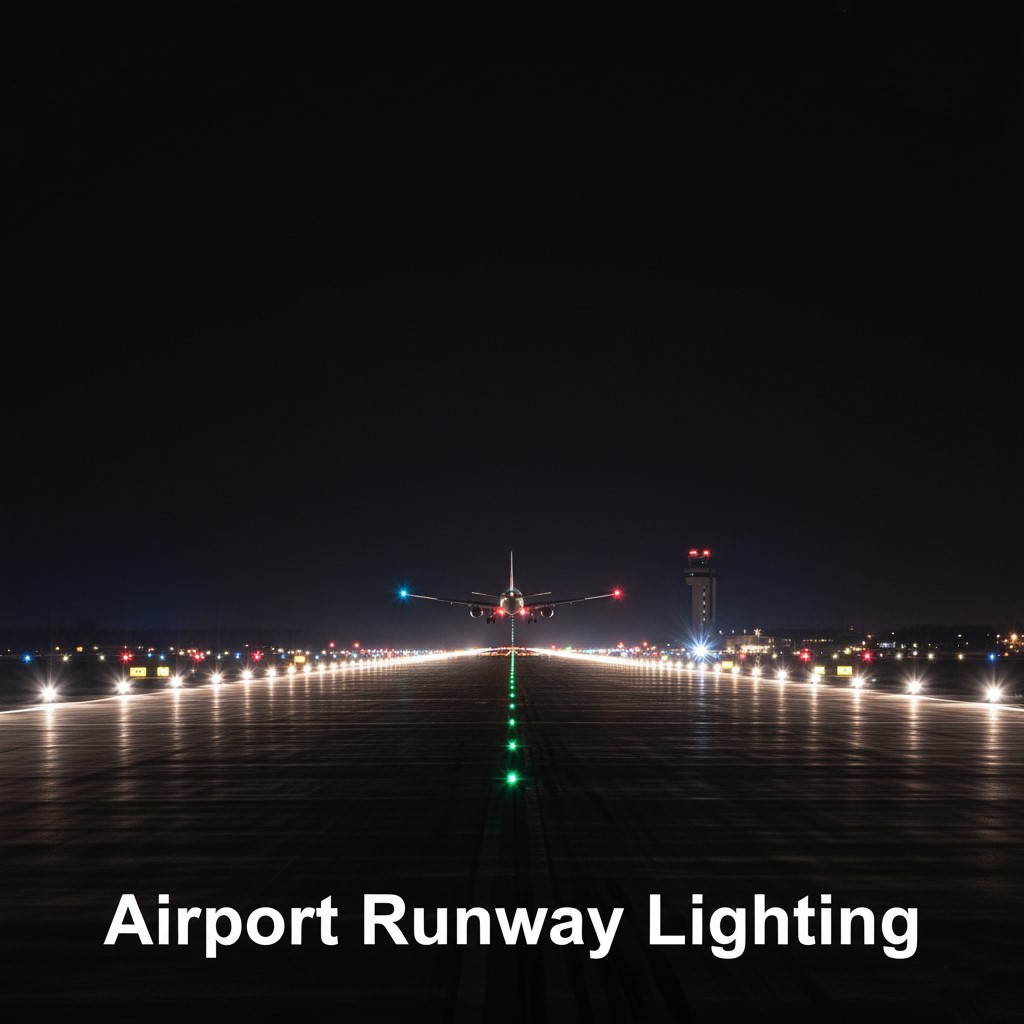
The global airport runway lighting market is poised for robust growth, projected to reach USD 566.9 million by 2025 and surge to USD 1,223.8 million by 2035, reflecting a compound annual growth rate (CAGR) of 8.0%. Growth is being fueled by increasing global air passenger traffic, expanding airport infrastructure, and heightened investments in airport modernization. Emerging economies with rising middle-class populations and higher disposable incomes are witnessing a surge in air travel demand, further accelerating the adoption of advanced runway lighting systems.
The market’s trajectory is closely linked to macroeconomic indicators such as global GDP, industrial output, trade volumes, and aviation infrastructure spending. Technological advancements, regulatory compliance, and sustainability initiatives are also shaping market dynamics, with LED and smart lighting systems emerging as dominant solutions for modern airports.
Full Market Report available for delivery. For purchase or customization, please request here – https://www.futuremarketinsights.com/reports/sample/rep-gb-25648
Driving Forces Behind Market Growth:
The airport runway lighting market is largely driven by:
- Rising Commercial Aviation Traffic: Growth in passenger numbers is compelling airports to upgrade lighting systems to meet ICAO and FAA safety standards, improve night and low-visibility operations, and enhance operational efficiency. Large international airports and expanding regional hubs are leading this adoption.
- Cargo and Logistics Demand: Air freight growth necessitates high-intensity, reliable runway lighting for night operations and rapid aircraft turnaround. Automated and energy-efficient systems help optimize operations at major cargo hubs.
- Military and Defense Requirements: Runway lighting is critical for defense operations, including night sorties, tactical deployments, and training exercises. Military-grade lighting solutions emphasize precision, durability, and low-maintenance designs.
- Modernization and Retrofit Initiatives: Aging airport infrastructure worldwide is being upgraded to energy-efficient LED lighting and smart control systems. Retrofit projects focus on reducing maintenance costs, enhancing safety, and integrating predictive monitoring technologies.
Market Challenges & Strategic Responses:
Despite strong growth prospects, the airport runway lighting market faces challenges such as high initial investment costs, regulatory compliance hurdles, and sensitivity to macroeconomic fluctuations. Procurement costs are affected by currency volatility, import-export policies, and government fiscal incentives.
Market participants are responding strategically by:
- Offering modular and scalable lighting solutions to reduce upfront costs.
- Integrating intelligent lighting controls to improve operational efficiency.
- Partnering with government authorities and global aviation technology providers to comply with ICAO, FAA, and national safety standards.
- Focusing on energy-efficient and sustainable solutions, such as LED and solar-powered lighting systems, to meet long-term cost and environmental goals.
Regional Market Outlook:
Regionally, Asia-Pacific and the Middle East are expected to register the highest growth due to rapid airport expansions and post-pandemic air traffic resurgence. North America and Europe, while more mature, are investing heavily in retrofitting existing infrastructure, enhancing efficiency, and integrating smart technologies. Latin America, Central Asia, and Africa are gradually expanding their airport lighting investments in line with growing aviation demand.
Country-wise Insights:
- China: Leading with a CAGR of 10.8%, driven by new airport projects, modernization initiatives, and intelligent LED and solar-powered lighting adoption.
- India: Growing at 10.0%, fueled by rising passenger traffic, regional airport expansion, and smart control system integration.
- Germany: Projected CAGR of 9.2%, supported by airport modernization projects and retrofit initiatives at major hubs like Frankfurt and Munich.
- France & UK: CAGRs of 8.4% and 7.6%, respectively, led by energy-efficient LED upgrades, intelligent monitoring systems, and compliance with ICAO/CAA standards.
- USA: Expected CAGR of 6.8%, driven by modernization of major airports, FAA-supported projects, and adoption of solar-powered and automated lighting solutions.
- Brazil: Slower but steady growth at 6.0%, driven by regional airport development and compliance upgrades.
Company Profile & Competitive Landscape:
The airport runway lighting market is highly competitive, with key players offering innovative, energy-efficient, and regulatory-compliant solutions:
- ADB Safegate: Integrated airfield lighting systems with intelligent control and monitoring.
- Honeywell International Inc.: Turnkey airport lighting solutions emphasizing automation and durability.
- Hella KGaA Hueck & Co.: High-performance, weather-resistant lighting fixtures.
- OSRAM Licht AG: Energy-efficient LED solutions with precision optics.
- ABB Ltd.: Smart infrastructure solutions combining lighting, control, and predictive maintenance technologies.
- Eaton Corporation PLC: Modular and scalable lighting solutions with full lifecycle support.
Collaborations with airport authorities, contractors, and technology providers enable these companies to deliver customized solutions for both greenfield projects and retrofit initiatives, enhancing operational efficiency and compliance.
Market Size and Share Forecast Outlook (2025 to 2035):
- Market Value: USD 566.9 million in 2025 → USD 1,223.8 million by 2035
- Forecast CAGR: 8.0%
- Leading Technology Segment (2025): LED lighting – 57.3% of market share
- Leading Installation Type (2025): New installations – 63.5% of market revenue
- Leading End Use (2025): Commercial airports – 48.9% of market revenue
The commercial, cargo, and military airport segments collectively account for 80% of market demand, highlighting the primary growth drivers, while modernization projects and private airports present additional opportunities for expansion.
Stay Ahead – Grab the Report: https://www.futuremarketinsights.com/reports/brochure/rep-gb-25648
About Future Market Insights (FMI)
Future Market Insights, Inc. (ESOMAR certified, recipient of the Stevie Award, and a member of the Greater New York Chamber of Commerce) offers profound insights into the driving factors that are boosting demand in the market. FMI stands as the leading global provider of market intelligence, advisory services, consulting, and events for the Packaging, Food and Beverage, Consumer Technology, Healthcare, Industrial, and Chemicals markets. With a vast team of over 400 analysts worldwide, FMI provides global, regional, and local expertise on diverse domains and industry trends across more than 110 countries.
Contact Us:
Future Market Insights Inc.
Christiana Corporate, 200 Continental Drive,
Suite 401, Newark, Delaware – 19713, USA
T: +1-347-918-3531
For Sales Enquiries: sales@futuremarketinsights.com
Website: https://www.futuremarketinsights.com
LinkedIn| Twitter| Blogs | YouTube