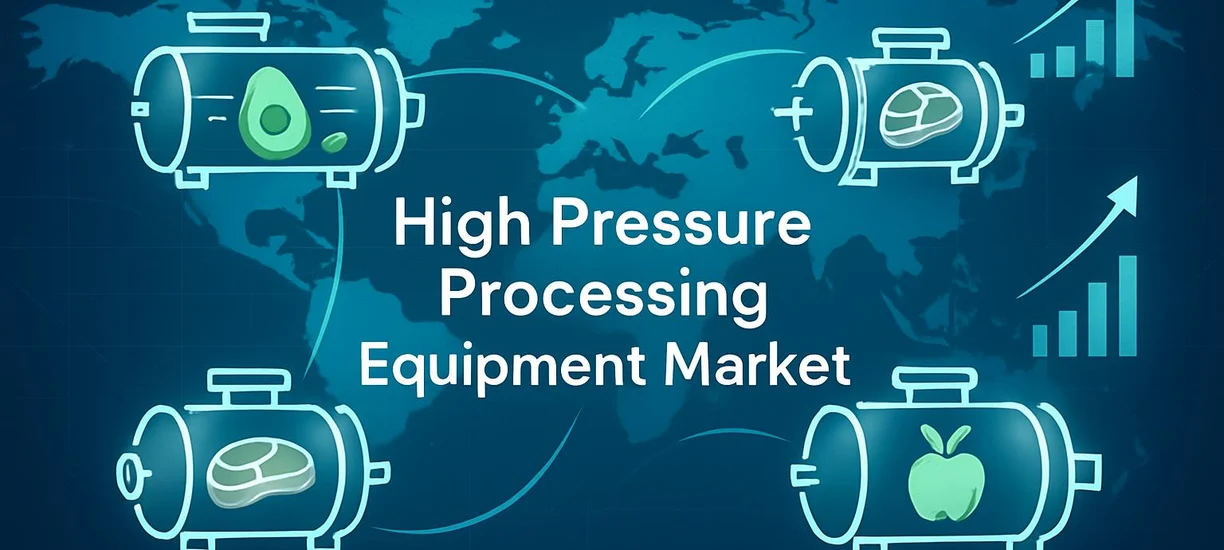
The global High Pressure Processing (HPP) equipment market is on a trajectory of transformative growth, projected to reach USD 1,400 million by 2035, up from USD 425.6 million in 2025. With a robust compound annual growth rate (CAGR) of 12.4%, HPP technology is rapidly becoming a cornerstone for manufacturers seeking safer, more sustainable, and consumer-aligned food processing solutions.
Unlocking Shelf Life and Quality Without Compromise
As consumer demand shifts toward clean-label, minimally processed, and preservative-free foods, manufacturers face the dual challenge of maintaining product safety while meeting stringent regulatory standards. HPP technology addresses these challenges by preserving nutritional value, flavor, and texture without thermal degradation. Unlike conventional pasteurization, HPP effectively inactivates harmful pathogens such as Listeria monocytogenes, Salmonella, and E. coli O157:H7, ensuring compliance with North American, European, and Asia-Pacific food safety regulations.
Leading brands have already demonstrated HPP’s transformative potential. In the United States, Suja Juice scaled HPP operations to meet Whole Foods’ rigorous sourcing standards, while Starbucks’ Evolution Fresh uses HPP to preserve premium cold-pressed juices across more than 8,000 retail locations. In Europe, Grupo Nueva Pescanova employs HPP to purify bivalves, minimizing preservatives while adhering to EU hygiene regulations. In Japan, Nippon Ham leverages HPP for ready-to-eat meat, enhancing microbial safety without compromising freshness.
Click Here for More Information:- https://www.futuremarketinsights.com/reports/high-pressure-processing-market
Technology Advancements Fueling Operational Efficiency
HPP equipment providers, including Hiperbaric, Avure Technologies, and Multivac, have revolutionized industrial-scale food processing with enhanced throughput, modular scalability, and digital condition monitoring. Integration with IoT diagnostics and AI-driven predictive maintenance allows manufacturers to reduce downtime, optimize efficiency, and cut operational costs. Large-capacity systems, particularly units above 300 liters, are driving adoption among multinational manufacturers like Campbell Soup Company and Maple Leaf Foods, while mid-capacity and pilot-scale systems support regional processors and startups experimenting with innovative product lines.
Horizontal vessels dominate 90% of the market, offering rapid cycle times compatible with conveyor automation, while vertical systems provide flexible, space-efficient solutions for smaller facilities and urban production centers.
Addressing Manufacturers’ Key Challenges
Despite its advantages, HPP adoption presents challenges, primarily high initial investment and system integration complexities. Successful deployment requires adaptive engineering solutions, specialized infrastructure, and skilled personnel. Manufacturers are responding with modular, inline solutions that combine automation, real-time monitoring, and cost efficiency. Strategic collaborations with regulatory agencies and alternative financing options are also accelerating adoption, particularly for small and mid-sized processors.
Capturing the Clean-Label Opportunity
The market opportunity for HPP is immense. Growing demand for clean-label and extended-shelf-life products aligns directly with HPP’s capabilities. The technology inactivates pathogens while preserving nutrients, flavor, and texture, offering manufacturers a clear competitive advantage. Beyond food safety, HPP supports sustainable processing by reducing energy consumption compared with thermal pasteurization, meeting the expectations of environmentally conscious consumers.
Products spanning fruits, vegetables, meats, seafood, dairy, baby food, and pet food are increasingly processed using HPP. Calavo Growers maintains guacamole freshness for major retailers like Costco and Walmart, Hormel Foods leverages HPP for deli meats under USDA safety standards, and Once Upon a Farm uses HPP to ensure nutrient retention in baby food. Cold-pressed juice brands such as Suja Life, Preshafood, and Raw Pressery rely entirely on HPP to preserve flavor and nutrition at scale.
Global Market Growth and Regional Insights
The United States HPP market is expanding rapidly due to FDA food safety regulations, growing clean-label demand, and investment in high-throughput solutions, with a projected CAGR of 12.8%. In the UK, adoption is driven by beverage safety requirements and FSA guidelines, supporting a CAGR of 12.1%. European markets are buoyed by strict EU food safety and sustainability regulations, especially in Germany, France, and Italy, achieving a CAGR of 12.5%. In Japan, HPP adoption in seafood and beverage sectors aligns with government-led food safety initiatives, while South Korea sees steady growth through investment in ready-to-eat meals, cold-pressed beverages, and high-quality dairy products.
Emerging markets also present opportunities. Indonesia, Singapore, Mexico, Thailand, and India are piloting and expanding HPP applications in seafood, urban agriculture, and export-oriented food processing, positioning the technology as a strategic investment for manufacturers aiming to meet international standards.
Competitive Landscape and Strategic Investment
Leading HPP providers are advancing scalable and intelligent solutions. Hiperbaric offers AI-enabled monitoring and sustainable technology, Avure Technologies drives automation and high-speed systems, and Thyssenkrupp AG delivers industrial-strength solutions for meat, dairy, and seafood. Bao Tou KeFa focuses on cost-effective high-volume systems, while Multivac integrates HPP with automated packaging for global compliance. Collectively, smaller players and startups are fueling innovation in batch, semi-continuous, and continuous systems, creating a competitive ecosystem that encourages adoption across manufacturers of all sizes.
Get Sample Report: – https://www.futuremarketinsights.com/reports/sample/rep-gb-665
Positioning Manufacturers for the Future
As regulatory pressure intensifies and consumer expectations evolve, HPP is no longer a niche solution—it is an essential investment for future-ready food processing. Manufacturers that adopt scalable, energy-efficient, and automated HPP systems gain operational resilience, regulatory compliance, and a direct line to health-conscious consumers.
High Pressure Processing is redefining food manufacturing, offering a solution-focused path to growth, profitability, and sustainability. With global adoption accelerating and technology evolving rapidly, the next decade promises a paradigm shift in how food and beverage products are processed, delivered, and trusted by consumers worldwide.
About Future Market Insights (FMI)
Future Market Insights, Inc. (ESOMAR certified, recipient of the Stevie Award, and a member of the Greater New York Chamber of Commerce) offers profound insights into the driving factors that are boosting demand in the market. FMI stands as the leading global provider of market intelligence, advisory services, consulting, and events for the Packaging, Food and Beverage, Consumer Technology, Healthcare, Industrial, and Chemicals markets. With a vast team of over 400 analysts worldwide, FMI provides global, regional, and local expertise on diverse domains and industry trends across more than 110 countries.
Contact Us:
Future Market Insights Inc.
Christiana Corporate, 200 Continental Drive,
Suite 401, Newark, Delaware – 19713, USA
T: +1-347-918-3531
For Sales Enquiries: sales@futuremarketinsights.com
Website: https://www.futuremarketinsights.com
LinkedIn| Twitter| Blogs | YouTube